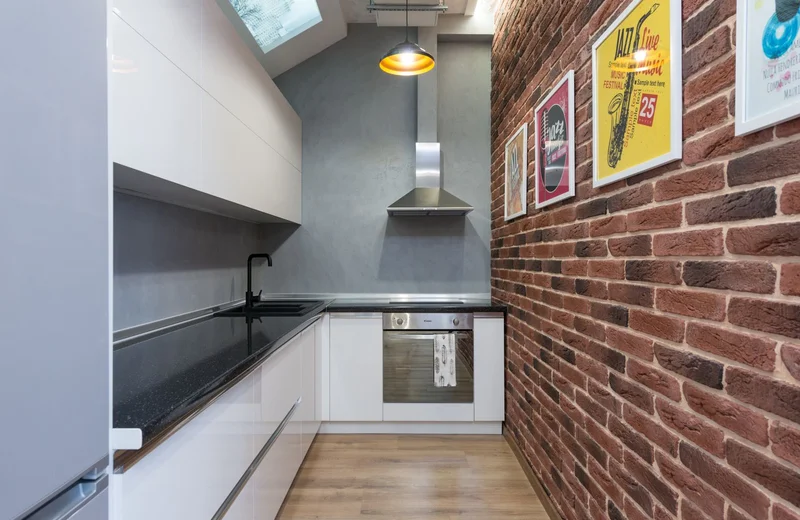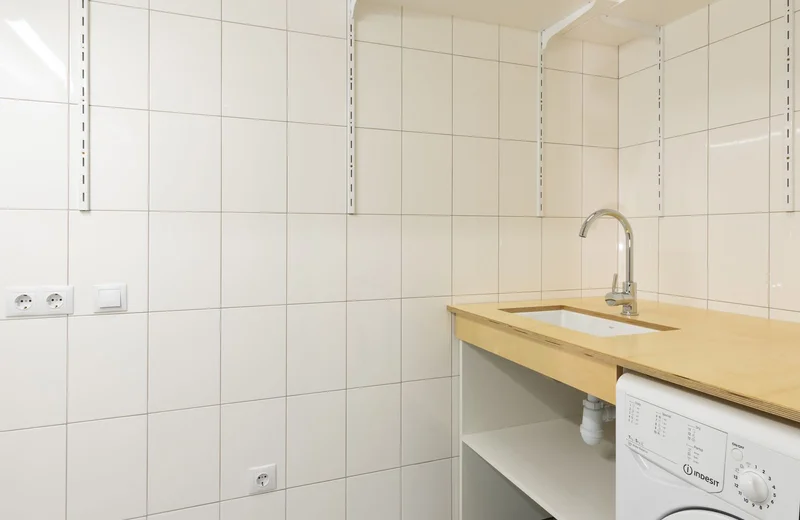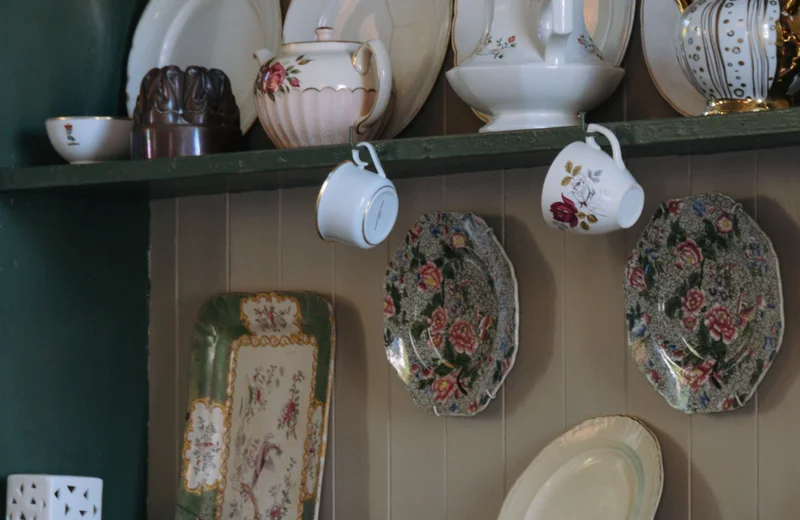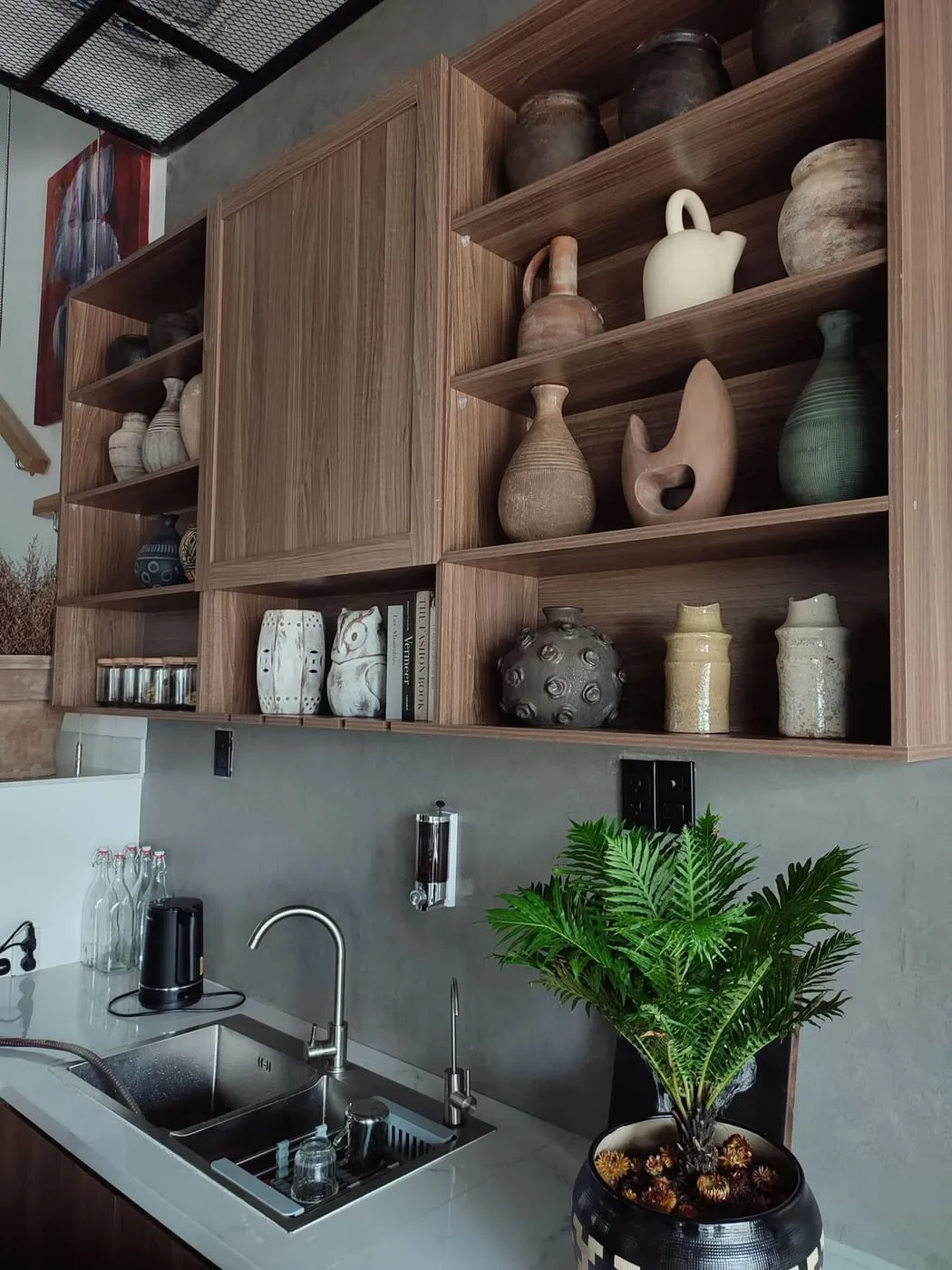
According to the English Housing Survey 2023-24 from the Department for Levelling Up, Housing and Communities, 4.6 million households in England now rent privately. A huge share of those live with a kitchen someone else chose, in a colour someone else picked, that they’re not allowed to touch.
I’ve rented three kitchens in the UK. All three had the same tired combination: oak-effect units from another decade, a chipped tile splashback, and a landlord who made it very clear in the inspection report that “no alterations” meant no alterations. What I learned across those three flats is that a rental kitchen can look completely different by moving-out day, provided you never do anything that can’t be undone.
This post covers the specific rental kitchen upgrade ideas UK tenants can actually use: changes that stick to walls without adhesive, sit over floors without glue, and hang on rods without a drill. Every one of them comes off cleanly and leaves your deposit exactly where it started.
Read more: kitchen on a budget UK for the equivalent list if you own your kitchen and can make permanent changes.
Key Takeaways
- Self-adhesive splashback tiles and worktop film cost £20–£45 and lift off cleanly, no wall damage.
- Peel-and-stick vinyl flooring goes over existing lino with no subfloor adhesive, from £1.50 per tile.
- Tension-rod shelving adds storage for £15–£30 with zero drilling.
- Swap handles but keep the originals: most standard ASTs require the kitchen returned to its original condition.
Why Does UK Tenancy Law Matter for Kitchen Changes?
Most assured shorthold tenancies (ASTs) require the property returned in the same condition it was handed over in, fair wear and tear excepted, a standard clause referenced by Shelter England’s tenant rights guidance, 2024. That single clause decides which kitchen upgrades are safe.
It’s not that landlords are being difficult. Standard AST wording, the kind most letting agents use without amendment, treats drilled holes, painted units, and adhesive residue as damage rather than wear and tear. That’s why every idea below avoids drilling into tiles or walls, avoids gluing anything to the worktop or floor itself, and keeps every original part of the kitchen intact and stored.
In my second rental, I lost £40 from my deposit for two small screw holes behind a spice rack I’d fixed to the wall. Since then I’ve only used adhesive-backed, tension-fit, or freestanding solutions, and I’ve had every deposit returned in full.
The practical rule is simple: if you can’t undo it in under an hour with nothing left behind, don’t do it in a rented kitchen.
How Do Self-Adhesive Splashback Tiles Work in a Rental?
Self-adhesive splashback tile sheets update a rental kitchen’s least-loved feature for £20–£45, with no tools and no adhesive touching the wall’s actual surface, just a removable backing film. Brands like Vinyltiles and Crearreda sell A3-sized sheets in metro tile, marble, and geometric patterns from most UK retailers, including Dunelm and Amazon UK.
The application itself takes an afternoon rather than a weekend. Clean the existing tile or wall thoroughly, degrease it if it’s near the hob, then apply each sheet from the top down, smoothing air bubbles out with a credit card as you go. On a properly cleaned, flat surface, they sit securely for well over a year.
Removal, when moving-out day arrives, is just as straightforward. Warm the edge gently with a hairdryer, then peel slowly from one corner. On painted plaster or existing ceramic tile, this leaves no mark behind. It’s worth testing a small offcut in a hidden spot first, particularly on older tile grout, before committing to the full splashback.
In short: self-adhesive splashback tile sheets from UK retailers such as Dunelm and Amazon cost £20–£45 per kitchen and apply directly over existing tile or painted wall with no drilling required, according to product specifications published by leading peel-and-stick tile brands including Vinyltiles (2024).
If your kitchen has bare wall instead of tile behind the hob, the same sheets work there too, just on a smooth painted surface rather than over existing grout lines.
For permanent-change equivalents if you own your kitchen or have full landlord sign-off, see our budget kitchen upgrade guide.
Can You Cover a Dated Worktop Without Replacing It?
Yes. Self-adhesive worktop film covers a dated or damaged laminate worktop for £20–£30 and lifts off completely at the end of a tenancy, unlike a replaced or painted worktop which can’t be reversed. Rolls from Dunelm and Amazon UK come in marble, concrete, and wood-effect finishes designed specifically for flat surfaces.
The film works best on a worktop that’s structurally sound but cosmetically tired, think burn marks, faded laminate, or a colour you simply can’t live with for another year. Wipe the surface down, apply the film in one continuous pull working from one end, and smooth out bubbles with the same credit-card technique used for splashback tiles.
It won’t withstand a hot pan set directly on it, so a trivet is worth keeping nearby. But for everyday use, a well-applied worktop film convincingly disguises a tired surface and peels away cleanly whenever you’re ready to move out.
A single roll (1.5m x 0.9m, around £20–£30 at Dunelm) covers a standard section of worktop and, in my experience, holds its finish for well over a year of normal kitchen use.
What Flooring Options Work for Renters Over Existing Lino?
Peel-and-stick luxury vinyl tiles go directly over most existing smooth lino or vinyl floors for £50–£90 per kitchen, with no adhesive applied to the subfloor itself, only to the back of each tile. Brands including ClickFix and Plank and Mill sell them through Amazon UK from around £1.50–£2.50 per tile.
Unlike traditional vinyl sheet flooring, which needs adhesive spread across the whole subfloor, these tiles carry their own adhesive backing and simply press into place, tile by tile, over your existing floor. The existing lino stays completely untouched underneath.
Most rental flooring guides recommend these tiles for hallways and living rooms, but kitchens are actually where they perform best. The existing lino underneath is usually flat, smooth, and already wipeable, exactly the surface peel-and-stick tiles need to bond properly and lift cleanly later.
Lifting them at move-out is simple: warm each tile edge slightly if needed, then peel from one corner. On a properly prepared original floor, no residue or discolouration is left behind. Avoid applying them directly over textured or damaged lino, since the adhesive won’t bond evenly and tiles can lift prematurely.
A full kitchen floor (roughly 3m x 3m) typically needs 40–50 tiles, bringing the total to £60–£125 depending on the pattern chosen.
How Can You Add Kitchen Storage Without Drilling?
Tension-rod and freestanding shelving units add real kitchen storage for £15–£50 with zero screws, using pressure-fit rods or simply standing on the worktop or floor rather than fixing to any wall. IKEA, Wilko, and Argos all stock tension-fit and freestanding options suited to rented kitchens.
Tension rods, the same style used for renter-safe curtains, work equally well as a mini shelving support wedged inside a cupboard or between two walls, holding spice jars, mugs, or a small rack above the worktop. Most extend from around 40cm to 70cm and cost £8–£15 from Wilko or Amazon UK.
For more structured storage, a freestanding shelving trolley on castors (IKEA’s RÅSKOG, around £35) rolls in wherever there’s floor space, adding three tiers of storage that move with you rather than staying behind. A stackable freestanding wire rack for under the sink (from £12 at Wilko) uses otherwise wasted cupboard space.
Freestanding and tension-fit shelving from retailers like IKEA and Wilko adds kitchen storage for £15–£50 without any wall fixings, meeting the reversibility requirements of most standard UK tenancy agreements (Shelter England, 2024).
None of these require a single hole in a wall or cupboard, and every piece leaves with you on moving day.
Is It Worth Swapping Cabinet Handles in a Rental?
Yes. Swapping cabinet and door handles is the fastest, cheapest visual change in a rental kitchen, costing £15–£40 for a full set and taking under an hour with a screwdriver, as long as the originals go back on before you leave. This is the same trick used in owned kitchens, just with an extra step.
Unscrew each original handle and store the full set together in a labelled freezer bag, ideally taped inside a cupboard so it can’t get lost during the tenancy. Fit the replacements in the same holes, checking the bore spacing (distance between the two screw holes) matches before you buy. The standard UK bore is 128mm, though some flatpack kitchens use 96mm.
B&Q sells basic handles from £2 each, and Amazon UK coordinated sets of ten start around £18. Brushed brass, matte black, or antique bronze finishes update flatpack cabinetry without touching the doors themselves.
Reinstalling the originals at the end takes fifteen minutes and removes any question about whether this counts as an alteration.
What’s the Realistic Budget and Order to Tackle This?
A full rental kitchen refresh using every idea above costs roughly £150–£280, well under a tenth of a professional renovation, and none of it risks a deposit deduction because every element is fully reversible.
Here’s the order I’d work through it in, starting with what’s free.
| Step | What to do | Approx cost | Reversible? |
|---|---|---|---|
| 1 | Declutter and reorganise the worktop | Free | N/A |
| 2 | Swap bulbs to 2700K warm white | £8–£15 | Yes, keep originals |
| 3 | Swap cabinet handles, store originals | £15–£40 | Yes |
| 4 | Add tension-rod or freestanding shelving | £15–£50 | Yes |
| 5 | Apply self-adhesive splashback tiles | £20–£45 | Yes |
| 6 | Apply worktop film | £20–£30 | Yes |
| 7 | Add peel-and-stick flooring | £50–£90 | Yes |
Start with steps one to three if your budget or your patience is limited. They cost under £60 combined and take a single weekend. If you complete only that much, the kitchen will already feel noticeably more yours.
The full list still comes in well under £300, and for renters who move every year or two, that’s a far better return than sinking money into a kitchen someone else owns. If you’re tackling the rest of the flat too, rented flat makeover UK covers the same reversible-first approach room by room.
Frequently Asked Questions
Can I change my kitchen if I’m renting UK? Yes, as long as every change is reversible. Peel-and-stick splashback tiles, worktop film, swappable handles, and freestanding shelving all update a rented kitchen without breaching a standard AST’s original-condition clause.
Do I need landlord permission to change kitchen handles UK? Technically most tenancy agreements cover this under “no alterations,” but swapping handles and keeping the originals is low-risk and widely tolerated. Ask first if you want to be certain, and always keep the original set to reinstall on exit.
What flooring can renters put over lino UK? Peel-and-stick luxury vinyl tiles go directly over existing smooth lino or vinyl with no adhesive to the subfloor. They lift cleanly at move-out and cost roughly £50–£90 for an average kitchen floor.
How do I make a rental kitchen look better without spending much UK? Start with the free changes: declutter the worktop, swap in warm white bulbs, and use tension-rod shelving. Add a peel-and-stick splashback (from £25) and new handles (from £15) once budget allows. For whole-flat renter-safe ideas beyond the kitchen, see our rented flat makeover guide.
None of this needs a landlord’s sign-off, and none of it puts your deposit at risk. Start with the free worktop declutter this weekend, add the handles and shelving next payday, and save the splashback and flooring for when the budget stretches. A rented kitchen doesn’t have to feel borrowed for the entire length of your tenancy.
Related reading you might find useful:
The budget kitchen series — each part in depth:
Frequently Asked Questions
Yes, as long as every change is reversible. Peel-and-stick splashback tiles, worktop film, swappable handles, and freestanding shelving all update a rented kitchen without breaching a standard AST's original-condition clause.
Technically most tenancy agreements cover this under 'no alterations,' but swapping handles and keeping the originals is low-risk and widely tolerated. Ask first if you want to be certain, and always keep the original set to reinstall on exit.
Peel-and-stick luxury vinyl tiles go directly over existing smooth lino or vinyl with no adhesive to the subfloor. They lift cleanly at move-out and cost roughly £50–£90 for an average kitchen floor.
Start with the free changes: declutter the worktop, swap in warm white bulbs, and use tension-rod shelving. Add a peel-and-stick splashback (from £25) and new handles (from £15) once budget allows.