“Grandma core” kitchens have been one of the fastest-rising home-decor searches on Pinterest heading into 2026. It’s not the same look as cottagecore, and it isn’t the earthy-neutral trend either. Grandma core is warmer, more decorative, and unashamedly pattern-heavy.
TL;DR: Grandma core kitchens use gingham fabric, scalloped shelf and blind edges, brass hardware, vintage crockery on display, and doily or lace textures. Most of the look can be built for under £150 using Dunelm, IKEA, and Homesense. This guide covers 12 ways to build the look, room by room.
Read more: Kitchen on a Budget UK
1. What Makes a Kitchen Feel “Grandma Core”?
Grandma core kitchens combine warm pattern, visible china, and soft brass tones rather than the pared-back palettes that dominated the last decade. The trend’s surge on Pinterest ties directly to a wider shift toward “lived-in” interiors over minimalist ones.
The look pulls from a specific era: British kitchens of the 1960s-80s, where a dresser displayed the good plates, tea towels had a check pattern, and nothing matched perfectly on purpose. It’s decorative rather than rustic.
That distinction matters because it’s easy to confuse with two other trends already covered on this site. Cottagecore leans rustic and floral, dried flowers and exposed wood. This trend leans domestic and decorative, china and gingham and brass — and it’s become one of the platform’s fastest-growing kitchen aesthetics.
2. How Is Grandma Core Different From Cottagecore?
Grandma core and cottagecore share a nostalgic feel but pull from different sources. Cottagecore draws on countryside and rural imagery; grandma core draws on the domestic interior of a specific decorated home. The difference shows up most clearly in what’s on the walls and shelves.
Cottagecore favours dried or pressed flowers, exposed beams, wicker, and a muted, faded floral palette. Grandma core favours displayed china, brass photo frames, gingham textiles, and a slightly bolder, more saturated colour mix.
If your kitchen already leans earthy and neutral (see our earthy-neutral kitchen colour guide if that’s your starting point), adding grandma core elements works best in small, deliberate doses, a plate rack here, gingham tea towels there, rather than a full overhaul.
- Cottagecore: dried flowers, rattan, muted florals, exposed wood
- Grandma core: gingham, scalloped trims, china displays, brass, doilies
3. Where Should You Start With Gingham in a Kitchen?
Gingham is the fastest, cheapest way to signal grandma core, and curtains or a tablecloth are the best starting point. Dunelm’s gingham check curtains start from around £16 a pair, giving an instant, high-impact change for very little cost.
Red-and-white or blue-and-white gingham are the most classic choices, though sage or yellow gingham reads slightly softer and works well if your walls are already a warm neutral.
Don’t stop at one item and call it done. A tablecloth, a set of tea towels, and a blind in the same or a coordinating gingham creates the layered, “collected” feel the trend is built on, rather than one token check pattern in an otherwise plain room.
- Gingham curtains: Dunelm, from ~£16 a pair
- Gingham tablecloth: IKEA, ~£10
- Gingham tea towels (set of 3): Dunelm, ~£8
4. Why Are Scalloped Edges Everywhere in This Trend?
Scalloped, or “wavy,” edges appear on shelf trims, blind hems, and cushion covers throughout grandma core kitchens because the curved detail softens an otherwise ordinary surface. It’s a small architectural flourish rather than a full redesign, which is exactly why it’s spread so fast on Pinterest.
A scalloped shelf edge can be bought as a ready-made trim or made with a length of fabric and basic sewing, and it turns a plain open shelf into something that reads as intentional rather than incomplete.
I added a scalloped trim to a single open shelf above my kettle using leftover gingham fabric and fabric glue. It took under an hour and changed how the whole shelf read, from “unfinished DIY” to “deliberately styled.”
- Ready-made scalloped shelf trim: Etsy UK sellers, from ~£12
- DIY version: offcut fabric + fabric glue, under £5 if using leftover material
- Scalloped edge tea towels: Homesense, ~£5-£7
5. How Do You Build a Vintage Crockery Display?
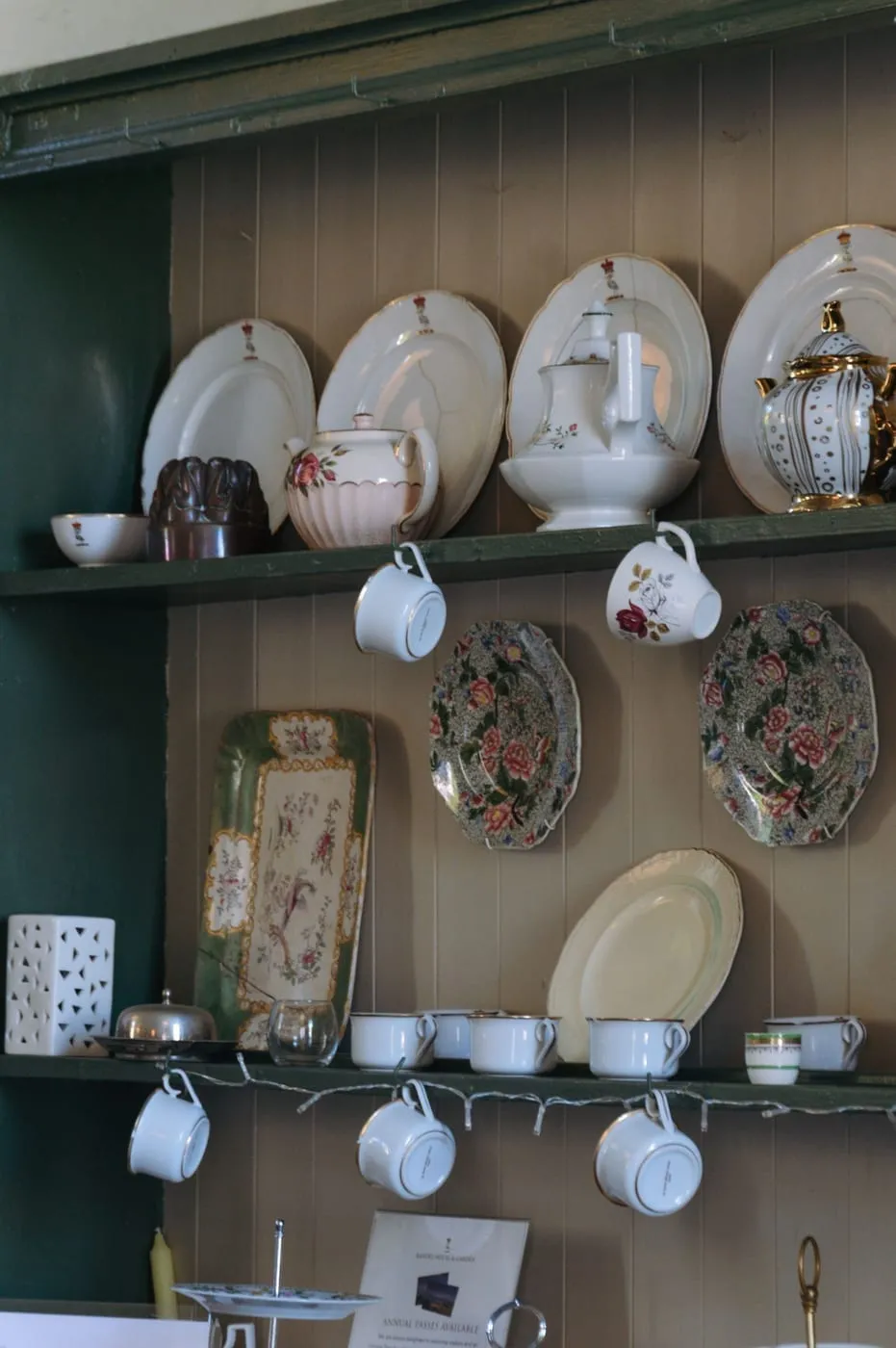
A vintage crockery display, mismatched plates arranged on a wall or open shelf, is the single most recognisable grandma core feature and can be built almost entirely from secondhand finds. Charity shop and Vinted plates typically cost £1-£4 each, so a wall of eight plates can cost under £20.
Plate hangers (small metal clips that let a plate sit flush against the wall) cost around £1-£2 each from Amazon UK or a hardware shop, and are the only tool you actually need beyond the plates themselves.
Mismatched patterns work better than a matching set here. Mix florals, stripes, and plain patterned plates in similar colour tones (blues and whites, or warm creams and terracottas) so the display feels collected over time rather than bought as a bundle.
A full plate-wall display of eight to ten mismatched plates typically costs £15-£40 when sourced from charity shops or Vinted, versus £50-£80 buying new patterned plates from Homesense or Dunelm.
6. What’s the Right Way to Add Brass Without It Looking Dated?
Brass accents work best in grandma core kitchens when used on hardware and small fixtures rather than large statement pieces, keeping the warmth without tipping into a fully retro renovation. Swapping cabinet handles is the cheapest, highest-impact brass update.
IKEA sells brass-effect cabinet handles from around £3 each, while a full set of six or eight for a small kitchen runs roughly £18-£24. Dunelm and B&Q both stock similar brass or antique-brass finishes in a similar price range.
Beyond handles, brass shows up well in light fittings, a kettle, small hooks for mugs, and picture frames for any wall art. Avoid brass worktops or large brass appliances, that reads as a full retro kitchen renovation rather than a decorative trend update.
- Brass cabinet handles: IKEA, from ~£3 each
- Brass mug hooks (set of 6): Amazon UK, ~£9
- Brass pendant light shade: Dunelm, ~£35
7. Should You Hang Doilies and Lace in a Modern Kitchen?
Doilies and lace textures work in a grandma core kitchen when used sparingly, as shelf liners, under a fruit bowl, or as a table runner, rather than draped everywhere. A pack of paper doilies costs under £3 and a fabric doily table runner from Dunelm is around £12.
Lace-edged tea towels and lace café curtains (a short curtain covering only the lower half of a window) are two of the more practical applications, since they add texture without permanently altering the room.
Most grandma core Pinterest boards over-index on doilies visually, but in a working kitchen they’re the hardest element to keep clean. Reserve fabric lace for low-touch areas like a display shelf, not worktops or near the hob.
- Paper doilies (pack of 50): Amazon UK, ~£3
- Fabric doily table runner: Dunelm, ~£12
- Lace café curtain: Homesense, ~£14
8. What Colour Palette Suits Grandma Core Best?
Grandma core kitchens lean warmer and more saturated than the earthy-neutral trend, typically pairing a cream or soft yellow base with one bold accent, red gingham, sage green, or dusty blue. Dulux Buttermilk (~£22 per 2.5L from B&Q) is a common base colour choice.
A cream or warm off-white wall gives the pattern-heavy textiles and displayed crockery somewhere calm to sit, so the room doesn’t feel overwhelming despite the amount of pattern involved.
If you’d rather build the palette from paint rather than accessories first, our earthy-neutral kitchen colour guide covers the base tones that pair well with a grandma core layer on top.
- Dulux Buttermilk 2.5L: ~£22 from B&Q
- Crown Country Cream 2.5L: ~£18 from B&Q
- Farrow & Ball Setting Plaster 2.5L: ~£59, a warm dusty pink accent option
9. Can You Get the Look on a Rental Kitchen?
Grandma core is one of the most rental-friendly trends going, because nearly every signature element is removable, curtains, tea towels, a plate rack, cabinet handle covers, and stick-on scalloped trim. None of it requires drilling into cabinetry or permanent alteration.
Command strips (from ~£5 for a pack at Dunelm) hold lightweight plate hangers and hooks without wall damage, and most tenancy agreements allow curtains and freestanding shelving without landlord sign-off — see our renter-friendly kitchen decor guide for more no-damage options.
For cabinet handles specifically, magnetic or adhesive brass-effect covers exist that clip over existing handles rather than replacing them, useful if your tenancy agreement restricts fixture changes.
- Command strips (pack of 12): Dunelm, ~£5
- Freestanding plate rack shelf: IKEA, ~£25
- Adhesive brass handle covers: Amazon UK, ~£10 for a set of 6
10. How Do You Avoid It Looking Like a Costume?
The most common mistake with grandma core is layering every element at once, gingham, doilies, brass, a full plate wall, scalloped trim, in a single small kitchen, which tips the room from “decorated” into “themed.” The kitchens that photograph best on Pinterest almost always show restraint, not maximalism.
Pick two or three signature elements rather than all five. A gingham curtain, a plate wall, and brass handles together read as a considered grandma core kitchen. Add doilies, lace, and a scalloped trim on top of that and it starts to feel like a stage set.
Leave some surfaces genuinely plain. A grandma core kitchen still needs negative space, on the worktop, on at least one wall, to let the patterned elements stand out rather than compete with each other.
11. What Should You Buy First on a Tight Budget?
If you’re building the look gradually, gingham textiles and a small plate display give the fastest visual return for the lowest spend, both are under £30 combined and instantly signal the trend. Brass handles are the second priority once budget allows.
A realistic staged budget looks like this: gingham tea towels and a tablecloth in week one (£18), five to eight secondhand plates and hangers in week two (£20-£30), and brass handles in week three (~£20). Total spend across three weeks: roughly £60-£70.
This staged approach also means you can stop at any point and still have a coherent look, rather than needing to buy everything at once for the room to make sense.
12. Priority Order: Building a Grandma Core Kitchen Step by Step
| Step | What to buy | Approx. cost | Where |
|---|---|---|---|
| 1 | Gingham curtains or tablecloth | ~£10-£16 | Dunelm, IKEA |
| 2 | Gingham tea towels | ~£8 | Dunelm |
| 3 | Secondhand plates (x8) + hangers | ~£15-£25 | Charity shop, Vinted |
| 4 | Brass cabinet handles | ~£18-£24 | IKEA, Dunelm |
| 5 | Scalloped shelf trim | ~£5-£12 | DIY or Etsy UK |
| 6 | Doily table runner | ~£12 | Dunelm |
| 7 | Brass mug hooks | ~£9 | Amazon UK |
| 8 | Freestanding plate rack | ~£25 | IKEA |
Total for the full look: roughly £102-£141, well within most kitchen decorating budgets and far cheaper than a renovation.
→ For a full budget kitchen refresh plan, see Kitchen on a Budget UK. → For general kitchen styling ideas, see Kitchen Decor Ideas UK. → If you’d rather explore the rustic, floral cousin of this trend, see Cottagecore Home Decor UK.
Frequently Asked Questions
Grandma core kitchen is a 2026 decorating trend built around gingham fabric, scalloped shelf edges, brass hardware, vintage crockery displayed on walls, and doily or lace textures. It's grown fast on Pinterest, driven by a wider return to warm, decorative, 'lived-in' interiors over minimalism.
No. Cottagecore leans rustic and floral, with dried flowers, exposed wood, and countryside imagery. Grandma core is more decorative and domestic, centred on gingham, brass, china displays, and doily textures — closer to a 1970s British kitchen dresser than a countryside cottage.
A full grandma core refresh, gingham textiles, a plate rack, brass handles, and a few vintage accessories, typically costs £100-£180 using Dunelm, IKEA, and charity shop or Vinted finds. Swapping cabinet handles alone starts from around £15 for a set of six from IKEA.
Charity shops, Vinted, and local car boot sales are the cheapest sources, with mismatched plates typically £1-£4 each. Homesense and Dunelm also stock new vintage-style patterned plates from around £4-£8 each if you want a faster, more curated result.