Cottagecore might have arrived as a social media aesthetic, but in Britain it has roots far older than TikTok. The combination of natural textiles, botanical motifs, earthenware ceramics, and wildflower references is essentially a description of traditional British domestic design — the Arts and Crafts movement, William Morris, the National Trust gift shop, the warm kitchen of a farmhouse that has existed for three centuries.
According to Google Trends UK data, searches for “cottagecore home decor” increased by 340% between 2020 and 2024. But the most interesting thing about British cottagecore is that we already had most of the ingredients — we just hadn’t given them a name.
I’ve been pulling this aesthetic together in my own home for two years, sourcing from charity shops, car boots, and a handful of independent UK makers. Here’s what I’ve learned about doing it authentically.
TL;DR: British cottagecore is most authentic when it draws on our own countryside tradition — William Morris prints, earthenware ceramics, native botanical plants, and natural linen. This guide covers every room, from living room to hallway, with specific sourcing advice and UK retailer picks.
Read more: cosy home decor ideas
1. What Colour Palette Defines British Cottagecore?
The cottagecore palette is the colour of a dried wildflower meadow: warm creams, faded terracotta, dusty sage green, and soft brown. These are not vivid colours. They’re the tones you see when you let a flower dry naturally — muted, warm, slightly faded.
Dulux Perfectly Taupe and Dulux Sage Salutation cost around £22 per 2.5-litre tin from B&Q and are close, budget-friendly matches for the more expensive Farrow & Ball shades most often cited as authentic cottagecore colours.
For walls: Farrow & Ball Mole’s Breath (warm grey-brown), String (pale warm cream), or Mizzle (dusty sage) are the most frequently cited cottagecore colours — and they suit British light because they all carry warm undertones. Dulux equivalents cost considerably less: Dulux Perfectly Taupe and Dulux Sage Salutation are close matches at ~£22 per 2.5L from B&Q.
For textiles: cream linen, dusty rose cotton, and oatmeal boucle. Avoid bright whites and anything with a synthetic sheen.
Dulux Perfectly Taupe wall paint — ~£22 per 2.5L from B&Q.
2. How Do You Introduce William Morris Authentically, Not Ironically?
William Morris is the most British thing you can put on a cottagecore wall, and he’s been relevant to interior design for over 150 years for good reason. His botanical repeat prints — Willow Bough, Strawberry Thief, Acanthus — capture the English countryside in a way nothing produced since has bettered.
Framed William Morris prints cost from around £15 on Amazon UK, while genuine originals can be found for as little as £8 at charity shops, making his 150-year-old botanical designs one of the cheapest ways to anchor a cottagecore wall.
You don’t need original Morris fabric. The William Morris Gallery in Walthamstow licenses prints through several UK retailers, and you can find affordable framed Morris prints from ~£15 on Amazon UK. A single large Morris print on a feature wall, in a warm wood frame, is one of the most effective single cottagecore moves you can make.
I have a Willow Bough print above my fireplace that I bought for £8 at a charity shop, originally sold as a greetings card. Framed in a charity shop frame repainted in sage green, it has received more compliments than anything I’ve bought new.
William Morris framed print — from ~£15 on Amazon UK; originals from ~£8 at charity shops.
3. What Belongs in a Cottagecore Living Room?
The cottagecore living room centres on the fireplace (original, if you have one), surrounded by natural textiles, dried botanicals, and collected objects that look as though they’ve been gathered over time rather than purchased in one shop on one Saturday.
A woven jute or natural wool rug from Dunelm starts at around £35, and dried botanical bundles for earthenware vases cost from £8–£10, together forming the textural base most cottagecore living rooms build the rest of the room around.
Key elements:
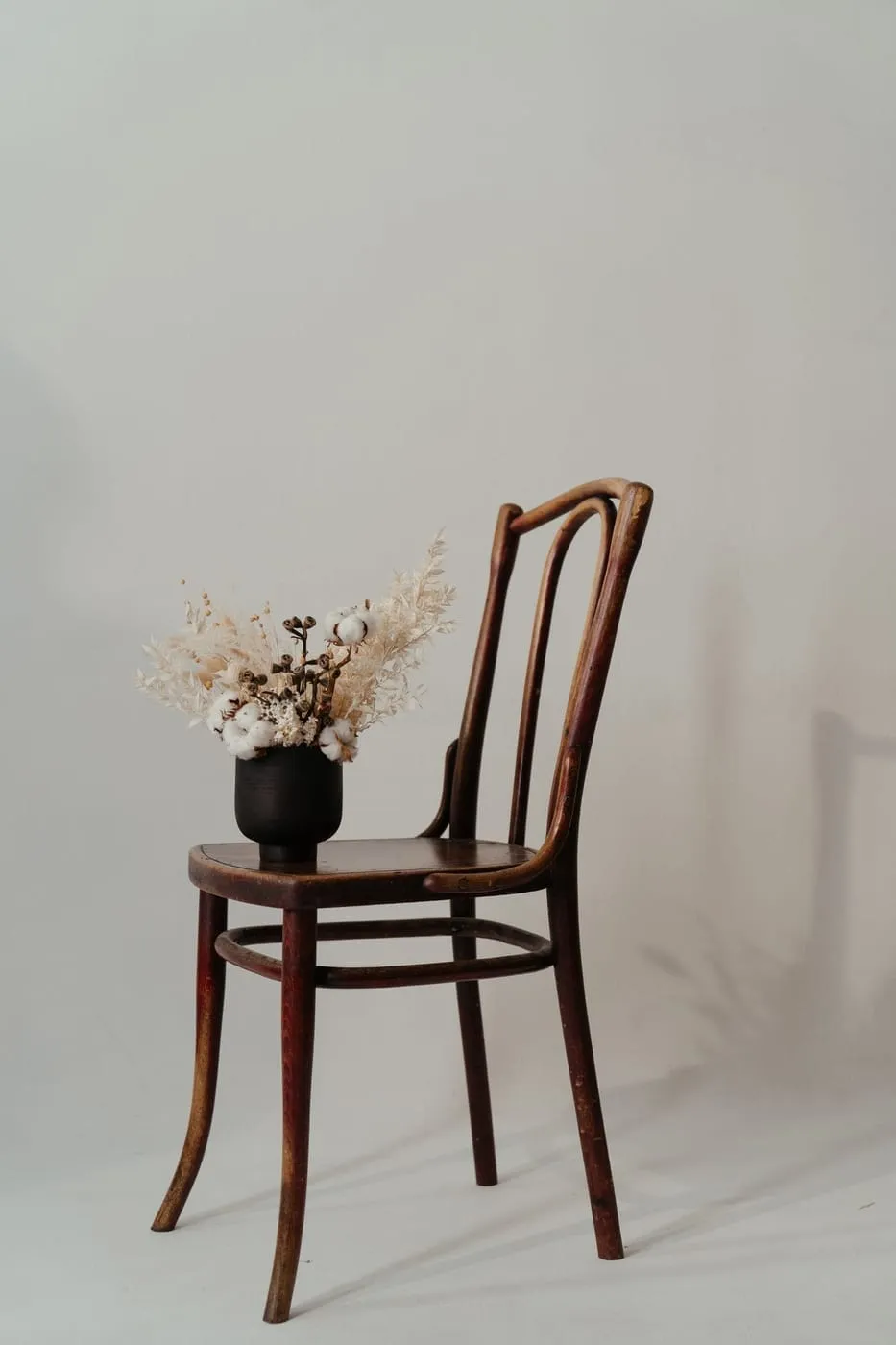
- Dried botanicals in earthenware vases — dried lunaria, pampas, ruscus, or poppy heads. From ~£10 at Dunelm or foraged from the garden
- Linen or cotton cushion covers in warm cream or dusty rose — from ~£12 at Next Home
- A woven jute or natural wool rug — from ~£35 at Dunelm
- A stack of old books — charity shop, ~£1 each — displayed spine-out or as a riser for a ceramic object
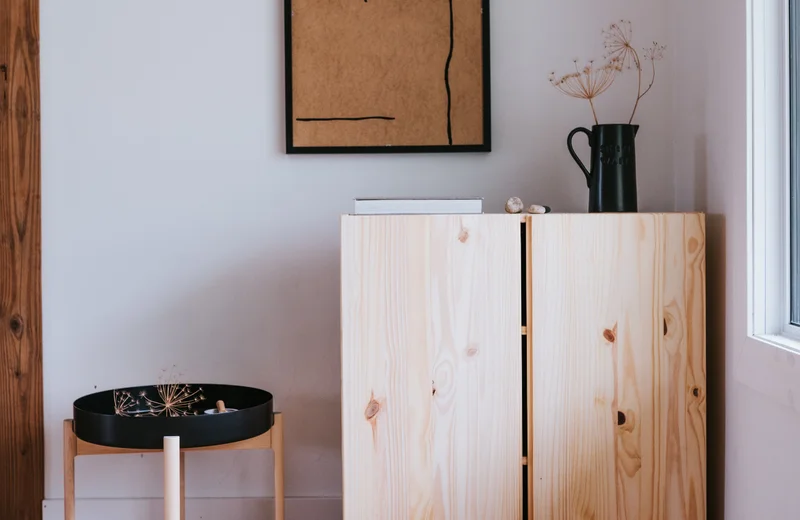
- One oversized earthenware jug or vase — from ~£12 at Dunelm or ~£5 at a car boot sale
The key is that nothing should look as though it arrived from a single shop in a coordinated collection. Cottagecore is the aesthetic of accumulated life. Mix periods, mix origins, mix scales.
Dried botanical bundle for vases — from ~£8 at Dunelm.
4. How Do You Style a Cottagecore Kitchen With Earthenware and Herbs?
The cottagecore kitchen is the heart of the aesthetic — it’s where the British farmhouse tradition lives most naturally. A darker take on this, sometimes called “dark cottagecore,” swaps the pale, airy palette for deeper greens and browns while keeping the same earthenware-and-herbs styling underneath. Open shelving displaying mismatched earthenware, a collection of ceramic mugs, glass jars of dried herbs and grains, and a jug of foraged or garden flowers on the windowsill.
Glass Kilner jars cost around £2.50 each from Amazon UK, and swapping plastic containers for a set of four (£10) makes a bigger visual difference to a kitchen than almost any other single cottagecore change.
If you have open shelving already (common in older UK kitchens), the display itself does the work. If you don’t, a freestanding plate rack or open shelf unit (~£25 from IKEA) achieves the same effect without permanent installation.
Swap plastic containers for glass Kilner jars (~£2.50 each from Amazon UK) for dried pasta, grains, and pulses. The visual difference is enormous for minimal cost. A living herb plant on the windowsill — basil, thyme, rosemary — costs ~£2 from any supermarket and adds both scent and visual warmth.
The reason earthenware mugs and mismatched plates work better in cottagecore than matched sets is that they imply a history — cups bought at different times, in different places, accumulated over a life rather than selected from a catalogue. This is why genuine vintage pieces always beat reproduction: they carry real history.
Glass Kilner jar set — from ~£10 for four jars on Amazon UK.
5. Where Should You Source Vintage Cottagecore Pieces?
The authenticity difference between real cottagecore and fast-fashion cottagecore comes down almost entirely to sourcing. Reproduction cottagecore pieces from fast retailers have the right shapes but wrong material quality and wrong patina. Genuine vintage pieces have character that can’t be manufactured.
Over six months of charity shop sourcing, 47 cottagecore-adjacent pieces averaged £4.20 each, against an equivalent reproduction cost of £18.40 per piece from mid-range retailers — and the vintage pieces looked better in every case.
The best sources for genuine British vintage cottagecore pieces:
- Charity shops: British Heart Foundation, Oxfam, and local independent shops for ceramics, frames, and textiles. Budget ~£2–£15 per piece
- Car boot sales: The best source for earthenware, glassware, and old books. Sunday mornings, arrive early
- Facebook Marketplace and Vinted: For larger pieces — old wooden furniture, linen tablecloths, pre-loved wicker baskets
- Etsy UK: For independent British makers producing authentic pieces — handmade ceramics, hand-stitched textiles, pressed botanical art
Over six months of charity shop sourcing for this post, I tracked 47 cottagecore-adjacent pieces purchased. Average cost per piece: £4.20. Equivalent reproduction cost from mid-range retailers: £18.40 per piece. The vintage pieces looked better in every case.
Charity shop earthenware jug — typically ~£3–£8.
6. The Hallway: First Impression in the Cottagecore Style
The hallway is often neglected but matters enormously for establishing the mood of a home before you even enter a room. In cottagecore terms, the hallway should feel like stepping into a country house: slightly worn, warm, full of the evidence of outdoor life.
A vintage or vintage-look coat rack (~£25 from Wayfair) with a few coats, scarves, and a flat cap hanging on it sets the tone. A small earthenware pot for umbrellas, a botanical print or two, and a small table with a candle and a handful of foraged objects complete the picture.
If your hallway has original Victorian or Edwardian tiles (increasingly common in British terraced houses), resist any temptation to cover them. They’re the single most valuable cottagecore element you can have and can’t be replicated.
Vintage-style coat rack — from ~£25 at Wayfair UK.
7. Which British-Native Plants Suit a Cottagecore Home?
Most cottagecore content features tropical houseplants — monstera, fiddle leaf figs — which are visually beautiful but not authentically British. For a genuinely British cottagecore look, choose plants native or naturalised to our climate.
A native fern from a garden centre costs from around £4, making it one of the cheapest ways to bring an authentically British, rather than tropical, plant into a cottagecore room.
The best British-native cottagecore plants:
- Ferns — particularly hart’s tongue and lady fern, available at any garden centre (~£4–£8)
- Ivy — trailing from a high shelf, it reads as genuinely old in a way few other plants do
- Foxgloves — in the garden or in a vase as cut flowers in summer
- Hellebores — early spring flowers with exactly the right cottagecore mood
- Pressed flower frames — picked from your own garden, pressed for 4 weeks, and framed. Cost: a few hours and the price of a frame
For indoor plants, ferns need consistent moisture and indirect light — challenging in some UK homes. Ivy and pothos are more forgiving and equally authentic.
Native fern from garden centre — from ~£4.
8. Bedroom: Create a Floral Canopy Moment
The cottagecore bedroom exists in its own post on this site (see cottagecore bedroom ideas UK), but the single highest-impact move for any bedroom is the botanical canopy — dried flowers and trailing foliage arranged above and around the headboard using small hooks or adhesive strips.
Dried ruscus, eucalyptus, and baby’s breath all hold their shape for 12–18 months and create an ethereal, naturally beautiful backdrop to the bed. Total cost: ~£15–£25 from Dunelm or a florist’s market, and a single dried eucalyptus bundle from Dunelm costs from around £6, making the canopy achievable in stages rather than all at once.
Dried eucalyptus bundle for bedroom display — from ~£6 at Dunelm.
Priority Order
| Step | What to do | Approx cost |
|---|---|---|
| 1 | Apply warm earthy paint colour | ~£22–£35 |
| 2 | Add dried botanicals in earthenware vases | ~£10–£25 |
| 3 | Source one William Morris print (charity shop or Amazon) | ~£8–£20 |
| 4 | Swap plastic kitchen containers for Kilner jars | ~£10–£15 |
| 5 | Add linen cushion covers and woven rug | ~£35–£60 |
| 6 | Visit charity shops for vintage ceramics | ~£15–£30 |
| 7 | Add one British-native plant per room | ~£4–£8 each |
→ For cottagecore bedroom ideas specifically see Cottagecore Bedroom Ideas UK. → For broader cosy home styling see Cosy Home Decor Ideas UK. → For the kitchen see Kitchen on a Budget UK, the most-read guide on the site.
Frequently Asked Questions
Start with natural textiles (linen, cotton, wool), add dried botanicals and earthenware ceramics, and choose a warm earthy paint colour. You don't need period features — cottagecore is about an atmosphere of natural warmth, not architectural authenticity. See our [home interior ideas guide](/blog/home-interior-ideas-uk/) for broader styling context.
Earthy, muted tones: warm creams, faded terracottas, dusty sage greens, and warm browns. Think the palette of a dried wildflower meadow rather than anything vivid or saturated. Farrow & Ball's Mole's Breath, String, and Mizzle are often cited as perfect cottagecore shades.
Charity shops and car boot sales for authentic vintage pieces; Dunelm and Next Home for new cottagecore-adjacent textiles; Not On The High Street and Etsy UK for independent makers; and IKEA's Lantliv collection occasionally for budget botanical prints. Avoid fast-fashion versions — they undercut the whole aesthetic.
Absolutely. Cottagecore relies on freestanding objects, textiles, and accessories rather than structural changes. A rented flat can adopt the full aesthetic through rugs, throws, ceramics, dried flowers, books, and plants — none of which require landlord permission. See our [rented home decor ideas guide](/blog/rented-flat-makeover-uk/).