Renting a UK flat usually means one rule above all others: don’t lose the deposit. TL;DR: every idea below is fully reversible. Peel-and-stick wallpaper (from £15, B&Q) covers a feature wall without touching the plaster. Picture rail hooks (~£4 for 10) replace nails in period flats. Command strips handle curtain poles, shelves, and wall lights. Freestanding furniture and layered rugs finish the room. None of it needs landlord sign-off, and all of it comes down cleanly on moving day.
I’ve rented five flats across three UK cities, and the living room is always the room I want to change most and am most nervous about touching. Tenancy deposit schemes exist to protect against damage, not decorating, but “damage” can mean anything from a badly patched nail hole to wallpaper glue on the plaster. The list below is built from what’s actually held up at check-out inspections, not just what looks good on Pinterest.
What Counts as a Deposit-Safe Change in a UK Rental?
A change is deposit-safe if it leaves the wall, floor, and fixtures exactly as they were, with no patching or repainting needed. Tenancy deposit schemes assess “damage beyond fair wear and tear”, and a change that peels or unscrews cleanly rarely falls into that category (TDS, 2025).
The three tests I use before trying anything new:
- Does it need a drill, or can it clip, hook, or stick on instead?
- Can I remove it in under ten minutes with no residue left behind?
- Would it pass a torch-lit inspection by a fussy letting agent?
If a change fails any of these, I skip it, no matter how good it looks in a photo.
How Do I Add Colour Without Painting a Rented Wall?
Peel-and-stick wallpaper on a single feature wall gives you a full colour or pattern change for around £15-£40 a roll, and it removes cleanly from sound painted plaster (B&Q, 2025). No paint, no primer, no landlord conversation needed.
I did this behind our sofa in a Manchester flat, a soft sage botanical print from B&Q, and it transformed the whole room for about £45 across three rolls. I tested a corner behind the sofa first and left it a week before committing to the full wall, since some plaster takes adhesive better than others.
Where to buy: B&Q, Wilko, and Amazon UK all stock peel-and-stick ranges from £15 a roll. Choose a matte finish over a textured one; textured surfaces sometimes leave faint marks on removal.
A few things I’ve learned the hard way:
- Apply to a clean, dry, painted wall, never over fresh paint (wait at least four weeks after any repaint)
- Peel off slowly at a low angle, not straight outward
- Keep offcuts in case a corner lifts and needs re-sticking later
Can You Hang Pictures Without Drilling in a UK Flat?
Yes, and in many period conversions you already have the tool built into the room. Picture rail hooks (~£4 for a pack of 10, Amazon UK) clip over an existing picture rail and hang pictures on cord, with zero holes in the plaster.
Victorian and Edwardian flats across the UK were built with a picture rail as standard, a moulded strip running near the ceiling. If your flat has one, it was designed for exactly this. Clip a hook over the top, run picture cord or chain down to your frame height, and adjust the length whenever you rearrange.
No picture rail? Command picture hanging strips (~£8 for a set) hold frames up to about 7kg and remove without marking painted plaster, provided you follow the pull-tab removal method rather than yanking straight off. For a fuller approach to arranging frames this way, see our renter-friendly gallery wall ideas UK.
How Do I Hang Curtains Without Drilling Into a Rental Wall?
A tension rod fitted inside the window recess (£10-£15, Amazon UK) needs no fixings at all and holds standard curtains without any wall contact. For a wider pole outside the recess, Command curtain rod brackets (£12) use adhesive strips rated to hold several kilograms.
I switched from a drilled curtain pole to Command brackets in my current flat and honestly can’t tell the difference day to day. The brackets sit flush against the wall and the pole slots straight into them, same as a fixed bracket would.
Weight matters here. Heavy blackout or lined curtains push close to the limit of what adhesive strips can hold, so check the weight rating on the packaging before committing. Lighter voile or unlined curtains are the safest match for Command-style fixings.
Should You Buy Freestanding or Fitted Furniture in a Rented Living Room?
Freestanding furniture wins every time in a rental, because it moves with you and needs no wall fixing at all. Fitted shelving units and built-in TV cabinets are landlord territory, and even landlord-approved versions can’t travel to your next flat.
A freestanding bookcase, a console table on legs instead of a wall-mounted media unit, and a set of stacking storage cubes all do the job a fitted unit would, minus the commitment. IKEA’s KALLAX and BILLY ranges (from around £40-£90) are the obvious UK renter defaults for exactly this reason.
Most rental advice pushes wall-mounted storage as the “space-saving” option, but in practice freestanding furniture on slim legs frees up more usable floor space, because it lifts clutter off the ground entirely rather than fixing it at eye level where it visually crowds the room.
For the layout and styling side once your furniture is sorted, our guide on how to style a living room UK covers arrangement and proportion in more depth.
How Do You Get Better Lighting Without Rewiring a Rental?
Plug-in wall lights (~£20-£35, IKEA or Amazon UK) give you the visual effect of a hardwired wall light using nothing but a standard socket, and most models come with a cable-tidy clip to run the flex discreetly along the skirting.
British landlords are understandably strict about anything touching the electrics, and rightly so. A plug-in sconce with an in-line switch solves this completely: mount the fitting with Command strips or a small screw-free bracket, and plug the cable into a nearby socket.
Layer three light sources instead of relying on the overhead pendant alone:
- A plug-in wall sconce for ambient wall-washing light
- A floor lamp with a warm bulb (2700K) near the sofa
- Fairy lights or a small table lamp for lower, cosier evening light
This layered approach is one of the cheapest ways to make a rented living room feel considered rather than just lit.
What’s the Cheapest Way to Cover a Worn Rental Carpet?
Layering two rugs, a large budget base rug (£30-£50, Wilko or IKEA) topped with a smaller textured rug, covers stained or worn carpet for under £80 total, with nothing attached to the floor.
Most UK rentals have carpet that’s seen a few tenants before you, and stains, flattened patches, and dated colours are common. Rather than trying to fix the carpet itself, which risks a dispute over “improvements”, cover it.
The layering trick that actually looks intentional: put the large rug down first to anchor the seating area, then add a smaller rug with texture, a jute weave or a faux sheepskin, offset slightly rather than centred. This reads as a styling choice rather than a cover-up, even though it’s doing double duty.
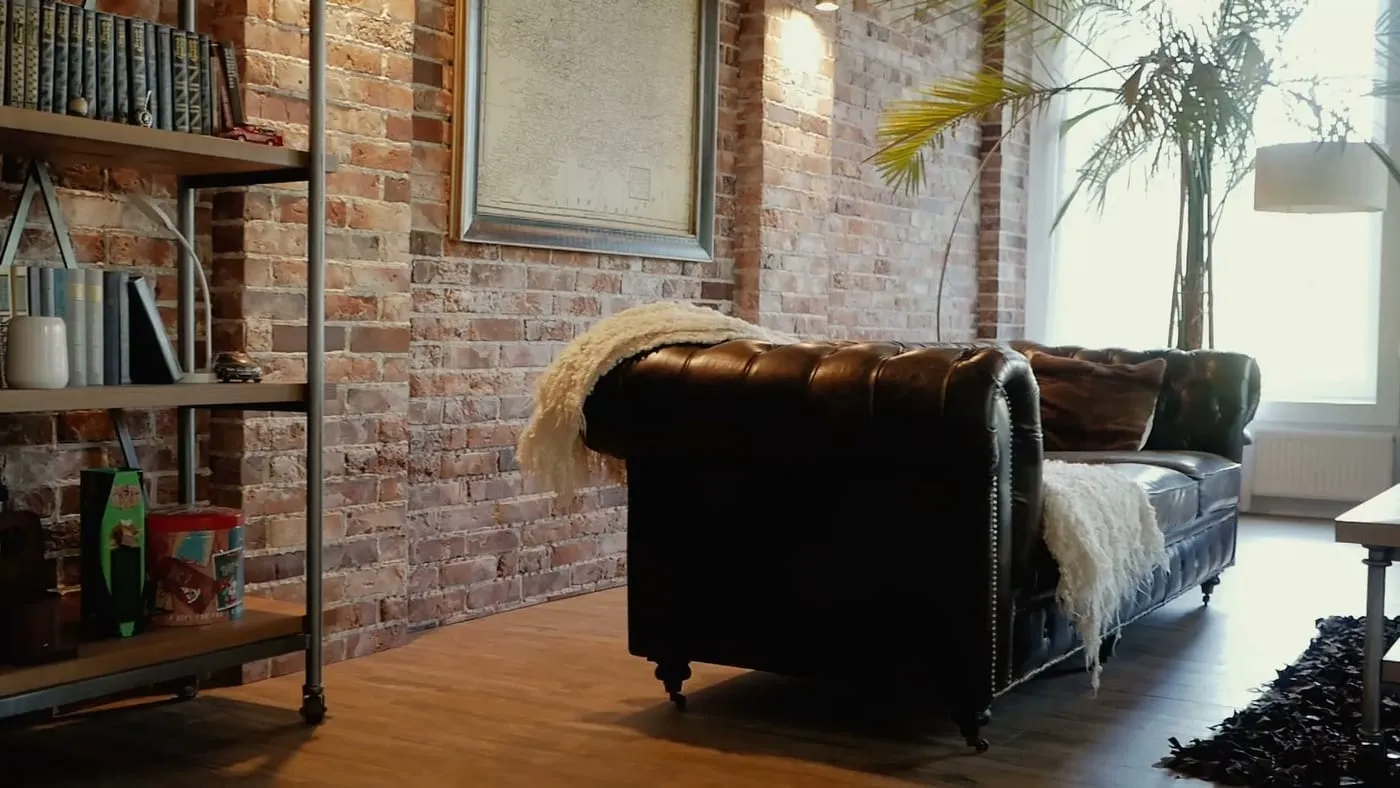
Deposit-Safe Living Room Changes at a Glance
| Change | Typical Cost | Deposit-Safe |
|---|---|---|
| Peel-and-stick wallpaper (one wall) | £15-£45 | Yes, on sound painted plaster |
| Picture rail hooks | ~£4 for 10 | Yes, no wall contact |
| Command picture strips | ~£8 | Yes, if pull-tab removed properly |
| Tension rod curtains | £10-£15 | Yes, no fixings |
| Command curtain brackets | ~£12 | Yes, up to rated weight |
| Freestanding furniture | £40-£90+ | Yes, no fixing at all |
| Plug-in wall lights | £20-£35 | Yes, no rewiring |
| Layered rugs | £30-£80 | Yes, nothing attached |
| Painting a whole wall | £20-£40 | Only with written landlord permission |
| Drilled shelving | £15-£30 | No, needs permission and repair |
Across the two flats I’ve fully redecorated this way, the total spend on all the changes above came to roughly £220, compared with an estimated £400+ quote I got for a professional accent wall and curtain pole install in the first flat, and every item came with me to the next tenancy.
Frequently Asked Questions
How can I decorate my rented living room without losing my deposit?
Stick to reversible changes: peel-and-stick wallpaper (£15 a roll), picture rail hooks (£4 for 10) instead of nails, Command strips for curtain poles and shelves, and freestanding furniture instead of anything fixed to the wall.
Can I put up curtains in a rented flat without drilling?
Yes. A tension rod (£10-£15) fits inside most window recesses with no fixings at all, and Command curtain rod brackets (£12) hold a standard pole using rated adhesive strips.
What is a picture rail and can I use it to hang things? A picture rail is a moulded wooden strip near the ceiling, common in Victorian and Edwardian UK flats. Rail hooks (~£4 for 10) clip over it and hang pictures on cord, with zero holes in the wall.
Do peel-and-stick wallpapers actually come off cleanly when you move out? Good quality peel-and-stick wallpaper, applied to sound painted plaster, removes cleanly in most cases if peeled slowly at a low angle. Test a small corner behind furniture first.
How do I cover a worn or stained rental carpet cheaply? Layer a large budget rug (£30-£50) over the worn area, then add a smaller textured rug on top. This costs under £80 and hides stains without touching the landlord’s flooring.
Every change on this list shares the same test: does it come off clean, and does it come with you? Start with whichever bothers you most, the bare wall, the flat lighting, or the tired carpet, and work through the rest as your budget allows. None of it needs a conversation with your landlord, and all of it travels to your next flat.
Related reading you might find useful:
- Renter-friendly gallery wall ideas UK for hanging art without drilling, in more detail
- How to style a living room UK once the deposit-safe basics are in place
- Kitchen on a budget UK for the same renter-safe approach in the kitchen
- Deposit Deductions UK: What Landlords Actually Charge For for what actually happens if any of this goes wrong at check-out
Frequently Asked Questions
Stick to reversible changes: peel-and-stick wallpaper (~£15 a roll), picture rail hooks (~£4 for 10) instead of nails, Command strips for curtain poles and shelves, and freestanding furniture instead of anything fixed to the wall. All of these come off cleanly at check-out.
Yes. A tension rod (~£10-£15, Amazon UK) fits inside most window recesses with no fixings at all. For a wider rail, Command curtain rod brackets (~£12) hold a standard pole using adhesive strips rated for several kilograms.
A picture rail is a moulded wooden strip near the ceiling, common in Victorian and Edwardian UK flats. Rail hooks (~£4 for a pack of 10, Amazon UK) clip over the top and let you hang pictures or shelves on cord, with zero holes in the wall.
Good quality peel-and-stick wallpaper, applied to sound painted plaster, removes cleanly in most cases if you peel it slowly at a low angle. Test a small corner behind furniture first, and avoid applying it directly over fresh or flaking paint.
Layer a large budget rug (£30-£50, Wilko or IKEA) over the worn area, then add a smaller textured rug on top for depth. This costs under £80 total and hides stains, wear patches, and dated carpet colours without touching the landlord's flooring.