Most living rooms in the UK share the same problem: they were furnished in stages over several years, with individual pieces chosen without much reference to each other, and styled by someone (usually us, usually late on a Sunday) who just kind of placed things where they fit.
This is the general styling guide for any living room. If space is the actual constraint, see Small Living Room Ideas UK; if it’s specifically furniture arrangement and floor plan you’re stuck on, see Small Living Room Layout Ideas.
The result is a room that has everything it needs but doesn’t quite feel like a room. It feels like a collection of objects waiting to become one.
Styling a living room properly isn’t about buying more things — the “vibey” living room look everyone’s chasing right now comes from layering, not shopping. It’s about understanding the order of layers — what goes first, what responds to what, and where the eye should travel. Once you understand the sequence, it becomes logical rather than overwhelming.
I’ve styled and restyled my own living room several times, and I’ve helped friends do the same. Here’s the process that works.
TL;DR: Style in this order: focal point, furniture layout, rug, curtains, lighting, textiles, shelves and surfaces, plants. Each layer informs the next. The whole thing can be done in a weekend and doesn’t require a single new purchase if you already have the basics.
1. How Do You Identify or Create Your Focal Point?
Every successful living room has a focal point — the visual anchor the eye finds first when you walk in. Styling flows from it.
In British living rooms, this is often already decided for you: the original Victorian or Edwardian fireplace, if you’re lucky enough to have one, is the natural focal point of the room. Arrange everything else in relation to it.
If you don’t have a fireplace, or if the TV is on the opposite wall, you need to make a choice. In most living rooms the focal point is one of three things:
- The fireplace — even if non-functional, it reads as the room’s anchor
- A large piece of art — a single oversized print or painting on the main wall
- A well-styled media wall or TV unit — if the TV is genuinely the centrepiece
Trying to have two focal points (fireplace on one wall, large TV on another) creates visual competition that makes the room feel tense. Decide on one and let everything else support it.
2. What Furniture Layout Rules Actually Work?
The biggest layout mistake in British living rooms is pushing all the furniture against the walls. It feels like the logical thing to do in a small room — surely it creates more floor space? — but it actually makes the room feel like a waiting area.
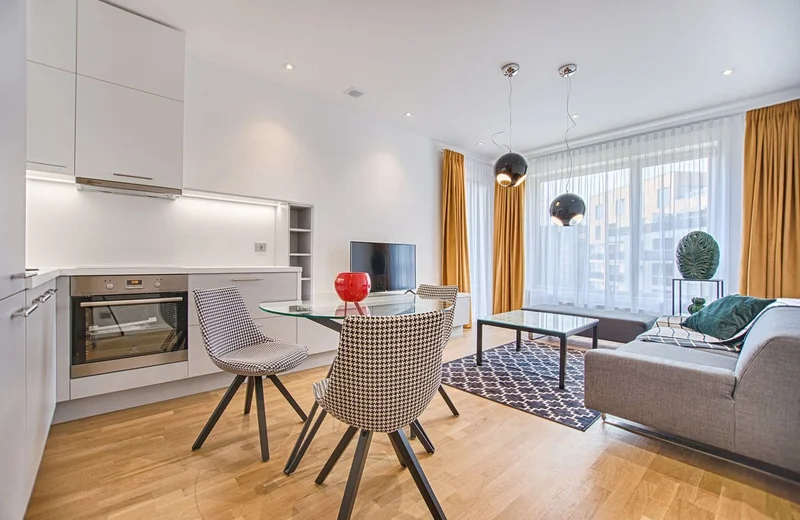
Furniture that floats slightly away from walls creates a sense of intimacy and conversation. Even pulling the sofa just 30–40cm from the wall is a small change that turns a room reading as a waiting area into one that feels intimate and conversational.
The basic layout for most UK living rooms:
- Main sofa facing or angled toward the focal point
- Accent chair or chairs at roughly 90 degrees to the sofa, creating a conversation triangle
- Coffee table centred within the seating arrangement, close enough to reach without stretching
- Side tables within arm’s reach of each seating position
For small rooms specifically, see our small living room layout ideas guide for layouts that maximise space without sacrificing the lived-in feeling.
The traffic flow test: Once furniture is placed, walk the natural path from the door to the sofa to the window to the kitchen. You should be able to move through the room without squeezing or navigating around pieces. If you can’t, something needs to move.
3. The Rug: Your Most Important Styling Purchase
After the sofa, the rug is the most impactful piece in a living room. And it’s the piece most people get wrong — specifically, they buy one that’s too small.
The rule: The rug should be large enough that at least the front two legs of every piece of seating sit on it. Ideally, all four legs of all pieces sit on it. A rug that sits only in front of the sofa — with chairs floating on bare floor beside it — reads as disconnected and wrong.
Rug sizing guide:
- Small living room: 160 x 230cm minimum
- Medium living room: 200 x 290cm or larger
- Large living room: 240 x 340cm
A large rug sized at least 200 x 290cm for a medium living room — from around £65 at Wayfair UK up to £195 for IKEA’s STOCKHOLM range (170 x 240cm) — grounds the whole seating area rather than leaving chairs floating on bare floor, and makes the room feel more expansive rather than smaller.
Colour: The rug doesn’t need to match your sofa — it needs to share at least one or two tones with the room’s overall palette. A patterned rug can do a lot of the colour work in a room where walls and furniture are kept neutral.
4. How High and Wide Should Curtains Be Hung?
Curtains do two things in a living room: they control light and privacy, and they make the ceiling feel higher.
The mistake most people make is hanging curtains just above the window frame. Always hang curtains as close to the ceiling as possible — or at least 15–20cm above the top of the window frame — and extend the pole 20–30cm beyond the window on each side. This makes the window look larger and the ceiling feel higher.
This is a near-free change that makes both the window and the ceiling read as larger.
What to buy: Ready-made lined curtains from IKEA, Dunelm, or Next Home are all good. IKEA’s METIS or MAJGULL ranges are very affordable; Dunelm’s made-to-measure curtains offer better value for unusual window sizes. Linen or linen-look fabric reads best in most British living rooms.
Length: Curtains should skim the floor or just touch it. Curtains that hang halfway down the wall between the window and the floor look awkward and unfinished.
5. Lighting: The Layer You Probably Skip
Most British living rooms rely on a single overhead light. This is the fastest way to make a room feel flat, cold, and uninviting — particularly in the evening, when overhead lighting creates shadows and washes out colour.
Layer your lighting in three types:
Ambient lighting: The general light in the room. Ideally from a ceiling pendant on a dimmer rather than a bare bulb.
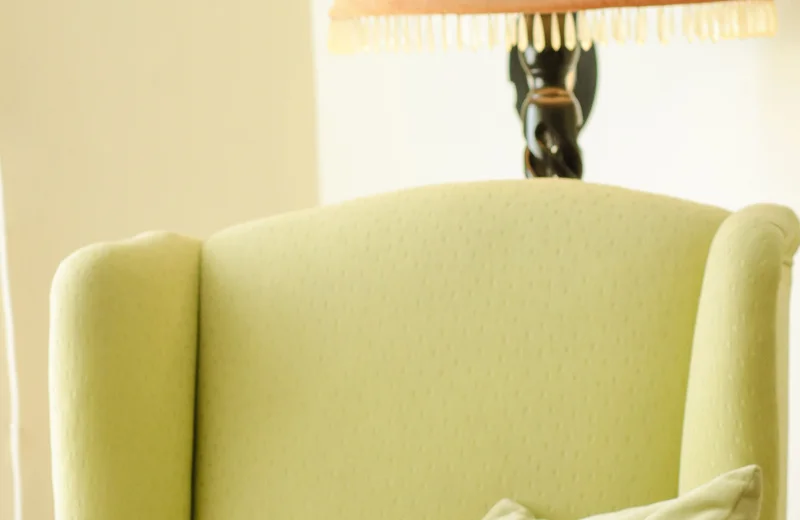
Task lighting: For reading and close work. A floor lamp beside a chair, a table lamp beside the sofa. At least two task sources in any living room.
Accent lighting: Purely atmospheric. Fairy lights behind the sofa, a small lamp on a shelf, candlelight in the evening.
All bulbs should be 2700K warm white — this is non-negotiable. Cool white bulbs (4000K or above) make even warm paint colours look grey and cold.
A good floor lamp from Dunelm starts at around £35–£45, and a pair of matching table lamps can be found for under £30 each — enough to replace a single overhead light with the layered warm sources that make the single highest-impact lighting change you can make to a living room.
6. How Do You Layer Cushions and Throws?
Textiles are where a room gets its character. A sofa with nothing on it looks like it’s waiting to be returned to the shop. The same sofa with four or five cushions and a throw draped over one arm looks like a room where someone lives happily.
Cushion formula: For a three-seat sofa, use five cushions: two matching large ones at either end, two smaller contrasting ones slightly inset, and one different accent cushion in the centre. Five works better than four (odd numbers read better) and better than six (too arranged).
Throw formula: A throw should look draped, not folded. Lay it across one arm and a third of the seat, or fold it loosely over the back corner. The goal is effortless, not organised.
Colour discipline: Textiles should share your room’s palette — not match perfectly, but sit within the same colour family. Two or three tones, in different materials and textures: velvet, cotton, wool, linen.
Dunelm’s cushion and throw range is the best value in the UK for this. You can build a complete textile layer for under £60.
7. Shelves and Surfaces: The Rule of Three
Every shelf and surface in your living room is an opportunity to add character or create clutter. The difference is in how you group things.
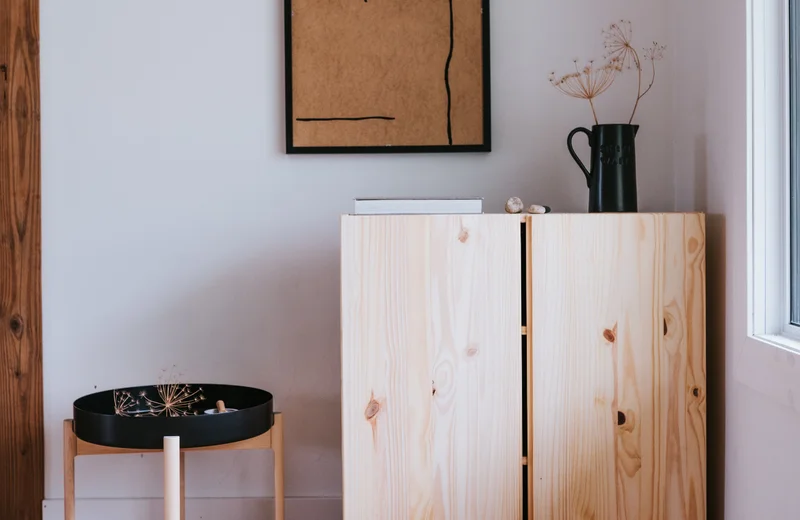
The rule of three: Group objects in threes, at varying heights. A tall vase, a medium candle, a small ceramic figure. A stack of three books, a plant on top of the stack, a small object beside it. Odd numbers read as more natural than even ones; varying heights create visual movement.
Every surface needs a breathing space: Even if you love a maximalist aesthetic, each surface should have at least one clear area. This is what separates a styled surface from a dumping ground.
Books as objects: Don’t underestimate books as decorative elements. Stack them horizontally, arrange them by colour spine-out, or use them as plinths for smaller objects. They add warmth and personality that bought decorative objects often can’t match.
8. Why Are Plants the Living Layer?
Plants are the final layer and the one that makes a styled room feel alive rather than arranged. A living room without any plants or greenery has a slightly static quality — everything is permanent and fixed.
Start with one large plant (a snake plant or bird of paradise for lower-light rooms, a fiddle-leaf fig for brighter rooms) and two or three smaller ones. Place the large plant in a corner to fill vertical space; smaller ones on shelves and windowsills.
Terracotta pots universally improve the look of plants in a living room. Plastic pots, however practical, undercut the warmth of the overall styling.
Local garden centres and IKEA both offer good value on common houseplants. The RHS recommends snake plants (Sansevieria) as one of the best plants for British light conditions — they tolerate low light, irregular watering, and central heating better than almost anything else.
Priority Checklist
| Step | What to do | Approx cost |
|---|---|---|
| 1 | Identify or establish your focal point | £0 |
| 2 | Rearrange furniture away from walls, test traffic flow | £0 |
| 3 | Buy a large rug — front legs of all seating on it | ~£65–£195 |
| 4 | Re-hang curtains close to ceiling, wide of window | £0–£15 (extra pole brackets) |
| 5 | Add a floor lamp + at least one table lamp, warm bulbs | ~£45–£90 |
| 6 | Style cushions (5 for 3-seat sofa) and add a throw | ~£40–£65 |
| 7 | Restyle shelves using rule of three | £0–£20 (charity shop objects) |
| 8 | Add one large plant in a terracotta pot | ~£15–£30 |
→ For colour palette decisions see Living Room Colour Schemes That Work in British Light. → For small living room layout challenges see Small Living Room Layout Ideas. → For a cleaner, pared-back take on the same principles, see Modern Home Interior UK. → Need ideas across the whole house, not just the living room? See Home Decor Inspiration UK. → Ready for the kitchen? Kitchen on a Budget UK is the most-read guide on the site.
Living Room Guides for Every Style and Situation
Want to go deeper on one part of the room, or apply a specific style once the fundamentals above are in place? These cover it in full:
- Living Room Lighting Ideas for UK Rentals (No Rewiring) — the full version of step 5’s lighting layer
- 11 Small Living Room Ideas UK — space-specific inspiration if your room is genuinely tight
- Small Living Room Storage Ideas UK (No Fitted Furniture) — for rooms that need to double as storage
- Small Living Room on a Budget UK: Under £150 Refresh — if the £65–£195 rug budget above is too high right now
- Renter-Friendly Living Room Ideas UK (No Permission) — every idea here confirmed deposit-safe
- Scandi Living Room Ideas for UK Homes — a specific, pared-back style direction
- Soft Minimalism Living Room Ideas for UK Homes — a warmer alternative to strict Scandi minimalism
- Maximalist Living Room Decor UK — the opposite direction, for rooms built around pattern and colour
- Opera-Inspired Living Room Ideas UK — a bold, dramatic style direction for a room with real character
- Afrobohemian Decor Ideas for UK Homes — warm textures and pattern with a global, cultural throughline
Doing the whole flat? Rented Flat Makeover UK applies the same deposit-safe principles to every other room.
Frequently Asked Questions
Start with your focal point and arrange furniture around it. Add a large rug, then window treatments, then lighting, then soft furnishings. Complete with shelf displays and plants. See our [living room ideas guide](/blog/small-living-room-ideas-uk/) for specific inspiration.
For most UK living rooms: sofa facing the focal point (fireplace or TV), two chairs at angles to create conversation, a coffee table in reach of seating, and a rug underneath all front legs. Avoid pushing all furniture against the walls — the room reads as a waiting room rather than a living space.
Three things make the biggest difference: consistent warm lighting, a deliberate colour palette that runs through every element, and grouped displays on shelves and surfaces rather than scattered objects. Throw in good curtains hung close to the ceiling and the room looks significantly more elevated.
A tall floor lamp is the best corner use in most living rooms — it adds height, anchors the corner, and provides essential ambient light. Alternatives: a tall plant, a corner shelf unit, or (in a large room) a reading chair with a side table and lamp.