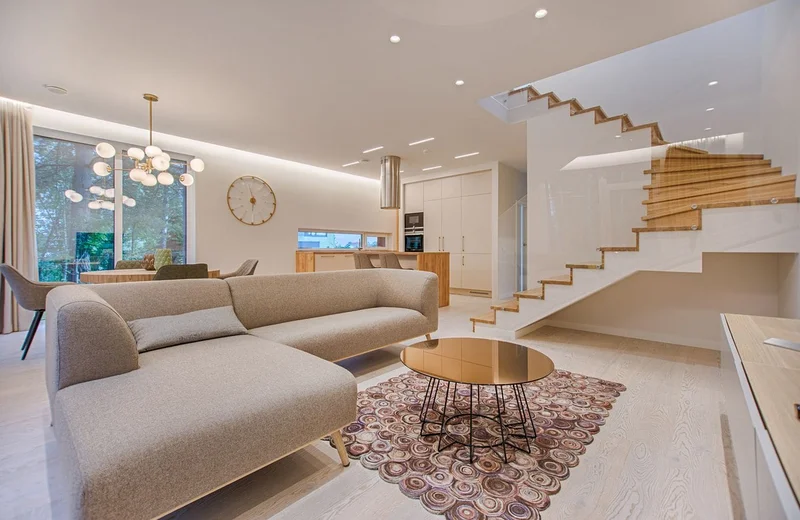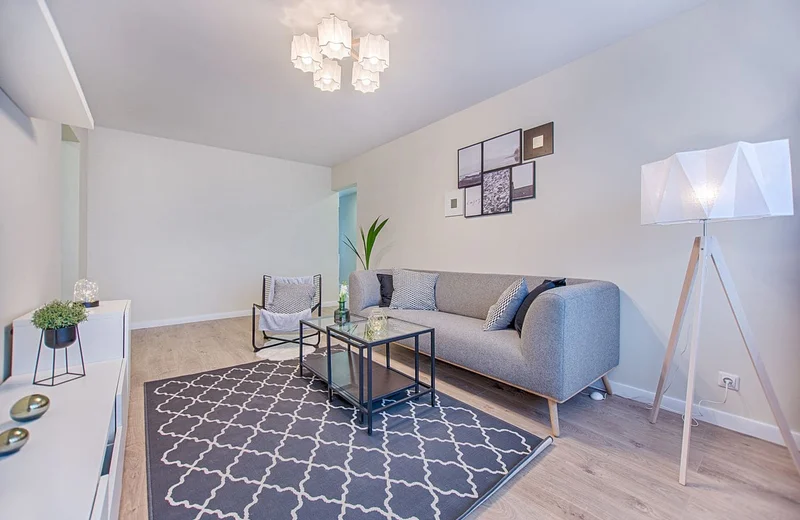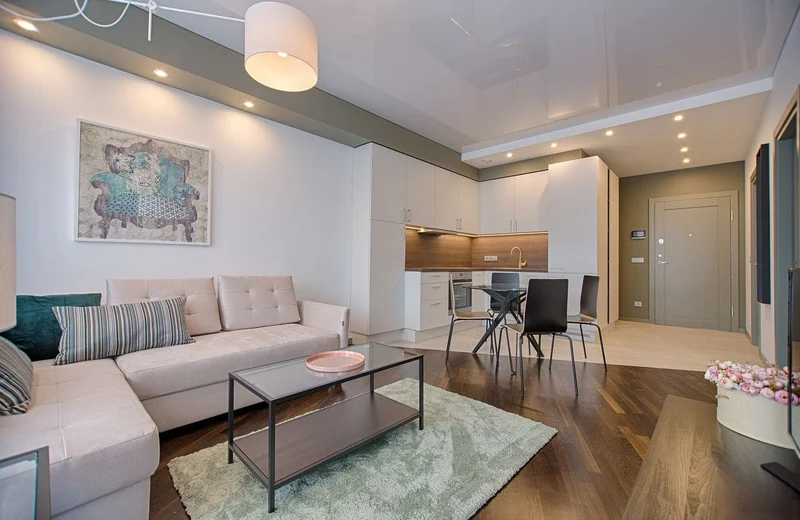
There’s a specific frustration that hits when you spend an hour on Pinterest saving beautiful rooms, only to look up at your own living room and feel like you’ve been deceived. The light is different. The rooms are bigger. The ceilings are taller. There’s a utility room that the size of your actual living room. None of it translates.
This guide is about where to find good inspiration, not room-by-room ideas themselves. For the general framework, see Home Interior Ideas UK.
Most home decor inspiration online is American, or styled for American audiences. That’s not a criticism — it’s just geography. But British homes have specific conditions: smaller rooms, older buildings, grey northern light, radiators that take up wall space, sash windows that limit curtain options, original features that need to be worked with rather than around.
Good inspiration should start from the same conditions you’re working in.
I’ve spent years filtering out the irrelevant and finding the sources that actually help. Here’s what I’ve found.
TL;DR: Prioritise UK-specific sources — British interior magazines, UK Instagram accounts, and real homes rather than styled shoots. When using international sources like Pinterest, always filter your searches to surface UK content. And start with your own street: houses similar to yours, already solved, are your most useful reference. For a complete walkthrough of British interior style principles, see our home interior ideas guide.
1. Why Is Your Own Street Your Best Starting Point?
Before opening any app or magazine, walk slowly down your own street and look at what your neighbours have done. Peer through bay windows (discreetly), notice curtain choices, observe how people have handled original features.
This sounds banal, but it’s genuinely the most practical starting point because the houses on your street share your exact conditions: the same orientation, the same light quality, similar room sizes, and — if it’s a Victorian or Edwardian terrace — the same architectural bones.
When I was deciding what to do with my bay window, I walked the road first. Half the houses in my street have the same window. Some had curtains that worked; some had ones that didn’t. Seeing them in situ, in our specific light, told me more than an hour of Pinterest ever could.
Look specifically at: how people have handled the bay window, what colour they’ve painted the front (often a clue to interior palette), whether they’ve kept original features, and how they’ve handled the challenge of making a terrace feel like a home rather than a rental.
2. Which British Interior Magazines Are Worth Your Time?
The UK has some of the best interior design publishing in the world — and yet most people looking for inspiration default to American-skewed social media.
The magazines that consistently show real British homes:
House & Garden is the high end of British interior publishing — often aspirational beyond most budgets, but an excellent source for understanding how period features are handled well, and for seeing what serious interior designers do with British light and British homes. Their Instagram (@houseandgarden) is free and updated daily.
Livingetc leans more contemporary and modern, with a strong focus on smaller spaces, which suits British homes well. Good for flat and terrace ideas.
Homes & Gardens sits in the middle — real homes, achievable budgets, genuine British context. Their website has an excellent free archive.
Real Homes magazine is specifically focused on real UK homes rather than aspirational shoots — houses that look like the ones people actually live in, with budgets that reflect reality. Their Instagram (@realhomesmag) is particularly good for this.
All four have strong free content on their websites and social channels before you commit to any subscription.
3. Instagram Accounts Worth Following
Instagram is arguably better than Pinterest for UK home inspiration because you can filter by account rather than relying on algorithm-served content.
Accounts that consistently show British homes:
- @houseandgarden — aspirational, but British
- @livingetc — contemporary UK interiors
- @realhomesmag — achievable real homes
- @dunnandcompany — British interior designer with excellent project content
- @farrow_and_ball — useful for seeing paint colours in real British rooms
The hashtags that filter to UK content:
- #ukhome
- #britishhome
- #victorianterrace
- #ukinterior
- #britishinterior
Using these hashtags in your searches rather than generic ones like #livingroomdecor surfaces content from people living in similar homes, dealing with similar constraints, at similar budgets.
4. How Do You Use Pinterest Properly for British Homes?
Pinterest is a genuinely useful tool if you use it with intention rather than letting the algorithm serve you whatever is most popular globally.
The key adjustment: Don’t search for “[style]”. Search for “[style] UK home”, “[style] Victorian terrace”, or “[style] small British living room”. The specificity filters out a huge amount of irrelevant American content and surfaces boards created by or for people in similar homes.
Building a useful inspiration board:
Create separate boards for each room, and within each board, section by topic: colour, textiles, lighting, furniture. When you save something, ask: would this actually work in a room of my size and light? If not, save it to a separate “aspirational but irrelevant” board and come back to it when you’ve moved somewhere with higher ceilings.
One more filter: Look at the window treatment in any photo you save. If the window is floor-to-ceiling glass, the room is likely in a country with more light than ours. If the window is a sash, a casement, or a bay, the room is probably British — and far more directly applicable to your situation.
5. The Grand Designs Back Catalogue
If you have Channel 4’s streaming service (which is free in the UK), the Grand Designs archive is one of the most useful collections of British interior inspiration available.
Not for the self-builds — those are often beyond any realistic budget or situation — but for how the show documents the way light works differently in different British conditions, how period features are preserved or transformed, and how rooms that start as blank boxes develop character over time.
The episode discussions about paint colours, material choices, and how rooms will read in British light are genuinely educational. Kevin McCloud’s commentary, for all its tendency toward the dramatic, comes from real knowledge of British architecture and interior design.
6. How Do You Adapt International Trends for British Conditions?
When you do find inspiration from non-British sources, the adaptation is almost always the same in three ways.
68% of UK homeowners rank their home’s period features as its most important asset (Which? Magazine, 2024), and typical American rooms run 20–30% larger than British ones — two reasons colour warmth and scale are the adaptations that matter most.
Colour: Shift warmer. What looks beautiful in a Californian room flooded with direct sunlight will look grey and cold in a north-facing British living room. If a room you love uses cool sage, try warm sage instead. If it uses pale grey, try warm greige. The principle applies consistently.
Scale: Reduce. Most American interior design assumes rooms 20-30% larger than typical British equivalents. A grand statement sofa that anchors a large American room might overwhelm a typical UK sitting room. When you see a scaled furniture arrangement you like, ask: would this work in a room that’s one third smaller?
Architecture: British homes have features that American interiors rarely deal with — fireplaces, coving, picture rails, sash windows, bay windows, radiators. Good British interior inspiration works with these features. International inspiration often ignores or removes them.
Which? Magazine’s 2024 home improvement survey found that 68% of UK homeowners feel their home’s period features are its most important asset — a figure that underlines how deeply the existing architecture matters to people living in British homes.
7. Showrooms as Free Education
Every Dunelm, IKEA, John Lewis home section, and Next Home showroom is a free interior design education that you can walk through any Saturday afternoon.
Don’t go to buy. Go to observe: how have they arranged furniture in a room of this size? What rug is under that sofa — and how big is it relative to the seating? What’s the lighting arrangement? How have they mixed patterns in the cushions?
The stylists behind retail showrooms are professional interior designers working to make their products look as appealing as possible in realistic room sizes. Their solutions are often genuinely useful templates.
IKEA in particular shows the same room in multiple configurations and at multiple price points — it’s arguably the best free interior design education available in the UK.
8. Should You Start a Physical Inspiration File?
Digital inspiration boards have one weakness: they’re easy to add to and almost impossible to edit. Most Pinterest boards are a graveyard of saved ideas that contradict each other.
A physical file — just a folder or envelope where you cut and keep images you genuinely love, from magazines, brochures, and printed screenshots — forces a higher bar for inclusion. If it’s worth the effort of printing or cutting out, it’s worth keeping. If it isn’t, it probably wasn’t that useful.
Flip through the file when you’re making a decision about the room. Patterns emerge quickly: you’ll notice whether you consistently gravitate toward dark moody rooms or light airy ones, toward maximalist layering or restrained editing, toward warm colours or cool ones.
Your taste is consistent in ways you might not consciously recognise. A physical file reveals it faster than a scroll through a digital board.
Priority Checklist
| Step | What to do | Approx cost |
|---|---|---|
| 1 | Walk your street with fresh eyes — note what works | £0 |
| 2 | Follow 3-5 UK-specific Instagram accounts | £0 |
| 3 | Build a Pinterest board using UK-specific search terms | £0 |
| 4 | Pick up 2-3 UK interior magazines at a newsagent | ~£12–£18 |
| 5 | Visit one IKEA or Dunelm showroom as pure observation | £0 |
| 6 | Start a physical inspiration file from magazine cuts | £0 |
| 7 | Identify your 3 most-pinned elements — what’s the pattern? | £0 |
→ For British living room ideas at every budget see 21 Living Room Ideas UK. → For colour palette decisions specific to British light see Living Room Colour Schemes That Work in British Light. → For the room that changes a home the most, see Kitchen on a Budget UK. → Want a specific style direction to chase instead of generic inspiration? See Afrobohemian Decor Ideas for UK Homes.
Frequently Asked Questions
House & Garden, Livingetc, and Homes & Gardens are the three best UK interior magazines with strong Instagram presences. For real homes rather than styled shoots, look at @realhomesmag on Instagram and search #ukhome or #britishhome on Pinterest. For budget ideas, see our [living room ideas guide](/blog/small-living-room-ideas-uk/).
Three adjustments: make colours warmer (our grey light needs warmer undertones than American rooms shot in direct sun), scale down (US homes average much larger than UK ones), and account for period features (coving, fireplaces, sash windows) that don't exist in typical American interiors.
Warm maximalism (jewel tones, layered textures, pattern mixing), dark and moody rooms, cottagecore, biophilic design (bringing nature indoors), and the continued shift away from grey-and-white minimalism toward warmer, more characterful homes. See our [living room colour schemes guide](/blog/living-room-colour-schemes-uk/) for the specific colours leading the trend.
Yes, but with caveats. Most top Pinterest interior content is American, which means the light, scale, and architectural context often doesn't translate. Search specifically for 'UK home', 'British interior', or 'Victorian terrace' to find more relevant content. Also follow UK interior accounts on Instagram for more accurate reference.