Your bedroom is the most private room in your home. No guests come in. No one else judges it. And yet, if you’re honest, it’s probably the room you’ve done the least with — most of us spend more time there than anywhere else in the house and update it least often.
This is a sequenced, step-by-step makeover project with a budget and timeline. For a styling-element-by-element approach instead, see Bedroom Decor Ideas UK; for a mood- and warmth-focused angle, see Cosy Bedroom Ideas for UK Homes.
A bedroom makeover doesn’t mean a full renovation. It doesn’t require a builder, a skip, or a four-figure budget. These 13 changes work incrementally — you can do one this weekend for £20 or work through all of them over a few months. Either way, the cumulative effect is a room that feels genuinely different.
TL;DR: The 13 most effective bedroom makeover changes for UK homes, in order of impact — starting with bedding (the bed is 60% of the room visually) and working through lighting, paint, furniture arrangement, mirrors, curtains, storage, and atmosphere. Most changes cost under £50. None require a builder.
Key Takeaways
- New bedding in a cotton or linen weave transforms the room faster than any other single change
- Switching to 2700K bedside lamps (and turning the overhead off) takes 20 minutes and costs under £50
- Rearranging furniture so the bed faces the door makes the layout feel deliberate, not accidental
- A full-length mirror (from £30 at IKEA) adds light and depth to any sized bedroom
- Most people underestimate how much a cluttered bedroom undermines the rest of the room — decluttering is free and among the highest-impact changes on this list
Read more: bedroom decor ideas UK
1. Start With New Bedding
The bed occupies roughly 60% of the visual space in a typical British bedroom. This means the single fastest way to transform how a room looks is to change what’s on the bed. New bedding in a linen or cotton weave, from £35 at Dunelm, shifts the entire character of the room before you’ve touched anything else. A full layered set — duvet cover, flat sheet, euro pillows, and a throw — runs £55–£80.
The specific upgrade that makes the biggest difference isn’t just a new duvet cover. It’s adding a flat sheet (folded back at the turn-down), two euro square pillows (65x65cm) behind your standard sleeping pillows, and a throw across the lower third of the bed. This layered structure creates the hotel-bed effect that photographs beautifully and feels genuinely different to sleep in.
I changed my bedding from a supermarket polyester set to a cotton percale duvet cover with a linen throw and two euro pillows from Dunelm. The room looked like a different room — and I hadn’t touched a single other thing in it yet.
2. How Do You Actually Swap Out Bad Bedroom Lighting?
Overhead-only lighting is the fastest thing to fix in a makeover because it needs no tools beyond a plug socket. Two bedside lamps at 2700K warm white cost under £50 total from Next Home and replace the single ceiling bulb as the room’s main evening light source.
The swap itself takes about twenty minutes: position a lamp on each side of the bed, run the cables discreetly along the skirting board or behind the headboard, and fit a smart plug (from £8) if you want to schedule them to switch on automatically at dusk. No electrician and no rewiring are needed for a plug-in lamp swap.
For the research on why warm, lower lighting changes how a bedroom feels in the evening, see our cosy bedroom ideas guide.
3. Why Rearrange the Furniture Before You Buy Anything Else?
Most British bedrooms have their furniture in the default arrangement it was set up in when someone first moved in. The bed is against one wall, often pushed into a corner, and everything else is placed around it without much thought. Rearranging costs nothing and can completely change how the room feels — it’s the cheapest, fastest change on this list, so do it before buying anything else.
The principle is simple: the bed should ideally face the door, with space on both sides. A bed pushed against two walls (into a corner) looks accidental. A bed with matching space on each side looks intentional. It also makes the room more practical — no more climbing over your partner to get out.
In my experience, rearranging furniture first — before spending a single pound — often reveals that the room has more potential than it appeared. A previously awkward room can become genuinely workable once the bed is in the right position.
If the room doesn’t allow for equal sides, prioritise having the bed face the door and the wall behind the headboard as the focal point. Symmetry matters more than which wall you choose.
4. Paint One Wall (Not Necessarily All Four)
Paint is the highest-impact change per pound in any room. A feature wall behind the bed — in a warm neutral, muted sage, or deep enveloping tone — creates a focal point that pulls the room together without the cost or disruption of painting all four walls. A 2.5-litre tin costs £20–£28 and covers one wall in two coats within two to three hours.
The colours that work best in UK bedrooms account for British natural light, which is greyer and cooler than southern European or American daylight. That means warm undertones and muted hues rather than stark whites or overly bright tones. Specific recommendations: Dulux Goose Down, Farrow and Ball Dead Salmon, Jotun Lady Beige Sand (warm neutrals), Farrow and Ball Hague Blue, and Dulux Denim Drift (muted blues). All work well on a single wall behind the bed.
5. How High Should You Hang Bedroom Curtains?
The position of curtains matters as much as the curtains themselves. Curtains hung at window-frame height make ceilings feel lower and windows feel smaller — both common problems in British bedrooms. The fix is mechanical and costs nothing extra if you’re buying new curtains anyway.
Hang the curtain pole 10–15cm below the ceiling (not at window-frame height) and extend it 30–40cm past the window frame on each side. This makes the window look significantly larger, the ceiling feel higher, and the room feel more generous than it actually is. In a standard UK bedroom with 2.4m ceilings, this one change is visually dramatic.
For British bedrooms specifically: blackout lining is non-negotiable. UK summers mean light before 5am in many parts of the country. Without blackout lining, the best bedding and lighting in the world won’t help you sleep properly. Dunelm’s made-to-measure blackout curtains start from approximately £35 per pair.
6. Why Add a Full-Length Mirror?
A full-length mirror leaned against a wall is one of the cheapest and most effective bedroom makeover moves available. It adds light by reflecting it back into the room, adds the visual impression of depth and space, and creates a boutique-hotel feel that costs £30–£60 from IKEA or Dunelm, with no wall fixings needed.
Position matters. A mirror on the wall opposite a window doubles the natural light in the room. A mirror beside the wardrobe creates the illusion of a wider space. A mirror leaned against the wall at a slight angle (rather than mounted flush) looks more considered and styled than a wall-hung mirror in most bedroom contexts.
For renters: a leaning mirror requires no wall fixings at all, which makes it the most renter-friendly major bedroom upgrade there is.
7. Should You Check the Floor Before You Buy Anything Else?
A bigger makeover means looking under the rug question entirely: what condition is the actual floor in? A lot of UK homes built before 1980 have original floorboards under carpet or old vinyl, and a genuine transformation often means dealing with the floor itself before adding soft furnishings on top of it.
If the floorboards are sound, sanding and sealing them costs roughly £15–£25 per square metre for a DIY hire-sander job, versus £30–£45 per square metre for a professional finish, and gives a bedroom a completely different base to style from. If they’re not worth exposing, a budget carpet or vinyl click-flooring from Carpetright or B&Q runs from £12–£20 per square metre.
I skipped this step on my first bedroom makeover and regretted it. I’d already bought a new rug and repositioned the furniture before noticing the vinyl underneath was lifting at the seams. Doing the floor check first would have saved a wasted rug purchase.
Once the base is sorted, choosing the actual rug on top of it is a styling decision. See our bedroom decor ideas guide for how to size and colour-match one to the room.
8. Where Does the Headboard Fit in Your Makeover Timeline?
The headboard should be one of the last purchases in a makeover, not one of the first. It’s tempting to buy it early because it feels like the “big” item, but its colour and fabric need to respond to the paint (step 4) and the finished rug, not the other way round.
Once the wall behind the bed is painted and the rug is down, decide whether you’re improving the existing headboard or adding one from scratch. Budget £40–£120 depending on the route, DIY panel through to a ready-made upholstered option, and see our bedroom decor ideas guide for the specific materials, prices, and styling detail.
If you’re on a tight sequence and short on time, a temporary fix (leaning a large framed print against the wall where the headboard will go) lets you finish the rest of the makeover and add the headboard as a separate weekend project later.
9. Why Does Decluttering Every Surface Matter for Sleep?
A visually cluttered bedroom is not a restful bedroom. This is one of those pieces of advice that sounds like a platitude until you actually clear a room and feel the difference — a bedroom full of visible stuff keeps your attention busy in a way that works against winding down.
The goal is managed visibility, not minimalism. Everything you use daily can stay out; everything else lives in drawers, baskets, or inside the wardrobe. On the bedside table: one lamp, one book, one glass of water. On the chest of drawers: one tray with three objects maximum. On the floor: nothing except the rug and the furniture legs.
This costs nothing and takes an afternoon. It consistently ranks as one of the highest-impact changes in bedroom makeovers precisely because it’s free and most people underestimate how much visual clutter is affecting their experience of the room.
10. Should Your Bedside Tables Match?
A makeover is a good moment to check whether your bedside tables are actually a pair, since mismatched heights and styles are one of the most common reasons a redone bedroom still looks unfinished. Two identical (or deliberately matched) tables either side of the bed create the symmetry that step 3’s furniture rearrange was aiming for.
Matching second-hand or flat-pack bedside tables from IKEA or Dunelm cost £35–£60 each, and buying (or repainting) a matching pair is cheaper than most people expect, since a mismatched pair often already exists from two different house moves.
If a genuine pair isn’t in the budget, paint two different tables the same colour, or add matching drawer handles to both, so they read as a set even if the shapes differ slightly. This is a five-minute fix with a tin of paint you likely already bought for step 4.
For the styling detail on what to put on top of each table once they match, see our bedroom decor ideas guide.
11. Add Under-Bed Storage While the Bed Is Already Moved
Step 3’s furniture rearrange is the ideal moment to sort storage, because the bed is already pulled away from the wall and easy to access underneath. Fitting under-bed storage boxes now avoids a second disruption later once everything else is finished and styled.
Clear stackable under-bed boxes from Dunelm cost £8–£15 each and typically fit two to three per side of a UK double bed, giving you extra storage for out-of-season bedding or clothes without adding a single piece of visible furniture.
If your bed frame doesn’t clear enough height for boxes, bed risers (from £12 for a set of four at Amazon UK) add 10–15cm of clearance without needing a new frame. This is a genuinely load-bearing step in a makeover: it’s the point where you decide whether storage is handled invisibly or ends up back on visible surfaces later.
12. Set a Budget and a Timeline Before You Start Buying
The step most makeovers skip is deciding, upfront, what order things get bought in and what the total spend is capped at. Without a sequence, it’s easy to buy the headboard first (the “exciting” item) and run out of budget before the paint and lighting that actually change how the room feels.
A realistic phased plan: week one covers bedding, lighting, and furniture rearrangement (£100–£180 combined); week two or three covers paint, mirror, and flooring or rug (£100–£250 depending on flooring condition); the headboard and any remaining styling come last, once you can see what the room still needs.
Most bedroom makeover guides list changes purely by visual impact. In practice, sequencing by “what needs the room to be otherwise empty” (paint, flooring) before “what needs the room to be otherwise finished” (headboard, art) avoids redoing steps or buying items that clash with a colour chosen later.
Setting a hard total budget before buying anything also protects against the most common overspend: replacing an item twice because the first purchase didn’t match a decision made afterwards.
13. What Makes a Bedroom Feel Personal, Not Like a Show Room?
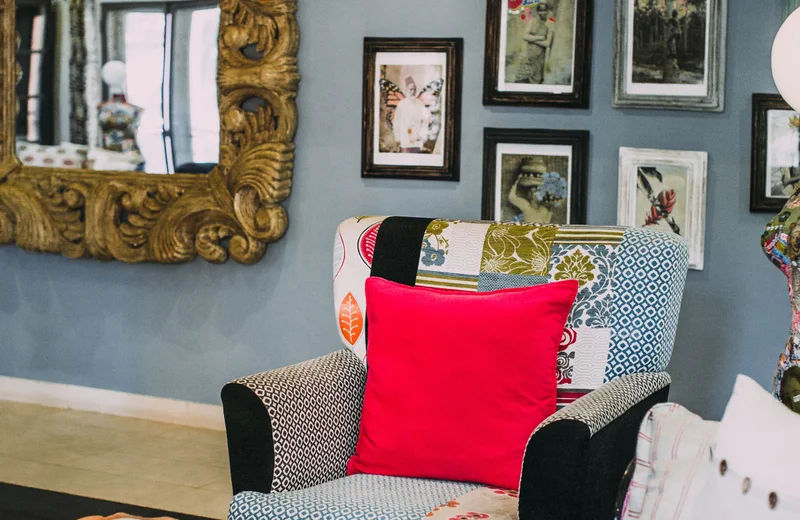
The final step separates a bedroom that looks like a show room from one that feels like it belongs to a specific person. One piece of art, a gallery wall of three framed photographs, a piece of textile hung as a wall piece, a vintage mirror — something that is yours and not easily replicated.
A single strong personal element on the main wall consistently does more for how “finished” a bedroom feels than any amount of matched, purchased styling — the rooms that read as generic or “like a hotel” are almost always the ones with nothing personal on display.
For renters: Command strips hold frames up to 5kg without wall damage. A set of three matching frames (from £5 each at IKEA or Dunelm) with printed photographs from a service like Photobox (prints from £0.09) creates a personalised gallery wall for under £30. Use the same frame finish throughout for cohesion.
Priority Order: Where to Start
Not everyone has the budget or time to work through all 13 changes at once. Here’s the sequence that delivers the most impact per pound — and per hour:
| Priority | Change | Approx. cost |
|---|---|---|
| 1 | Layer the bedding (flat sheet, euro pillows, throw) | £55–£80 |
| 2 | Replace overhead with two 2700K bedside lamps | £50–£90 |
| 3 | Rearrange furniture, bed facing door with equal sides | Free |
| 4 | Declutter all visible surfaces | Free |
| 5 | Paint one feature wall behind the bed | £20–£35 |
| 6 | Add a full-length leaning mirror | £30–£60 |
| 7 | Hang blackout curtains near the ceiling | £35–£80 |
| 8 | Check flooring condition before buying a rug | £12–£45 per m² |
| 9 | Add a headboard once paint and rug are finished | £40–£120 |
| 10 | Match or repaint bedside tables as a pair | £0–£60 |
| 11 | Fit under-bed storage while the bed is moved | £8–£15 per box |
| 12 | Set your total budget and buying sequence | Free |
| 13 | Add one personal element to a wall | £15–£30 |
The first four changes on this list cost between nothing and £80 and produce the most immediate visual transformation. Start there.
For a deeper guide to bedroom colour, headboards, and styling decisions, see the full Bedroom Decor Ideas UK guide.
For everything that makes a bedroom feel genuinely cosy rather than just tidy, see Cosy Bedroom Decor Ideas UK.
Bedroom Guides for Every Situation
Want to go deeper on one specific part of the bedroom? These cover one angle in full detail:
- Bedroom Colour Ideas UK — the full paint colour breakdown referenced in step 4
- Bedroom Lighting Ideas for UK Rentals — going further than the lamp swap in step 2
- Small Bedroom Storage Ideas UK — the full storage system for step 11
- Small Bedroom Layout Ideas for Awkward UK Rooms — for the furniture rearrange in step 3
- Small Bedroom on a Budget UK: Under £150 Refresh — if you’re working with a tighter total budget than this guide
- Renter-Friendly Bedroom Ideas UK (No Nails, No Damage) — every change on this list confirmed deposit-safe
- Scandi Bedroom Ideas for UK Homes — a specific style direction to apply once the fundamentals are done
- Cottagecore Bedroom Decor Ideas UK — another style direction, warmer and more layered than Scandi
Doing the whole home? Kitchen on a Budget UK is the most-read makeover guide on the site, and Rented Flat Makeover UK covers every other room with the same deposit-safe approach.
Frequently Asked Questions
New bedding, warm lighting from bedside lamps, a declutter of the surfaces, and a furniture rearrange will transform most bedrooms for under £100. Paint one wall if you want more impact — a feature wall behind the bed costs £20–£35.
Warm neutrals (Dulux Goose Down, Farrow & Ball Dead Salmon, Jotun Lady Beige Sand) and muted blues (Farrow & Ball Hague Blue, Dulux Denim Drift) are the most popular bedroom colours in UK homes. Both work well in the UK's natural light.
Layer the bed (fitted sheet + duvet + throw + cushions), add bedside lighting at the same height on both sides, use matching bedside tables, and remove all functional clutter from visible surfaces. These four changes read as luxurious regardless of the furniture quality.
Use light paint colours, hang curtains close to the ceiling, choose furniture with legs (rather than skirted bases), use one large mirror instead of several small ones, and keep the floor as clear as possible. Under-bed storage keeps things tidy without taking up floor space.