The bedroom is the one room that should always be yours. Not a spare office. Not a laundry sorting station. Not a room that looks fine but feels like a budget hotel you’d give three stars on Google. A genuine retreat — somewhere your body starts to relax before you’ve even pulled back the duvet.
And yet. Walk into most British bedrooms and something feels off. The ceiling light is too bright. The bed looks flat. The curtains let in a blade of orange streetlight at 2am. It’s a functional room, but it doesn’t feel cosy. It doesn’t feel like anywhere you’d actually want to spend time.
This guide is specifically about warmth and mood — lighting temperature, scent, texture, sound. For general styling elements, see Bedroom Decor Ideas UK; for a full sequenced renovation project, see Bedroom Makeover UK.
A bedroom’s environment matters more to how you sleep than most people give it credit for — the light, the temperature, the amount of visible clutter. Most of the fixes below cost less than a weekend takeaway.
I spent about two years in a bedroom that looked fine in photographs and felt cold in real life. New duvet cover, framed print above the bed, done. But it never felt like a retreat. The change came when I stopped styling it and started thinking about sensation: how it felt to walk in, to sit on the bed, to lie in the dark. That shift changed everything.
Cosiness in a bedroom comes down to seven core elements: lighting, layered bedding, window treatments, rugs, paint colour, scent, and texture. You don’t need all fourteen ideas on this list — pick the three or four elements missing from your room right now and start there. Most cost under £50.
Key Takeaways
- Warm lighting at 2700K is the single highest-impact change you can make — above paint, above bedding
- Layered bedding (duvet + throw + cushions) signals comfort before you get into bed
- Most meaningful cosiness upgrades cost under £50 per element
- Deep or warm paint colours outperform stark white in the UK’s grey natural light
Read more: bedroom decor ideas UK
Should You Switch the Overhead Light Off After 7pm?
The single cheapest cosiness upgrade costs nothing. Just stop using the overhead light in the evenings. Bright, cool overhead light in the run-up to bed keeps you feeling alert rather than winding down — it’s the same reason a supermarket or an office never feels restful.
Overhead lights are designed for task lighting — finding things, getting dressed, reading a prescription label. They’re not designed for unwinding. The light angle is wrong, the colour temperature is usually too cool, and the coverage is too even. Even rooms are not cosy rooms.
This costs nothing and takes thirty seconds. Try it tonight. The bedroom will feel warmer and quieter within a week.
Add Two Bedside Lamps at 2700K Warm White
Once the overhead light is off, you need something to replace it. Two bedside lamps at 2700K warm white are the answer. The 2700K figure is the colour temperature — anything lower looks yellow, anything higher starts to look clinical. It’s the same warmth as a traditional incandescent bulb, and it’s what makes a room look like a cosy photograph rather than a hospital corridor.
Next Home does excellent ceramic table lamps from £28–£45 that work on most bedside tables. IKEA’s SKAFTET range starts at £17 for the base, and you can fit your own 2700K E27 bulb for under £5. If your room has no bedside tables, plug-in wall sconces exist at Dunelm from £19 and install in ten minutes with no drilling.
Two lamps, not one. A single lamp creates shadows and asymmetry that makes a bed look unfinished. Matching lamps create balance.
How Do You Layer a Bed Properly?
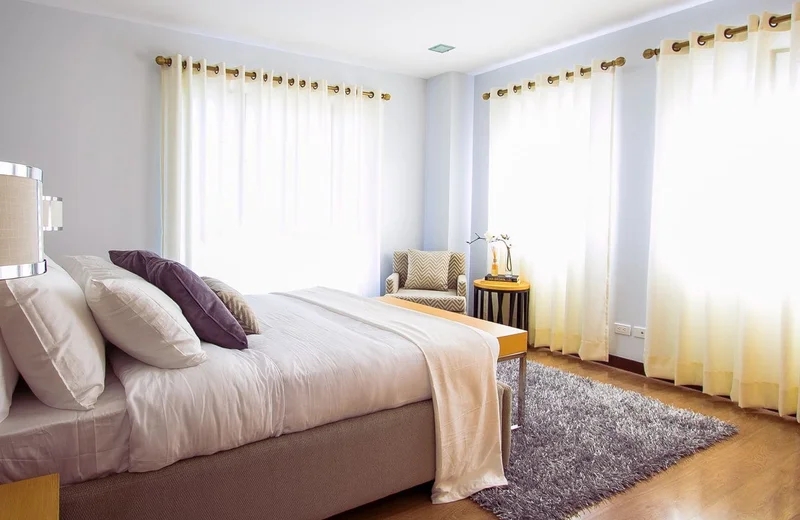
A flat duvet on a flat bed looks like a show home that no one lives in. Layering is what creates the hotel-bed effect — the visual and physical sense that the bed is warm and inviting, not just made. The formula is simple: fitted sheet, duvet in a warm-toned cover, flat sheet folded back at the turn-down, throw folded at the foot, and four to six cushions at the head.
Dunelm’s Dorma range does brushed cotton duvet covers in terracotta, sage, and dusty pink from £32 for a double. A waffle-weave throw from Next Home costs £28–£40 and adds exactly the right texture without going full maximalist — a full layered set like this runs under £75 total. Euro pillows (65x65cm) behind your standard pillows add depth and make the head of the bed look considered.
The layering matters more than the quality of any individual piece. A £25 duvet cover with a well-placed throw will look more inviting than an expensive single duvet cover on its own.
The throw at the foot of the bed is the most photographable element of a cosy bedroom. It also gets used every single evening, so buy one you’ll actually reach for.
Why Add Blackout Curtains in a Warm Colour?
Blackout curtains do two separate jobs in a British bedroom. First, they block light — and British summer mornings start before 5am, which is not a reasonable hour to be woken by the sun through a thin curtain. Second, they make the room feel enclosed and cocooned in a way that lighter window treatments simply don’t. A heavy curtain falling floor to ceiling changes the acoustic quality of a room. It absorbs sound, reduces draughts, and creates a sense of containment that’s very different from a blind.
Choose the curtain colour carefully. Stark white or pale grey curtains read cold in UK light, especially in north-facing rooms. Terracotta, dusty pink, deep forest green, warm toffee, and aged navy all read warm. Dunelm does blackout eyelet curtains in most of these tones from £35 per pair for a standard double. John Lewis’s own-brand range starts at £55 per pair and is noticeably better quality.
Hang the curtain rod as close to the ceiling as possible, and let the curtains puddle slightly on the floor. Width matters too — each curtain panel should be 1.5 times the width of the window to look full when closed. Skimpy curtains are the fastest way to make a room look unfinished. Most people hang rods six inches above the window frame; raise it to ten centimetres below the ceiling and the difference is immediate.
Lay a Rug Beside the Bed
Cold floors in the morning are the enemy of cosiness. The sensation of stepping from a warm duvet onto cold wood or laminate breaks the spell immediately. A rug solves this completely — and it also softens the visual character of the room, absorbs sound, and adds a layer of texture at floor level that makes the whole room feel warmer.
Size matters here. A rug that’s too small looks like a bath mat. For a double bed, the rug should extend at least 45cm on both sleeping sides and at the foot. That means a 160x230cm rug minimum for most UK double bedrooms. IKEA’s STOENSE range does this size in warm neutrals and soft grey-greens from £75. If the budget is tight, a jute rug from Dunelm (from £35 for a 120x170cm) is a better option than a small synthetic rug twice the price.
Wool and cotton rugs feel better underfoot than synthetic. They’re also more durable and age better. Spend a little more here if you can.
Which Warm Paint Colour Should You Choose?
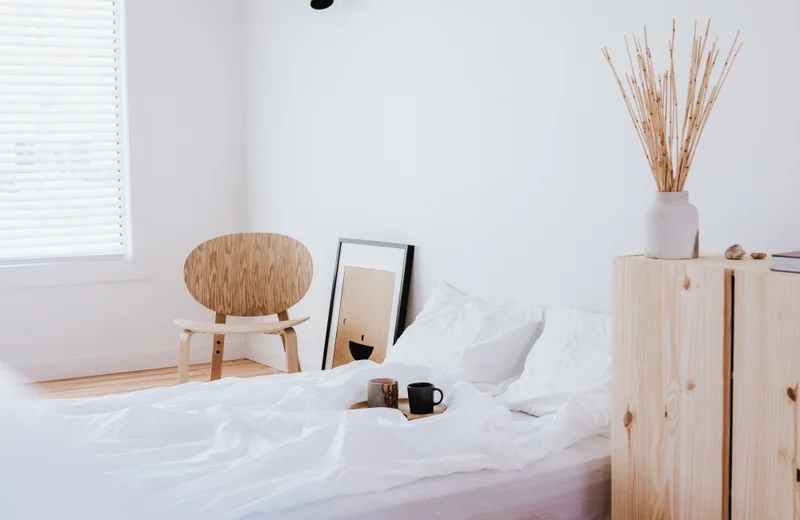
White walls are not neutral in a UK bedroom. In low natural light — which is most of the year in most of Britain — white reads as grey, and grey reads as cold. A bedroom painted brilliant white looks clinical in winter and flat in summer. Warm neutral or deep tones consistently outperform white in British bedrooms, because they reflect the warm light of lamps rather than the weak blue-grey of a cloudy sky.
Dulux Autumn Cashmere, Farrow & Ball Elephant’s Breath, and Little Greene Dorchester Pink are three of the most reliably cosy bedroom colours on the UK market. For deeper tones, Farrow & Ball Hague Blue and Little Greene Dark Lead create an enveloping quality that works especially well in rooms with good lamp lighting. A tester pot costs £4–£7. Buy three and live with them on the wall for a week before committing.
Don’t paint one wall a different colour and leave the rest white. That’s an accent wall, not a cosy bedroom. Paint all four walls the same tone and let the colour do the work.
Does a Weighted Blanket Really Help You Sleep?
A weighted blanket does something that a regular throw can’t replicate. The deep pressure stimulation from the added weight triggers a parasympathetic nervous response — the same mechanism that makes a firm hug feel calming. Plenty of people find them genuinely useful for winding down before sleep, particularly with anxiety.
Dunelm sells weighted blankets from £35 for a single/double option at 6.8kg, which is the recommended weight for most adults (roughly 10% of body weight). John Lewis stocks the more premium Silentnight and Mela ranges from £55–£90. The blanket can sit on top of the duvet in winter or replace it entirely in summer. It doesn’t need to be decorative — most people fold it at the foot of the bed and pull it up at night.
Choose a weight that’s roughly 10% of your body weight. Too light and you lose the effect. Too heavy and it becomes uncomfortable. The 6.8kg options at Dunelm cover most adults up to 70kg.
How Can You Use Scent Deliberately in the Bedroom?
Scent is the most underused tool in bedroom cosiness. It’s also one of the fastest to act — the olfactory nerve connects directly to the limbic system, the part of the brain that processes emotion and memory. A familiar, calming scent in a bedroom signals safety and relaxation in a way that paint colours and cushions can’t quite replicate.
Lavender is one of the most popular scents for a bedroom for exactly this reason. This Works Deep Sleep Pillow Spray (£19 at John Lewis) is one of the most effective delivery methods because it goes directly onto the pillowcase. A reed diffuser with lavender or cedarwood at the bedside achieves a similar effect.
Avoid plug-in air fresheners. They tend to smell synthetic and cycle in a way that becomes background noise rather than a deliberate signal. A candle lit for twenty minutes before bed, then snuffed out before you get in, is a more considered approach. Neom and P.F. Candle Co. both do excellent sleep-focused options from £15–£28 at John Lewis.
Scent works best when it’s consistent. Use the same scent every night and the brain starts to associate it with sleep. It becomes a cue, not just a smell.

Invest in a Proper Headboard
A bed without a headboard looks like a mattress on legs. The headboard gives the bed an anchor point, makes the room feel more considered, and provides somewhere comfortable to sit while reading or scrolling. It’s the single furniture item with the most visual impact in a bedroom.
For cosiness specifically, the fabric matters more than the shape or the budget: boucle, velvet, and linen all absorb sound and soften the room in a way a hard headboard can’t. IKEA’s HAUGA upholstered headboard fits standard double and king frames and costs £55–£75. John Lewis’s own-range button-back headboards start at £120 and look significantly more expensive than they are. If you already own a hard headboard, a loose fabric slipcover (from £25 at Dunelm, sized to most standard frames) adds the same acoustic softening without replacing the frame.
Upholstered headboards in boucle, velvet, or linen absorb sound and add warmth. Wooden or metal headboards look smart but feel harder and cooler. For a cosy bedroom, fabric wins. For DIY build options and pricing, see our bedroom decor ideas guide.
Why Create a Reading Corner in Your Bedroom?
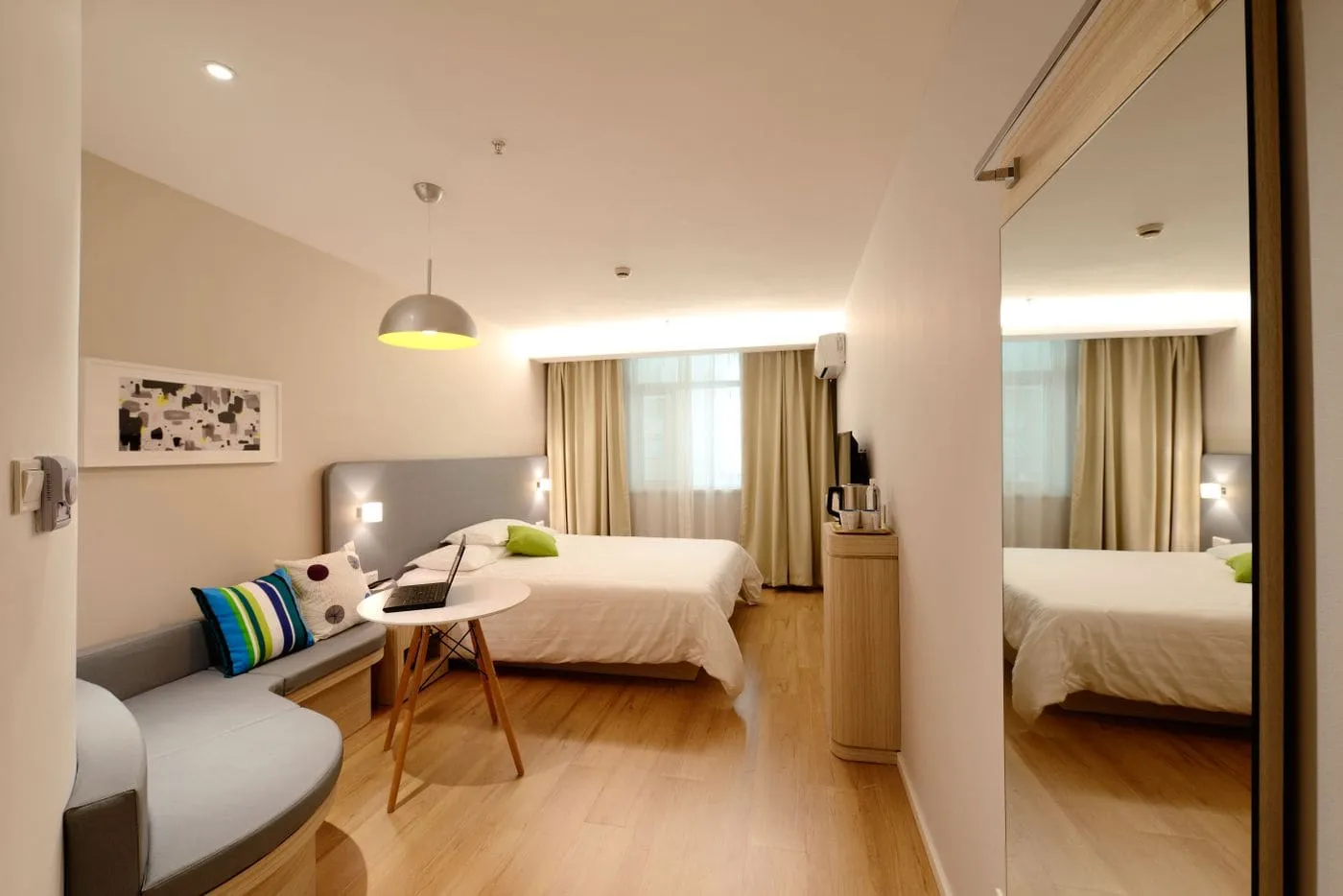
A bedroom that contains only a bed is a sleeping room. A bedroom that contains a chair is a retreat. The difference between the two is the existence of somewhere to sit that isn’t the bed — a small armchair, a curved accent chair, a cushioned window seat, or even a floor cushion beside a lamp. The reading corner signals that this is a room where you might choose to spend time, not just crash into at the end of the day.
In my own bedroom, the addition of a single curved accent chair in a warm rust boucle changed how I used the room entirely. I started going to bed earlier because the room had become somewhere I wanted to be. That’s the effect a reading corner creates — it gives you a reason to be in the room before you’re actually tired enough to sleep.
IKEA’s STRANDMON wing chair costs £195 and has become a staple of UK bedroom styling for good reason. It’s well-proportioned, comfortable, and comes in a range of warm fabric options. For smaller rooms, a papasan-style floor chair from Amazon UK costs from £45 and takes up almost no floor space when not in use.
The chair needs a lamp beside it. A chair in the dark is not a reading corner. Pair it with a floor lamp (from £25 at Next Home) or a plug-in wall sconce.
Should You Layer a Sheer Panel Behind the Blackout Curtain?
A blackout curtain alone gives you one lighting mode: fully closed and dark, or fully open. A sheer panel hung on a second track behind it gives you a middle setting, filtered, diffused daylight, that a lot of the cosiest-feeling bedrooms actually rely on more than either extreme.
A double curtain track (blackout plus sheer) from Dunelm costs £15–£25 on top of the curtains themselves. Closing just the sheer layer on a bright morning softens hard daylight into the kind of warm, diffused glow that makes a room feel gentle rather than starkly lit.
Most cosy-bedroom advice treats curtains as a single binary choice, blackout or nothing. In practice, the sheer layer is doing the atmospheric work during the hours you’re actually awake in the room, while the blackout layer only matters while you’re asleep with your eyes shut.
Linen-look sheer panels in warm ivory or soft taupe (rather than stark white) keep the tone consistent with the rest of a warm-toned bedroom. Dunelm and Next Home both stock these from £12 per panel.
How Do You Add Texture at Multiple Levels?
Cosiness is a sensory experience. A room that looks visually uniform — all smooth surfaces, all one material — reads as cold regardless of colour or lighting. Texture breaks up that uniformity and creates the visual and physical sensation of warmth. The trick is to add texture at multiple levels: high (cushions, headboard), mid (throws, lamp shades), and low (rug, footstool, bedside baskets).
Common texture pairings that work in UK bedrooms: chunky knit throw with linen duvet cover, wicker lampshade with velvet cushions, jute rug with a boucle accent chair. These combinations create contrast that’s interesting without being chaotic. Avoid combining too many bold patterns — texture is most effective when the patterns are subtle and the textures themselves do the visual work.
Dunelm’s own-brand cushion range covers most of these textures from £6–£18 per cushion. M&S Home and Next Home both do good mid-range textured throws from £28–£55. The investment pays back every time you walk into the room.
Four to six cushions is not too many on a double bed. It only looks excessive if the cushions are all the same size and fabric. Vary size, shape, and texture and the arrangement looks considered.
Style the Bedside Table Properly
A bedside table covered in charging cables, empty water glasses, and phone notifications is the opposite of cosy. The bedside table is in your direct eyeline when you wake up — what it contains shapes how the room feels before you’ve even properly opened your eyes. A styled bedside table with intentional objects makes the room feel cared for in a way that’s disproportionate to the effort involved.
The formula that consistently works: one lamp, one small plant or stem vase, one scent element (candle or diffuser), one book or journal, and a tray to contain everything. The tray is the key detail — it groups disparate objects and makes a collection look curated rather than cluttered. Dunelm does round marble-effect trays from £8, which is an absurdly cheap upgrade for the visual impact it creates.
Remove the phone charger from the bedside table entirely if you can. Charge the phone in another room or on a cable tucked behind the table. A phone face-up on a bedside table is a visual and psychological intrusion in a room that’s supposed to feel calm.
Change the bedside table setup seasonally. A small pumpkin in autumn, a pine cone in winter, a small wildflower in spring. The room registers the change and stays alive rather than static.
Should You Control Morning Light Differently to Evening Light?
The final idea is about understanding that a cosy bedroom needs two separate lighting modes: evening (dim, warm, calming) and morning (bright enough to wake up without being unpleasant). Most UK bedrooms have one mode — the overhead ceiling light — which is neither warm enough for evenings nor bright enough for gloomy January mornings.
A smart bulb in a bedside lamp solves this elegantly. Philips Hue E27 bulbs cost around £13 each at John Lewis and can be set to a warm 2700K in the evening and a brighter 4000K in the morning. A smart plug (from £8 at Amazon UK) with a timer on a standard warm-white lamp achieves roughly the same effect at a fraction of the cost. Waking to a lamp that gradually brightens is meaningfully different to being jolted awake by an alarm in a dark room.
Blackout curtains handle the evening side. But in summer, they also make it harder to wake naturally with the light. A secondary sheer blind behind the blackout curtain — left down while the blackouts are open in the morning — gives you control of both functions without sacrificing either.
Light quality in the morning affects mood for the rest of the day. A well-lit morning routine matters as much as a well-lit evening wind-down.
Priority Table: Where to Start First
Not everyone has the time or budget to implement all fourteen ideas at once. Here’s how to prioritise based on impact per pound:
| Priority | Idea | Estimated Cost | Impact |
|---|---|---|---|
| 1 | Switch off overhead light (use existing lamps) | £0 | Very High |
| 2 | Add 2700K bulbs to existing lamps | £8–£16 | Very High |
| 3 | Layer the bed with a throw | £25–£45 | High |
| 4 | Buy blackout curtains in a warm colour | £35–£55 | High |
| 5 | Add a rug beside the bed | £35–£75 | High |
| 6 | Repaint in a warm neutral (tester first) | £4–£7 (tester) | High |
| 7 | Add bedside lamps (if none exist) | £28–£90 (pair) | Very High |
| 8 | Style the bedside table with a tray | £8–£15 | Medium |
| 9 | Add a weighted blanket | £35–£90 | Medium |
| 10 | Introduce a scent ritual | £15–£28 | Medium |
| 11 | Add a headboard | £55–£195 | Medium |
| 12 | Add a sheer panel behind the blackout curtain | £12–£25 | High |
| 13 | Add texture (cushions, throws, rugs) | £20–£60 | Medium |
| 14 | Add a reading corner chair | £45–£195 | Medium |
Start with rows 1 and 2. They cost almost nothing and change the room immediately. Add the rug and throw. Then, when budget allows, think about paint and curtains. The expensive items (headboard, chair) come last — by which point the room will already feel significantly cosier without them.
Frequently Asked Questions
How do I make my bedroom more cosy UK?
Switch your overhead light for bedside lamps at 2700K, layer the bed with a throw and extra cushions, add a rug if you have hard floors, and choose warm paint colours over stark white. These four changes cost under £100 and transform the feeling of almost any bedroom.
What makes a bedroom feel cosy UK?
Warm lighting, soft layered textures (multiple cushions, a throw, textured rug), blackout curtains that make the room feel enclosed, and a warm neutral or deep paint colour. Cosiness is mostly about sensory signals — warmth, softness, low light — rather than specific products.
What bedding makes a bedroom feel most cosy UK?
A brushed cotton or flannel duvet cover in a warm neutral or deep tone, layered with a chunky knit or waffle-weave throw. John Lewis, Dunelm, and Next Home all do excellent options from £25–£60 per duvet cover.
Is hygge relevant to UK bedroom design?
Very much so. The principles of hygge (warmth, soft textures, candlelight, coziness without fussiness) translate directly into British bedroom design. The UK’s grey light and cold winters make these principles arguably more important here than in Scandinavia.
How much does it cost to make a bedroom feel cosy in the UK?
The most impactful changes cost under £50: a warm-toned throw (£25–£40), 2700K bulbs (£8–£16), and a bedside tray (£8–£12). A full cosiness overhaul including curtains, rug, and new bedside lamps runs to £200–£400. Most people see the biggest difference from the first £50 spent.
The Bottom Line
A cosy bedroom isn’t a style choice. It’s a sleep environment choice, and the two things are more connected than most people realise. A room that feels warm, enclosed, and sensory-rich signals to your body that it’s safe to slow down. A room that feels flat and clinical signals the opposite.
You don’t need fourteen new things. Pick the two or three ideas from this list that are obviously missing from your room right now. Switch the light off. Buy a throw. Raise the curtain rod. Live with those changes for a week and see how the room feels. Then add the next layer.
If you’re starting from scratch with a whole room, the bedroom decor ideas UK guide walks through everything from furniture layout to colour choices. And if the kitchen needs the same treatment, kitchen on a budget UK is the most-read guide on the site.
For the full 13-step room makeover these cosy touches build on, see Bedroom Makeover Ideas UK.
Your bedroom should be the room in the house you most want to be in. These fourteen ideas will get you there.
Frequently Asked Questions
Switch your overhead light for bedside lamps at 2700K, layer the bed with a throw and extra cushions, add a rug if you have hard floors, and choose warm paint colours over stark white. These four changes cost under £100 and transform the feeling of almost any bedroom.
Warm lighting, soft layered textures (multiple cushions, a throw, textured rug), blackout curtains that make the room feel enclosed, and a warm neutral or deep paint colour. Cosiness is mostly about sensory signals — warmth, softness, low light — rather than specific products.
A brushed cotton or flannel duvet cover in a warm neutral or deep tone, layered with a chunky knit or waffle-weave throw. John Lewis, Dunelm, and Next Home all do excellent options from £25–£60 per duvet cover.
Very much so — the principles of hygge (warmth, soft textures, candlelight, coziness without fussiness) translate directly into British bedroom design. The UK's grey light and cold winters make these principles arguably more important here than in Scandinavia.