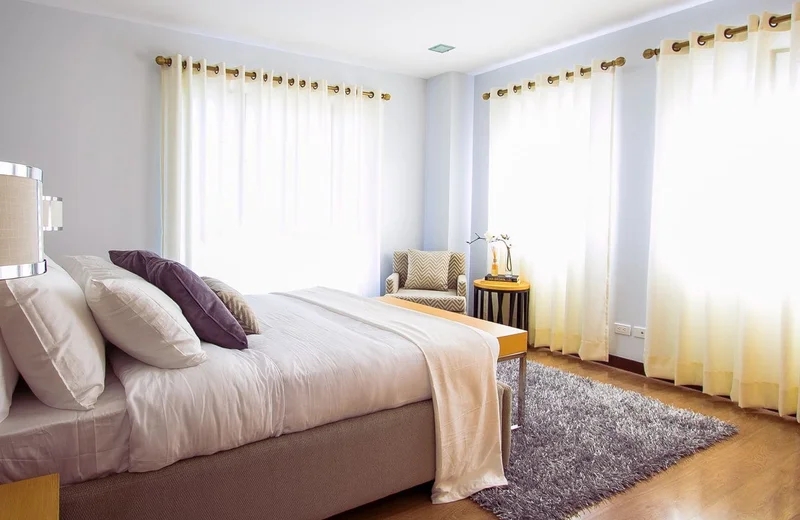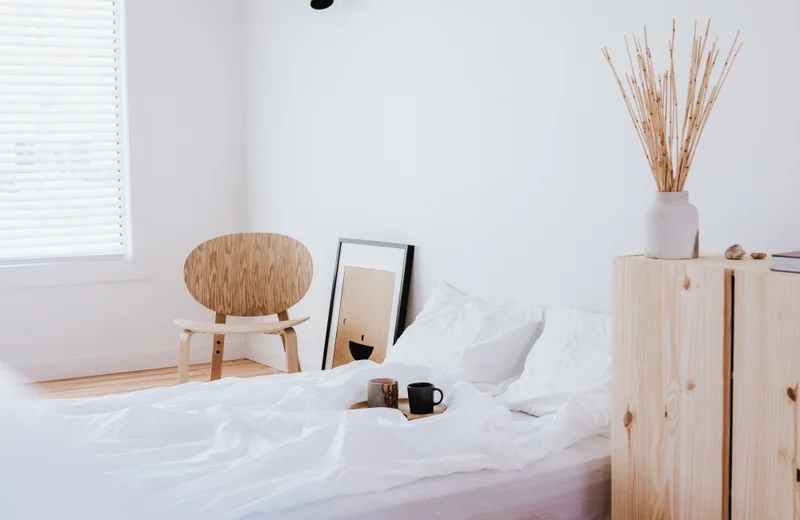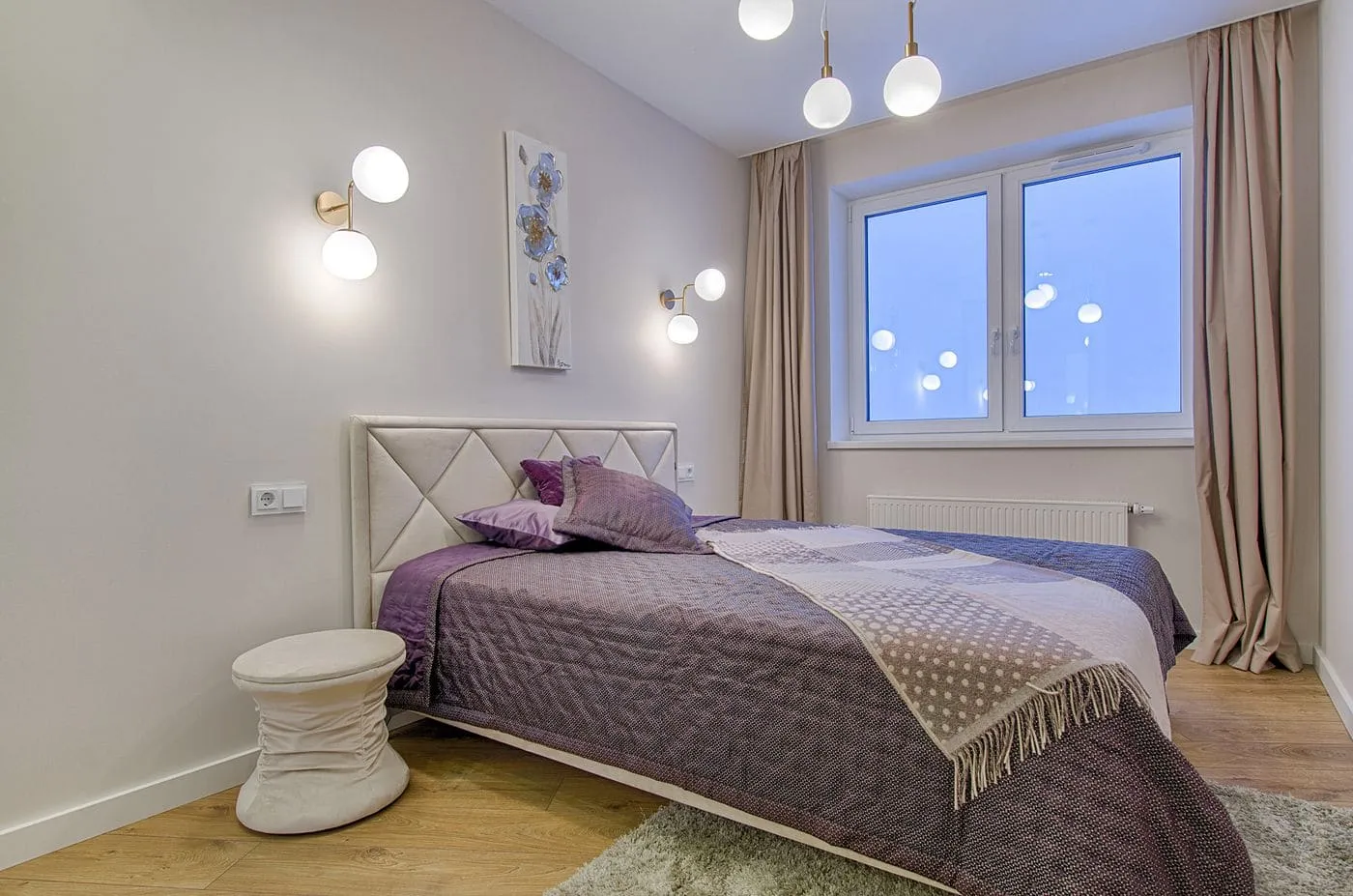
The bedroom is the one room in the house where you’re the only audience. There’s no guest to impress, no party to host. It exists entirely for you — and yet it’s usually the last room we properly decorate.
UK adults spend more time in the bedroom than in any other room in the home — and yet it’s consistently the room people get around to redecorating last, well behind the living room and kitchen.
This guide covers styling elements one at a time — colour, bedding, lighting, art, and the rest. If you want a sequenced, room-by-room renovation project instead, see Bedroom Makeover UK; if warmth and mood are the priority over general styling, see Cosy Bedroom Ideas for UK Homes.
We neglect the room we’re in the most. Here are 12 ideas to fix that.
TL;DR: The bedroom changes with the highest impact per pound are layered bedding, bedside lamps (not just a ceiling light), a headboard or alternative focal point, and warm paint colour. This guide covers all 12 in order of visual impact.
Read more: cosy bedroom ideas
1. Which Colours Work Best in a UK Bedroom?
Colour sets the entire atmosphere of a bedroom, and the UK’s grey natural light means this decision matters more here than almost anywhere else. Stark white walls read clinical and cold in a British bedroom. Warm undertones, muted greens, and deep, enveloping tones all work better.
Warm-toned bedroom paint costs roughly £20–£35 per 2.5-litre tin from B&Q, and because UK light is grey rather than bright, that undertone does more to set a room’s atmosphere than it would in a sunnier climate.
The three most reliable bedroom palettes for UK homes:
- Warm neutral: Dulux Goose Down, Crown Autumn Cashmere, or Farrow & Ball String
- Soft sage green: Farrow & Ball Mizzle, Little Greene Aquamarine, or Dulux Sage Salutation
- Boutique deep tone: Little Greene Dark Lead, Farrow & Ball Hague Blue, or Dulux Night Jewels
I painted my bedroom in Crown Autumn Cashmere three years ago. It was the single biggest improvement I made to the room — not the bedding upgrade, not the new curtains. The colour came first and everything else responded to it.
Bedroom paint — ~£20–£35 per 2.5L from B&Q.
2. How Do You Layer Bedding for a Hotel-Style Bed?
The “hotel bed” look that everyone chases comes from layers, not expensive thread count. The sequence is: fitted sheet, flat sheet (folded back over the duvet), duvet in a crisp cover, two sleeping pillows, two euro square pillows behind them, and a throw folded at the foot.
A full layered bedding setup costs under £80 using Dunelm’s Dorma range, with fitted sheets from £12 and duvet covers from £22 doing most of the visual work.
That’s it. The secret isn’t luxury materials — it’s the structure. A flat sheet folded back at the turn-down creates the crisp layered effect. Two euro pillows (65x65cm) add height and architecture to a bed that two standard pillows alone can’t achieve.
Dunelm’s Dorma collection covers all of this affordably: fitted sheets from ~£12, duvet covers from ~£22, euro pillows from ~£8. The full setup costs under £80.
Full layered bedding setup — under £80 from Dunelm Dorma range.
3. Why Does Every Bed Need a Headboard?
A bed without a headboard looks unfinished. The headboard is the visual anchor of the bedroom — it makes the bed feel intentional rather than just a mattress that happened to end up there.
A DIY upholstered headboard panel made from MDF, wadding, and off-cut fabric costs around £40–£60 in materials and takes just an afternoon to build, roughly half the price of IKEA’s ready-made upholstered headboards, which start at £85.
If budget is tight, a DIY upholstered panel — a piece of MDF cut to size, wrapped in wadding and fabric, and mounted with picture hooks — costs around £40–£60 in materials and takes an afternoon. The result looks considerably more expensive than it is.
I made one for my spare room using off-cut velvet from a fabric warehouse and it genuinely looks like a boutique hotel headboard. Guests always comment on it.
Alternatively, IKEA’s upholstered headboards start at ~£85 and are excellent quality for the price. Check your tenancy agreement before wall-mounting anything — a floor-standing headboard avoids that question entirely.
IKEA upholstered headboard — from ~£85 at IKEA.
4. Should You Replace the Overhead Light With Bedside Lamps?
The most clinical mistake in British bedrooms is relying on a single ceiling light for all purposes. Overhead light in a bedroom is harsh and flattening — it’s the opposite of restful.
Two bedside lamps at 2700K warm white cost around £25 each from Next Home, and 2023 Oxford University research found reducing light intensity before bed improved sleep onset time by an average of 14 minutes in study participants — a small change with an outsized effect on how restful a bedroom feels.
Two bedside lamps, both at 2700K warm white, are the replacement. They cast a lower, warmer light that’s appropriate for winding down. This isn’t just an aesthetic preference — dimmer, warmer light in the run-up to bed is one of the more consistently recommended changes for falling asleep faster.
Lamps don’t need to match perfectly. Two different lamps in complementary finishes (both brass, or both ceramic) look more personal than a matched pair. Next Home has an excellent range of bedside lamps from ~£25 each.
Two bedside lamps — from ~£25 each at Next Home.
5. How Do You Arrange Art So It Actually Looks Considered?
Art is the fastest way to make a bedroom look personal rather than showroom-neutral, and composition matters more than the individual pieces. A single large print centred above the headboard, or a tight gallery cluster of three to five frames, reads as intentional in a way scattered single prints never do.
For a single statement piece, the print’s width should roughly match two-thirds of the headboard’s width, hung so its centre sits at eye level when seated on the bed. A cluster of three frames should keep consistent gaps of 5–8cm between each frame rather than eyeballing the spacing.
I spent a year with a single small print floating awkwardly above my bed before swapping it for a wider botanical print sized to the headboard. The difference in how “finished” the wall looked was immediate, and it cost nothing extra since I already owned the print.
Choose art that echoes one colour already in your palette (the throw, the curtains, a cushion) rather than introducing a fourth unrelated tone. Botanical prints, abstract line art, and framed textiles all work well against the warm neutrals and deep tones recommended above.
Framed art print sized to headboard width — from ~£25 for prints plus ~£15–£30 per frame at IKEA or Dunelm.
6. How Do You Choose a Rug That Matches the Room’s Palette?
A rug is one of the largest single blocks of colour or pattern in a bedroom, so it needs to be chosen against the wall colour and bedding, not picked in isolation. A 160x230cm rug — the standard size for a UK double bedroom — costs from around £45 at Dunelm and should extend at least 60cm beyond the sides and foot of the bed, sizing up to 200x290cm for a king.
Against a warm neutral wall, a rug with a subtle geometric or muted stripe pattern adds visual interest without competing with the paint colour. Against a deep boutique tone (Hague Blue or Dark Lead), a plain textured rug in a lighter warm tone stops the room feeling too enclosed.
The rug should extend at least 60cm beyond the sides and foot of the bed so it registers as a deliberate frame for the bed rather than a leftover mat. Match its undertone (warm or cool) to your paint choice from section 1, not just its colour name.
Bedroom rug 160x230cm — from ~£45 at Dunelm.
7. How Do You Create a Dressing Area in a Small Room?
A dedicated dressing area — even just a small mirror on a wall, a stool, and a tray for jewellery — elevates a bedroom from functional to considered. It separates the sleep zone from the getting-ready zone and makes the bedroom feel more like a private suite.
A wall-mounted mirror above a chest of drawers plus a small tray for perfume and jewellery costs roughly £20–£40 total and creates a dedicated dressing area without using any extra floor space — ideal for small UK bedrooms.
In small UK bedrooms, a wall-mounted mirror above a chest of drawers creates a dressing table area without occupying additional floor space. Add a small tray for perfume bottles, a candle, and a few favourite objects. The chest of drawers already exists; the mirror and tray cost ~£20–£40 total.
Round wall mirror for dressing area — from ~£25 at Dunelm.
8. Add a Throw for Layered Warmth
A throw folded at the foot of the bed or draped over the corner of an armchair is the classic “bedroom styling” move — and it’s a classic because it works. It adds a layer of visible texture, suggests warmth, and gives the eye somewhere to rest.
A wool-mix throw from Next Home costs around £28, while John Lewis’s pure wool options start closer to £35 — both add the visible texture and suggested warmth that make a bed feel finished rather than plain.
Natural fibres work better than synthetic for this: a wool or cashmere-mix throw has a weight and drape that acrylic cannot replicate. John Lewis does excellent wool throws from £35. Next Home’s faux mohair range (£28) is an excellent mid-range alternative.
Wool-mix throw — from ~£28 at Next Home.
9. How Do You Style a Bedside Table With Three Objects?
A bedside table covered in whatever you happen to put there looks like a dumping ground. A bedside table styled with intent looks like a calm bedroom sanctuary. The formula: three objects, three heights.
A single ceramic bedside lamp from Next Home costs around £28 and does the most visual work in the three-object rule — one tall lamp, one medium plant or candle, one low book or dish — with everything else kept in a drawer.
One lamp (tall). One small plant or candle (medium). One book or small dish (low). That’s it. Everything else goes in a drawer. The phone charges out of sight.
The lamp does the heavy lifting visually — choose something with character. Ceramic bases in earthy tones are particularly good in British bedrooms.
Ceramic bedside lamp — from ~£28 at Next Home.
10. Does Peel-and-Stick Wallpaper Work on a Feature Wall?
A feature wall of peel-and-stick wallpaper is one of the best value upgrades available to renters and homeowners alike. Modern peel-and-stick options (sometimes called removable or self-adhesive wallpaper) apply smoothly to flat walls and remove without damage — genuinely, if you use a hairdryer on the adhesive while peeling.
Peel-and-stick wallpaper from Amazon UK costs from around £18 per roll, and a standard chimney breast behind a bed typically needs just two rolls — making a full feature wall achievable for well under £40 total.
Botanical prints, textural linens, and soft geometric patterns all work well in a British bedroom. Amazon UK has an extensive range from ~£18 per roll. For a standard chimney breast behind the bed, two rolls typically suffice.
Renters: check with your landlord before applying, and confirm with the manufacturer that the product is truly damage-free. Most modern versions are, but it’s worth the conversation.
Peel-and-stick wallpaper for feature wall — from ~£18 per roll on Amazon UK.
11. How Do You Coordinate Cushions and Textiles With Your Palette?
A bed with cushions in five unrelated colours looks assembled rather than styled, and coordinating textiles is a purely visual fix that costs nothing extra if you already own most of the pieces. The rule: pick one accent colour from your rug or throw and echo it in at least one cushion.
Most bedroom styling guides tell you to “layer cushions” without saying how many colours to use. In practice, three tones maximum (your wall colour, one accent, and a neutral) reads as styled; four or more starts to look cluttered regardless of quality.
A set of two to four cushions from Dunelm or Next Home in linen, boucle, or velvet covers costs roughly £8–£18 each, and mixing textures within the same colour family (a linen square with a velvet rectangle in the same sage tone) adds depth without adding visual noise.
Coordinated cushion set (2–4 covers) — from ~£8–£18 each at Dunelm or Next Home.
12. Why Does Visual Clutter Undermine Every Other Styling Choice?
A styled headboard, a coordinated rug, and considered art all lose their impact if the surfaces around them are covered in daily clutter. Managed visibility, not minimalism, is the goal: everything you need daily stays out, everything else lives in drawers, baskets, or wardrobes.
The composition principle from sections 9 and 11 applies here too: pick a handful of objects worth displaying and store the rest. A room styled around three or four deliberate objects photographs and reads as considered; a room with fifteen visible items, however nice each one is individually, reads as busy.
This costs nothing and takes an afternoon. It’s the finishing step that makes every other change on this list actually register.
Storage baskets to hide clutter — from ~£8 each at Dunelm. For the full wardrobe and under-bed system, see small bedroom storage ideas UK.
Priority Order
| Step | What to do | Approx cost |
|---|---|---|
| 1 | Choose and apply paint colour | ~£20–£35 |
| 2 | Add two bedside lamps at 2700K | ~£50–£90 |
| 3 | Layer bedding with flat sheet and throw | ~£40–£80 |
| 4 | Add or create a headboard | ~£40–£120 |
| 5 | Hang one considered art piece or gallery cluster | ~£40–£75 |
| 6 | Add a rug matched to your colour palette | ~£45–£120 |
| 7 | Style bedside table with three-object rule | ~£10–£30 |
| 8 | Coordinate cushions and declutter visible surfaces | ~£20–£60 |
→ For a deeper guide to bedroom cosiness see Cosy Bedroom Decor Ideas UK. → For renter-safe bedroom changes see Rented Home Decor Ideas UK. → Doing the whole room at once? Bedroom makeover UK walks through the full transformation start to finish. → Ready to move to the kitchen? Kitchen on a Budget UK is the most-read guide on the site.
Frequently Asked Questions
Warm neutrals (Dulux Goose Down, Farrow & Ball Elephant's Breath), soft sage green (Farrow & Ball Mizzle), and deep navy (Little Greene Dark Lead) all perform well in UK bedrooms. Avoid stark whites, which read cold in grey natural light. Deep tones work particularly well for a boutique hotel feel.
Three changes with the most impact per pound: layer your bedding (add a throw and a flat sheet to your existing set), style your bedside table with the three-object rule, and hang one considered piece of art above the headboard. Total spend: under £100. See our full guide to [cosy bedroom decor ideas UK](/blog/cosy-bedroom-ideas-uk/).
For most British bedrooms: a 10.5–13.5 tog duvet for winter (with a lighter summer option), 200+ thread count cotton or percale sheets, and a chunky knit or waffle throw for layering. The White Company, Dunelm's Dorma range, and John Lewis all offer excellent mid-range options.
Use freestanding furniture, plug-in lighting, removable rugs, and peel-and-stick wallpaper on one wall. A fabric headboard panel using Command strips is legal in most tenancies. See our [rented home decor ideas guide](/blog/rented-flat-makeover-uk/) for a full checklist.