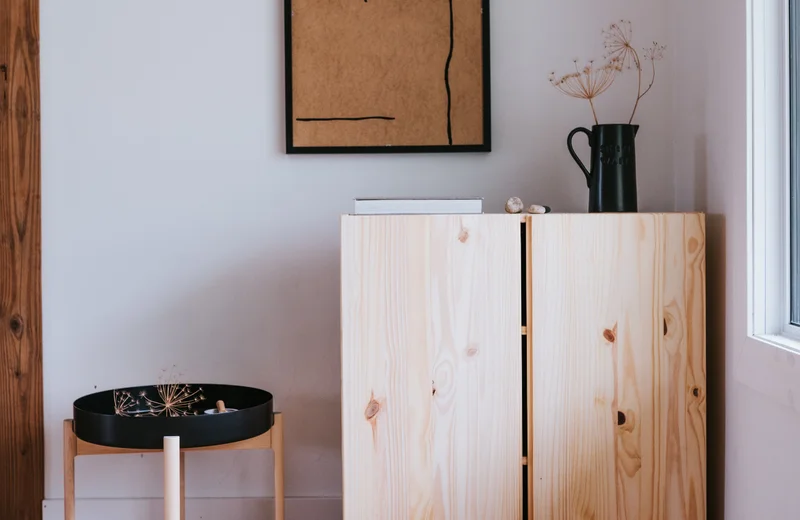
There’s a particular gloom that settles into a British home by late February. It’s not that anything has changed — the furniture is where it always was, the cushions are fine, the rooms are clean. But something about the accumulated weight of five months of winter dimness makes everything feel heavier and slightly dusty, even when it isn’t.
The spring refresh exists to address this. It’s not a renovation — it’s a resetting.
According to the Royal Horticultural Society, British gardening activity increases by 340% from February to March as the days lengthen, reflecting a deep seasonal instinct to engage with the world differently. The same instinct applies indoors. We want to open windows, move things around, let light in, and make space.
I do a proper spring refresh every March. Here’s the system I’ve developed — cheap, achievable in stages, and genuinely effective.
TL;DR: A spring home refresh has four components: edit and declutter (remove things), lighten the textiles (swap winter for spring alternatives), clean what’s been ignored all winter (windows, curtains, behind furniture), and bring spring colour and nature inside through plants and seasonal accents.
Read more: living room styling year-round
1. Why Should You Declutter Before Adding Anything to Your Spring Refresh?
Every effective spring refresh starts with removing things, not adding them. This is the step most people resist because buying is more satisfying than editing — but it’s the step that makes the most visible difference.
The principle is simple: a room with 20% fewer objects but the same furniture looks larger, lighter, and more considered. That’s the spring feeling you’re after, and no amount of new spring cushions will create it if the room is already full.
I spend the first weekend of my spring refresh doing nothing but removing. Everything that doesn’t earn its place — the ornament that’s been there for three years but I’ve never loved, the stack of unread magazines, the chair that holds clothes rather than people — goes. I do a first pass, live with it for a day, then do a second more ruthless pass.
The British Red Cross and British Heart Foundation shops are set up for exactly this. They collect from the door in many areas, or you can drop to a local branch. British Heart Foundation furniture collection for larger items — they’ll collect for free.
Renter note: Decluttering is the most deposit-safe thing you can do. Less stuff means less chance of accidental damage to walls and floors.
2. What Does a Proper Spring Clean Actually Involve?
A proper spring clean addresses the things that accumulate over winter and aren’t covered by regular cleaning. The British home in late February has specific grime: condensation residue on windows, dust on curtains, the inside of cupboards that haven’t been opened since autumn.
The spring clean priority list:
| Task | Why spring specifically |
|---|---|
| Clean windows inside and out | Winter condensation and grime; spring light reveals every mark |
| Wash curtains and rehang | Curtains absorb cooking smells, dust, and general winter stuffiness |
| Clean behind and under furniture | This is rarely done and makes a surprising difference |
| Wipe down all hard surfaces | Including the tops of picture frames, tops of doors, skirting boards |
| Clean light fittings and lampshades | Dusty lampshades reduce light output significantly |
| Empty and wipe kitchen cupboards | Crumbs and residue accumulate fast |
Washing and rehanging curtains is the single spring clean task with the most dramatic effect. Clean curtains hang better, smell fresher, and let more light through. In spring light, the difference between clean and dusty curtains is visible and significant.
3. How Do You Swap Winter Textiles for Spring Alternatives?
This is the parallel to the autumn cushion swap — but in reverse. Out go the heavy, dark, heat-retaining textiles and in come lighter, fresher alternatives.
Swapping a chunky knit throw for a lightweight linen one costs around £25 at Dunelm, and refreshing four cushion covers adds roughly £48 — together enough to change a room’s whole seasonal feel in under an hour.
The spring textile swap:
- Replace chunky knit throw with lightweight linen throw — Dunelm from ~£25
- Swap velvet cushion covers for cotton or linen alternatives — Next Home from ~£12/cover
- Wash and rehang lighter curtains — or replace thermal-lined curtains with unlined linen
- Change bedding to lighter tog — 7.5 tog or 4.5 tog for spring, rather than 10.5 or 13.5 tog
I store my winter and spring textiles separately — two large vacuum storage bags that swap seasonally. The spring bag contains lighter throws in sage and blush, cotton cushion covers, and the lighter-tog duvet. The winter bag has the velvet, the chunky knits, and the heavyweight duvet. The swap takes an hour and completely changes the feeling of the home.
Vacuum storage bags from Amazon UK (~£12 for a set of four) compress winter textiles to a fraction of their normal size.
4. Spring Colour: What Works in British Light
Spring colour in British home interiors is not the bright, saturated palette of a Provencal market. British spring light — still diffuse, often cloudy, with that particular quality of watery sunshine we get from February to April — suits softer, more muted versions of spring tones.
New cushion covers and a bunch of spring flowers together cost under £20 and change a room’s feel more than most people expect.
Colours that work well in UK spring interiors:
- Soft sage green — the colour of new leaves before they deepen. Calming and fresh.
- Dusty blush — warm pink with a grey or terracotta undertone. Not candy pink.
- Warm primrose yellow — pale yellow with warmth. Farrow & Ball’s Babouche lightened, or Dulux’s Lemon Sorbet tinted down.
- Sky blue — the specific pale blue of a British spring sky when it does appear. Very good as an accent.
- Warm white — switching from winter’s warm amber tones to a fresher warm white reads as spring without being startling.
The easiest way to introduce spring colour is through a few new cushion covers and a bunch of spring flowers — both cost under £20 and can change the feeling of a room entirely.
5. How Do You Bring Spring Inside With British Plants?
The best spring decoration in a British home is plant-based — and specifically, it’s the plants that are flowering in British gardens right now.
Forced hyacinth bulbs cost just £3-£5 and daffodil bunches around £1.50 — a single flowering hyacinth on a windowsill often does more for a spring refresh than an entire new cushion set.
The spring indoor plant list:
- Forced hyacinth bulbs — buy kits from garden centres in January for February-March flowers (~£3–£5 per bulb). The scent is extraordinary. One hyacinth in a small pot on a windowsill is worth more to a spring refresh than a whole bag of new cushions.
- Daffodils — cut flower bunches from supermarkets from ~£1.50. Change the water every two days and they last a week. Put them everywhere: kitchen, bathroom, desk, dining table.
- Tulips — British tulip season runs from March to May. Parrot tulips and fringed varieties in warm terracotta, peach, and deep plum look beautiful in simple vases.
- Lily of the valley — if you have garden access, bring a small bunch inside. One of the finest scents in the natural world.
- Pothos or trailing ivy — fresh green for the window or bookshelf. Easy to care for, grows quickly in spring warmth.
Fresh British-grown spring flowers from market stalls and supermarkets are genuinely the cheapest way to make a home feel seasonal. A £1.50 bunch of daffodils does more for a spring kitchen than a £40 decorative item.
6. Letting More Light In
Spring is when British homes want to breathe again after months of closed-curtain, artificial-light living.
A large mirror positioned opposite the main window costs around £45 at IKEA and can effectively double the sense of light in a small British room.
Practical ways to maximise spring light:
- Open curtains fully and early — push them right back to the edges of the window, not half-drawn
- Clean windows as above — a clean window lets measurably more light through
- Move furniture away from windows — sofas pushed close to windows block the light for the rest of the room
- Add a mirror opposite your main window — this reflects spring light deep into the room
- Switch to lighter lampshades — a white or cream shade lets more light through than a dark fabric
A large mirror opposite a window can effectively double the sense of light in a room. IKEA has good large mirrors from ~£45.
7. What Is the Best Spring Scent for a British Home?
Just as autumn calls for spiced, resinous scents, spring has its own olfactory signature — and getting it right is the quickest sensory signal that the season has changed.
A spring-appropriate reed diffuser costs around £8 at Dunelm — one of the cheapest sensory signals that the season has changed.
Spring scents for a British home:
- Hyacinth — the real plant is best, but Neom and Jo Malone do excellent versions
- Fresh linen — clean, light, airy
- Green tea — clean and fresh without being citrus-sharp
- Rhubarb and ginger — particularly British and particularly spring
- Lily of the valley — delicate, sweet, genuinely lovely
Swap out the amber and clove of winter for these lighter alternatives in late February. The olfactory cue to your brain that the season is changing is powerful.
Budget option: Dunelm’s reed diffuser range includes spring-appropriate scents from ~£8. Swap in early March.
Priority Order
| Do this first | Then this | Approx cost |
|---|---|---|
| Declutter — remove before adding | Donate to British Heart Foundation | Free |
| Clean windows and wash curtains | The light change is immediate | Free |
| Swap winter textiles for spring alternatives | Lighter throws, cotton cushion covers | ~£25–£50 |
| Buy a bunch of daffodils or a hyacinth | Put in the main room and the kitchen | ~£1.50–£5 |
| Change your scent | Reed diffuser or candle in spring tone | ~£8–£15 |
This same sequence — declutter, clean, swap textiles, refresh — is what’s now often called the “reset aesthetic,” and it doesn’t have to wait for spring. If a room’s drifted at any point in the year, the same priority order above works as a mid-year reset too.
→ For colour inspiration, see Living Room Colour Schemes UK. → For the full room styling picture, see Living Room Ideas UK. → Refreshing the kitchen too? See Kitchen on a Budget UK.
Frequently Asked Questions
Three free-or-cheap actions make the biggest difference: swap winter cushion covers for lighter ones you already own, do a proper declutter (things leaving the room counts as a refresh), and wash and rehang your curtains — clean curtains in spring light look completely different. See our [living room ideas guide](/blog/small-living-room-ideas-uk/).
Soft sage green, dusty blush, warm primrose yellow, and sky blue all work well in UK rooms in spring — they suit the improving but still-diffuse British light. Avoid sharp neon or tropical tones that look beautiful in Mediterranean light but feel jarring in a British setting.
Late February to early March is ideal in the UK. The days are noticeably longer by then, snowdrops and early daffodils are appearing, and there's enough natural light to properly assess your rooms. Waiting until April means the season is already in full swing.
Decluttering — particularly removing things rather than rearranging them. A room with 20% fewer objects but the same furniture looks larger, lighter, and more intentional. Donate to the British Red Cross or your local British Heart Foundation shop. See our [rented flat makeover guide](/blog/rented-flat-makeover-uk/) for the editing process.