Most small home office problems are not really about space. They come down to four things: a desk that’s the wrong size, a chair that doesn’t support you, poor light, and clutter with nowhere to go. Fix those and a box room, a corner of a bedroom or a hallway alcove can work as well as a dedicated study.
This guide covers the practical numbers, then the best small home office ideas for the spaces UK homes actually have: box rooms, small bedrooms, alcoves, and living room corners. Most of it works for renters, with no drilling.
What Do You Actually Need in a Small Home Office?
A small home office needs less floor space than most people expect. The essentials are these:
- A desk about 60cm deep for a laptop, or about 70cm if you use a monitor. Width of 100 to 120cm is enough for one person.
- A chair you can sit in for hours. Adjustable height and lumbar support matter more than the desk. If you can only spend on one thing, spend it here.
- Light you control. Daylight plus an adjustable task lamp.
- Storage that clears the desk. Paper, chargers and stationery need a home so the desk surface stays usable.
- Somewhere to put the office away. In shared spaces, this decides whether the setup works long term.
The Health and Safety Executive’s guidance on display screen equipment also recommends short, frequent breaks rather than one long one. That matters in a small room where it’s tempting to stay in the same spot all day. Build a reason to stand up into the setup, such as printer, kettle or notes on the far wall.
Box Room Office Ideas
A box room is the small third bedroom found in many terraces and semis, often around 5 square metres or less. It’s the classic small home office space in the UK, and the main challenge is the door.
1. Put the desk across the window end. You get natural light, the desk sits side-on or facing the window, and the rest of the room stays open for the door to swing.
2. Run shelving up one side wall. Tall, narrow shelving uses height instead of floor. Keep the depth to 25 to 30cm so you don’t lose walking space. Freestanding units that lean against the wall work for renters, and our guide to vertical storage ideas for small UK flats covers no-drill options.
3. Choose a chair that tucks fully under the desk. A chair that sticks out into the walkway can make a box room feel unusable. Armless designs tuck in neatly.
4. Go light on the walls. A pale, warm colour makes a small room feel larger, and glossy or reflective surfaces bounce light around. Keep the desk and shelving in similar tones so the room reads as one calm space.
5. Use a rug for definition. A small rug under the chair helps separate work from storage and stops chair wheels marking the floor.
Small Bedroom Office Ideas
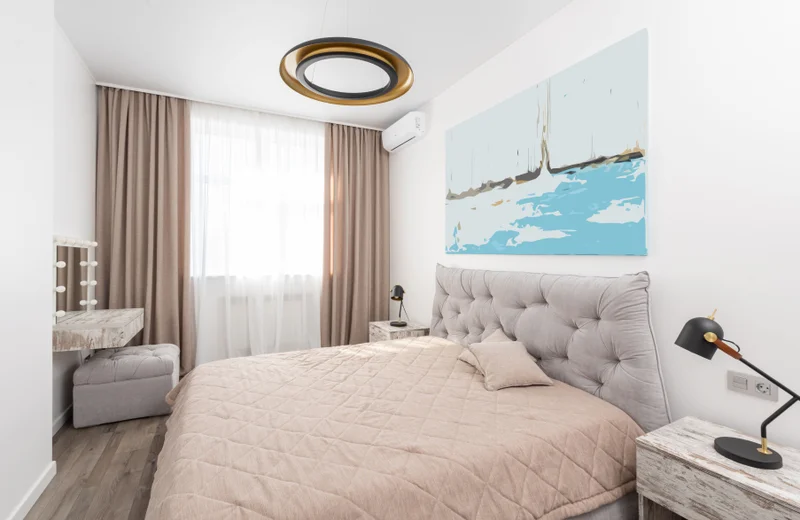
If the office has to live in the bedroom, the priority is separating work from sleep.
- Sit with your back to the bed. You won’t see the bed while you work, and it stays out of video call backgrounds.
- Use a desk that folds away. A drop-leaf desk, a wall-mounted fold-down desk or a slim console table can be cleared in a couple of minutes at the end of the day.
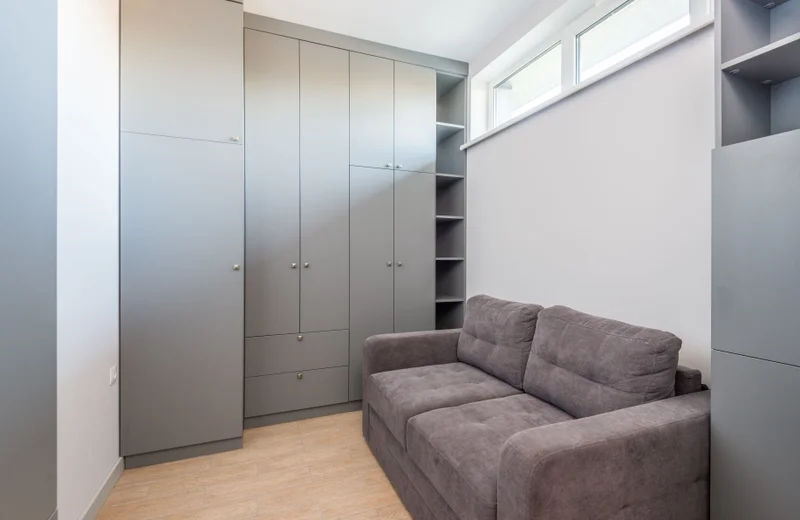
- Turn a wardrobe or alcove into a work nook. Removing a wardrobe door, or using an unused alcove beside the chimney breast, gives you a desk position that doesn’t take any floor space.
- Use a divider. A bookcase, a screen or even a plant stand marks out the work zone.
- Keep the laptop out of bed. It sounds obvious, but a dedicated desk is the boundary that lets you switch off.
For layouts that keep the bed and desk from fighting over the same wall, see our small bedroom layout ideas.
Alcove and Under-Stairs Desk Ideas
Alcoves either side of a chimney breast are among the best places for a compact office, and many British homes have them.
- Measure the width and depth first. Most alcoves are 90 to 120cm wide, which fits a desk of the same width.
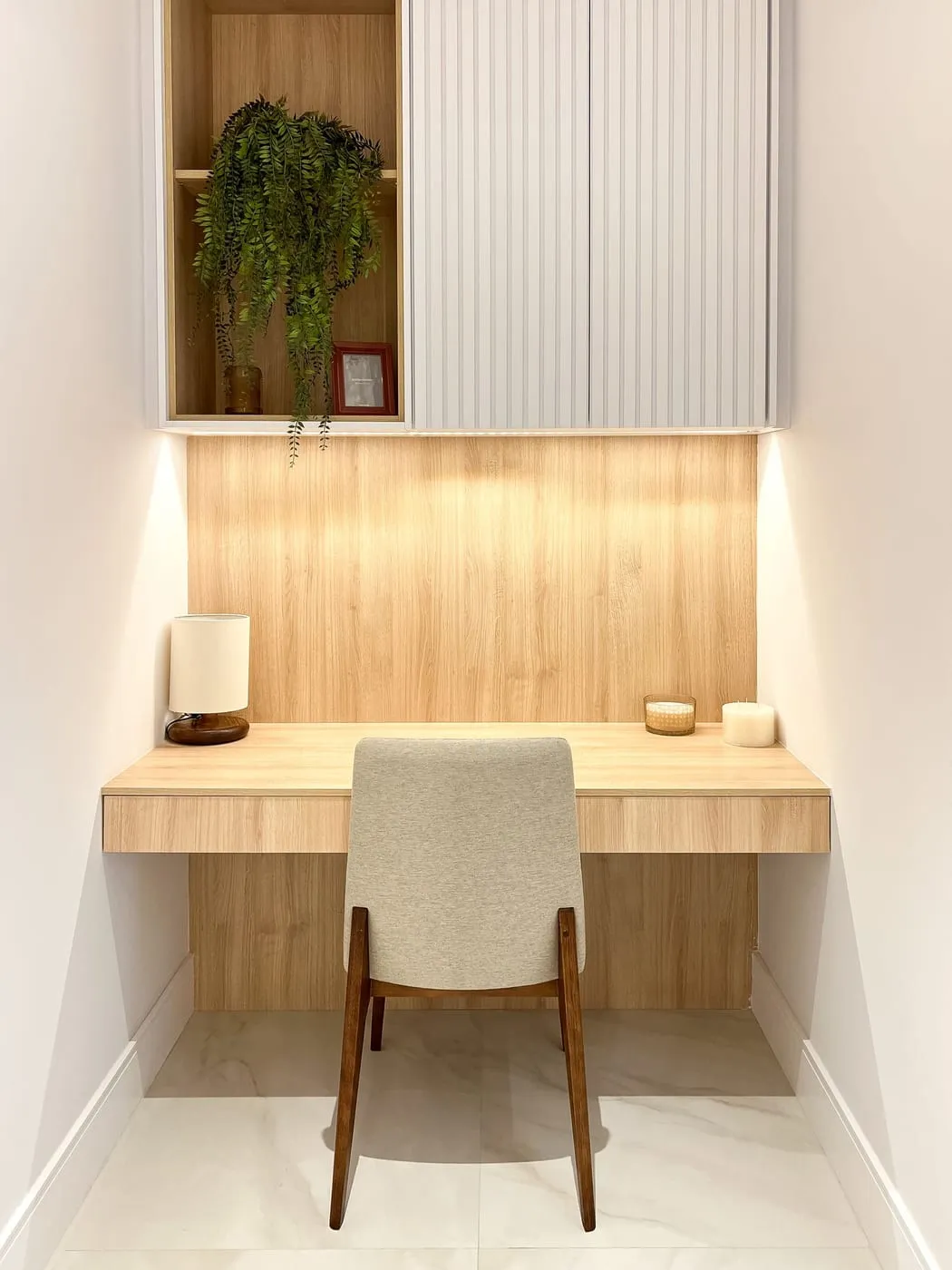
- Choose a floating desk or a shelf desk. A single deep shelf fixed at desk height with a chair underneath takes almost no visual space. Renters should check with their landlord before drilling, or use a freestanding desk cut to fit.
- Add a shelf above and a lamp. Wall lighting or a clip-on lamp keeps the desk surface clear.
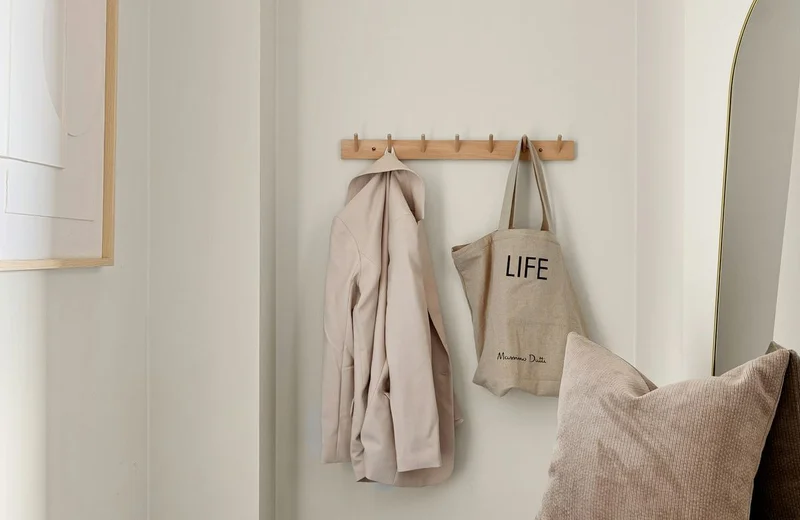
- Use the under-stairs space. A shallow desk under the stairs works if headroom allows. Add lighting and a hook or two for headphones and bags.
Living Room and Hallway Corner Offices
You don’t need a room of your own. A corner of the living room or hallway can host a small office if it can be tidied away.
- A console table doubles as a desk. A slim console about 35 to 45cm deep works for a laptop, with a stool that slides underneath.
- A secretary or bureau desk. The lid closes and the whole office disappears.
- A wall-mounted fold-down desk. Fixed to the wall, it folds flat when you’re not using it. If you can’t drill, a freestanding folding desk gives you a similar effect.
Our multifunctional furniture ideas for UK homes has more pieces that earn their space in a small room.
Lighting for a Small Home Office
Good light does more for a small workspace than any other change.
- Position the desk side-on to the window. Facing a window creates glare on the screen, and having the window behind you reflects into it.
- Add an adjustable task lamp. A neutral-white bulb around 3,500 to 4,000K is comfortable for working. Switch to a warmer bulb, around 2,700K, when you’re finished so the space still feels like part of the home.
- Avoid a single overhead light. It casts your own shadow on the desk. A task lamp on the opposite side to your writing hand solves that.
If the office shares a bedroom, our bedroom lighting ideas covers how to layer light so the room still feels restful at night.
Storage and Cable Tidying
Clutter is what makes a small office feel cramped. Small fixes help a lot:
- Go vertical. A shelf above the desk or a tall, narrow bookcase beside it uses height instead of floor.
- Use a tension rod and baskets. A tension rod fitted between two walls or inside an alcove holds lightweight baskets or a small pegboard, with no drilling.
- Get cables off the floor. A desk organiser or cable tray under the desk or adhesive cable clips along the back edge keeps wires out of sight and stops them tangling around the chair.
- Keep a single “inbox”. One tray for paper stops it spreading across the desk.
What Will a Small Home Office Cost?
These are typical UK price ranges for the main pieces. Prices vary by retailer, so check current prices before buying.
| Item | Typical cost |
|---|---|
| Compact desk (100 to 120cm) | £40 to £150 |
| Wall-mounted fold-down or drop-leaf desk | £40 to £120 |
| Adjustable office chair | £80 to £250 |
| Task lamp | £15 to £40 |
| Freestanding shelving | £25 to £80 |
| Monitor stand / cable tray or clips | £5 to £15 |
A workable setup sits at the lower end of these ranges, and the chair is the item most worth spending on.
Renter-Friendly Setup Checklist
- Measure the space before you buy: width, depth, and door swing.
- Choose freestanding pieces. Shelving, desks and lamps that stand on the floor need no permission.
- Use adhesive fixings sparingly. Adhesive hooks and cable clips work for light items, but always check the weight limit and follow the removal instructions.
- Check your tenancy agreement before drilling anything.
- Keep it reversible. If it can be lifted out and taken with you, it’s a safe choice.
For more ways to make a rented space feel like your own, see our rented flat makeover guide.
Common Mistakes to Avoid
- A desk that’s too deep for the room. An extra 10cm can stop the door opening.
- Skimping on the chair. A cheap chair costs more in discomfort than it saves.
- Working in a dark corner. Poor light causes eye strain and makes the room feel smaller.
- Leaving everything on show. In a shared space, an office that can’t be closed away tends to take over the room.
Final Thoughts
A good small home office is about proportion, not square footage: the right desk depth, a chair that supports you, light you control, and a way to put it all away. Start with the chair and the lighting, fit the desk to the space you have, and add storage last.
Frequently Asked Questions
Put the desk across the window end of the room so you get daylight and the door can still open fully. Run tall, narrow shelving up one side wall to keep the floor clear, and choose a chair that tucks fully under the desk. A box room is often around 5 square metres or less, so a desk about 120cm wide and 60 to 70cm deep is usually the largest that works.
For a laptop, aim for at least 100 to 120cm wide and 60cm deep. If you use a monitor, keyboard and mouse, go for about 70cm deep so the screen sits an arm's length away. Standard desk height is around 72 to 75cm, which suits most people with a chair that allows your elbows to sit at roughly 90 degrees.
Place the desk so you sit with your back to the bed, or use a folding desk, a wall-mounted fold-down desk or a slim console that can be cleared away at night. Keeping work and sleep visually separate helps you switch off. A rug, a screen or a bookcase used as a divider all create a boundary without building anything.
Use daylight where you can, with the desk placed side-on to a window rather than facing it, which cuts screen glare. Add an adjustable [desk lamp](https://link.amazon/B0anMQSBp) with a neutral-white bulb (around 3,500 to 4,000K) for working hours and switch to a warmer bulb (around 2,700K) in the evening so the room still feels comfortable.
Yes. Use freestanding shelving, a folding or drop-leaf desk, a tension rod with baskets, and adhesive cable clips or a cable tray under the desk. Avoid drilling unless your landlord agrees in writing. Everything above can be lifted out and taken with you when the tenancy ends.