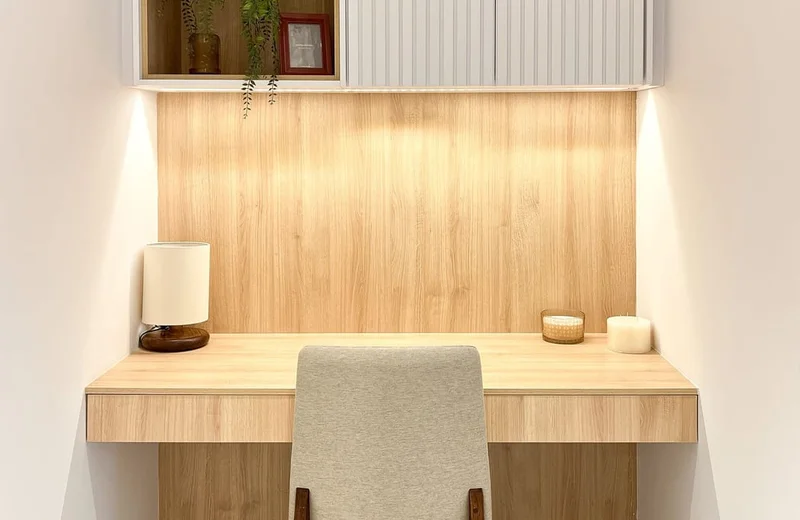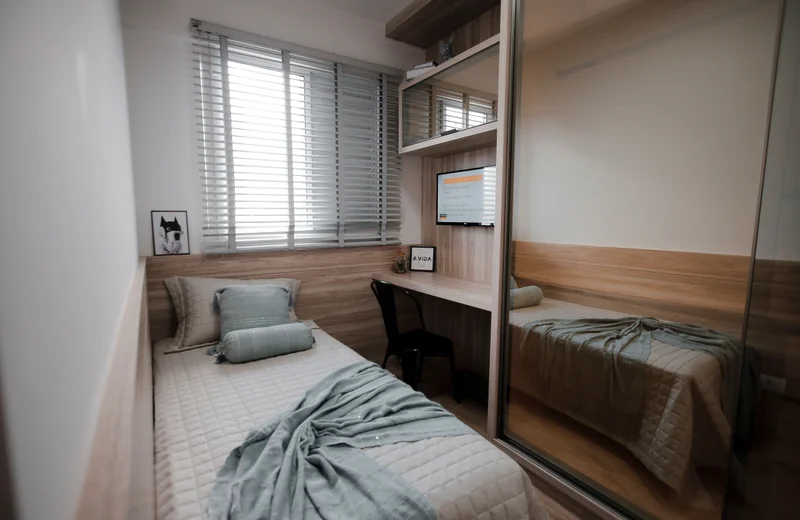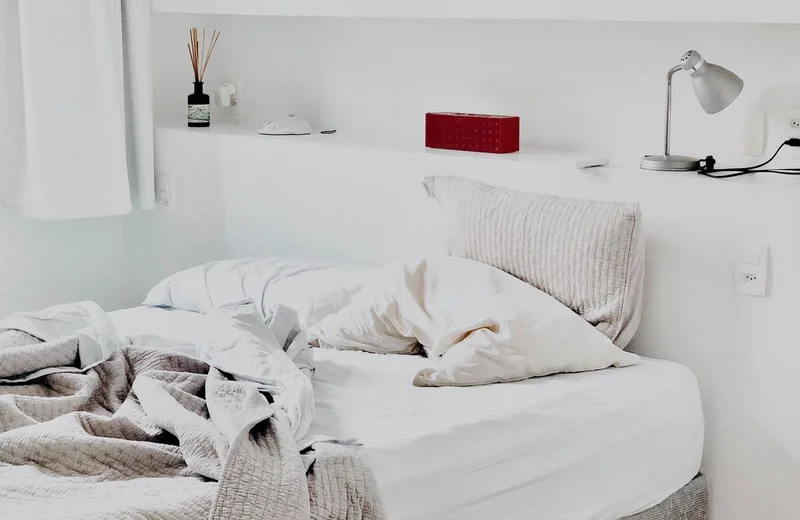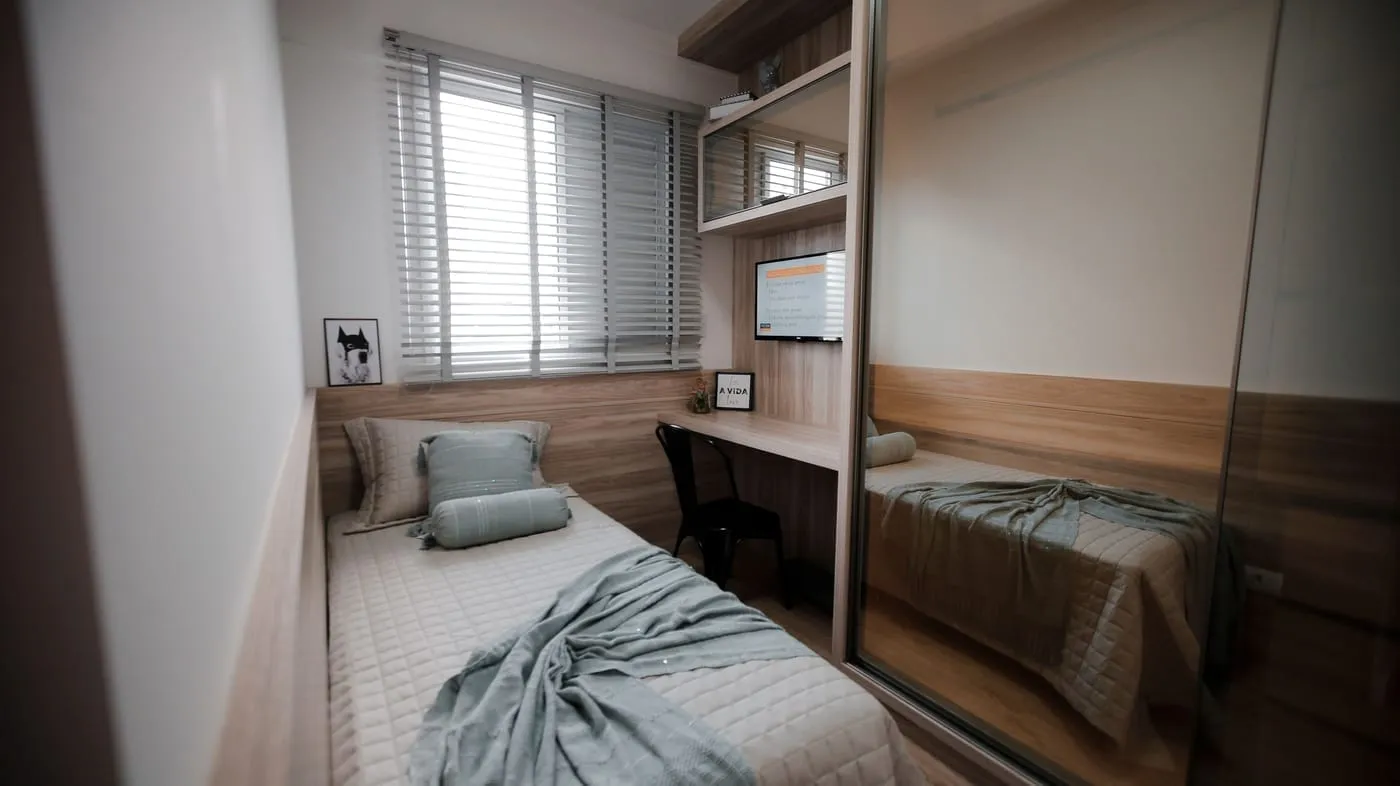
Every UK flat or terraced house has one: the box room. That 6-8 square metre afterthought next to the bathroom that the estate agent optimistically calls a “third bedroom.” The good news is that a box room this size is genuinely usable once you stop trying to treat it like a normal room and start working with its actual dimensions. If you’re also dealing with a tight living space elsewhere, our small living room ideas UK guide covers the same practical approach for the room next door.
This guide covers three ways to use a box room (bedroom, office, nursery), the storage tricks that actually work at this scale, which bed sizes fit, and how to make the whole thing feel less like a cupboard. Everything here works in rented flats too.
Box Room as a Bedroom: Single Bed Layout
The most common use for a box room, and the one that needs the most careful planning because you’re fitting a bed, storage, and a walking path into a space roughly the size of a large bathroom.
Start with bed placement. Put the bed lengthways along the longest wall, with the headboard against one end wall. In a typical 2m x 3m box room, this leaves a corridor of about 70-80cm along one side for getting in and out, which is tight but workable. Pushing the bed into a corner frees more floor space in the middle of the room but makes bed-making harder and feels more cramped when you’re lying in it.
Bed size matters more here than anywhere. A standard UK single (90cm x 190cm) is the safest choice. It leaves roughly 110cm of clear floor width in a 2m-wide room, enough for a slim wardrobe or chest of drawers plus a walking path. A small double (120cm x 190cm, sometimes called a 4ft bed) fits in rooms closer to 2.5m wide but leaves only 80cm for everything else. A standard double (135cm) in a box room means shuffling sideways past the bed every time you enter the room.
Skip the bedside table. A floating shelf fixed at mattress height (IKEA LACK shelf, around £9) or a small wall-mounted ledge does the same job with zero floor footprint. If you’re renting and can’t drill, a slim clip-on shelf that hooks over the headboard works too, roughly £15-20 on Amazon.
For more bedroom layout strategies that work in tight UK rooms, our small bedroom on a budget guide goes deeper on storage and furniture for small bedrooms.
Box Room Bed Size Guide
Because this is the question that trips most people up, here it is laid out clearly:
| Bed Size | Dimensions | Minimum Room Width | Works in a Box Room? |
|---|---|---|---|
| Single | 90cm x 190cm | 1.8m | Yes, comfortably |
| Small Double (4ft) | 120cm x 190cm | 2.3m | Yes, if room is 2.3m+ wide |
| Standard Double | 135cm x 190cm | 2.5m | Barely, very little floor space left |
| King | 150cm x 200cm | 2.8m | No |
The “minimum room width” assumes 70cm of clear space beside the bed for walking. Below that, you’re climbing over the bed to reach the window, which gets old fast.

Box Room as a Home Office
If you work from home even a few days a week, a box room makes a better office than a corner of the living room. The door closes, the mess stays contained, and video calls don’t include your kitchen in the background.
The fold-down desk is the key piece. A wall-mounted fold-down desk (sometimes called a Murphy desk) gives you a work surface of roughly 80cm x 50cm that folds flat against the wall when you’re done. Prices range from about £40 for a basic panel from Amazon to £150 for something with built-in shelving from Wayfair. For renters, freestanding versions that lean against the wall without fixings exist too, around £60-80 from Argos or Dunelm.
Chair storage. A folding chair that hangs on the back of the door when not in use keeps the floor completely clear. Alternatively, a slim stool that slides under the desk takes up less room than a standard office chair with arms.
Monitor placement. If you use a monitor, mount it on a desk-clamp arm (around £20-30) rather than using the stand it came with. This frees the entire desk surface and lets you push the screen back against the wall, gaining 15-20cm of usable desk depth.
Lighting for screen work. The single ceiling light most box rooms come with creates glare on screens. A desk lamp with an adjustable arm (the IKEA TERTIAL at £9 is hard to beat for the price) positioned to one side of the monitor eliminates this. If the box room has a window, position the desk so the window is to your side rather than behind or in front of you to avoid screen reflections and backlighting on video calls.
Box Room as a Nursery
A box room is actually a solid size for a nursery. Babies need surprisingly little space, and the small room keeps everything within arm’s reach during night feeds.
Cot placement. A standard UK cot (120cm x 60cm) fits along the shorter wall of most box rooms with room to spare. Keep it away from the window (cord safety and draughts) and away from the radiator. The remaining floor space is enough for a small nursing chair or a changing mat on top of a chest of drawers.
The cot-to-bed transition. When the baby outgrows the cot, a cot bed (which converts to a toddler bed at around 140cm x 70cm) still fits comfortably. After that, a standard single bed takes you through to the teenage years without needing to move rooms.
Storage for baby things. Babies accumulate stuff at an alarming rate. A narrow set of drawers (the IKEA KULLEN 3-drawer at around £30 works well at 35cm deep) doubles as a changing station with a mat on top. Fabric hanging organisers on the back of the door hold nappies, wipes, and small items without taking any floor space.
Storage Solutions That Actually Fit
Storage in a box room can’t follow normal bedroom rules. There isn’t room for a full-size wardrobe and a chest of drawers and a bookshelf. Pick one main storage piece and supplement it with vertical and hidden storage.
Under-bed storage is non-negotiable. If your bed frame doesn’t have built-in drawers, get a bed with enough clearance for rolling storage boxes underneath. The IKEA MALM bed frame with built-in drawers (from around £229 for a single) is purpose-built for this. Alternatively, vacuum storage bags under a divan bed compress duvets and seasonal clothes to a fraction of their size.
Vertical storage on every wall. Floating shelves above the bed, above the desk, above the door. A slim wall-mounted bookcase (the IKEA BILLY at 28cm deep fits on most box room walls without blocking the walking path). In rented places, tall freestanding shelving units like the IKEA KALLAX 1x4 (42cm wide, 147cm tall) lean against a wall and hold a surprising amount.
Over-door organisers. The back of the door is dead space in every room, but in a box room it’s premium storage. A fabric over-door organiser with pockets (around £8-12) holds shoes, accessories, stationery, or baby supplies depending on how you use the room.
Hooks, everywhere. Adhesive hooks on the wall behind the door, on the side of the wardrobe, inside the wardrobe doors. Command strips rated for 3kg+ hold coats, bags, headphones, and anything else that would otherwise end up on the floor or the bed.
Lighting a Box Room
Most box rooms have one ceiling light, often a bare bulb or a basic pendant, and one small window. This combination makes the room feel darker and smaller than it actually is.
Layer the light. You need at least two light sources: the ceiling light (swap the shade for something that throws light upward and outward rather than straight down) and a task light at bed height or desk height. A warm-white LED bulb (2700K-3000K) in both keeps the room feeling cosy rather than clinical.
Maximise the window. Whatever the window size, don’t block it. Swap heavy curtains for a roller blind or voile panel that lets light through during the day. If you need blackout for sleeping, a blackout roller blind (from about £12) sits flush to the glass and takes up zero wall space compared to curtains.
Mirror trick. A mirror placed on the wall opposite the window reflects natural light back into the room and creates the illusion of depth. It doesn’t need to be large; a 40cm x 60cm mirror from a charity shop or TK Maxx does the job. Lean it against the wall if you can’t drill.
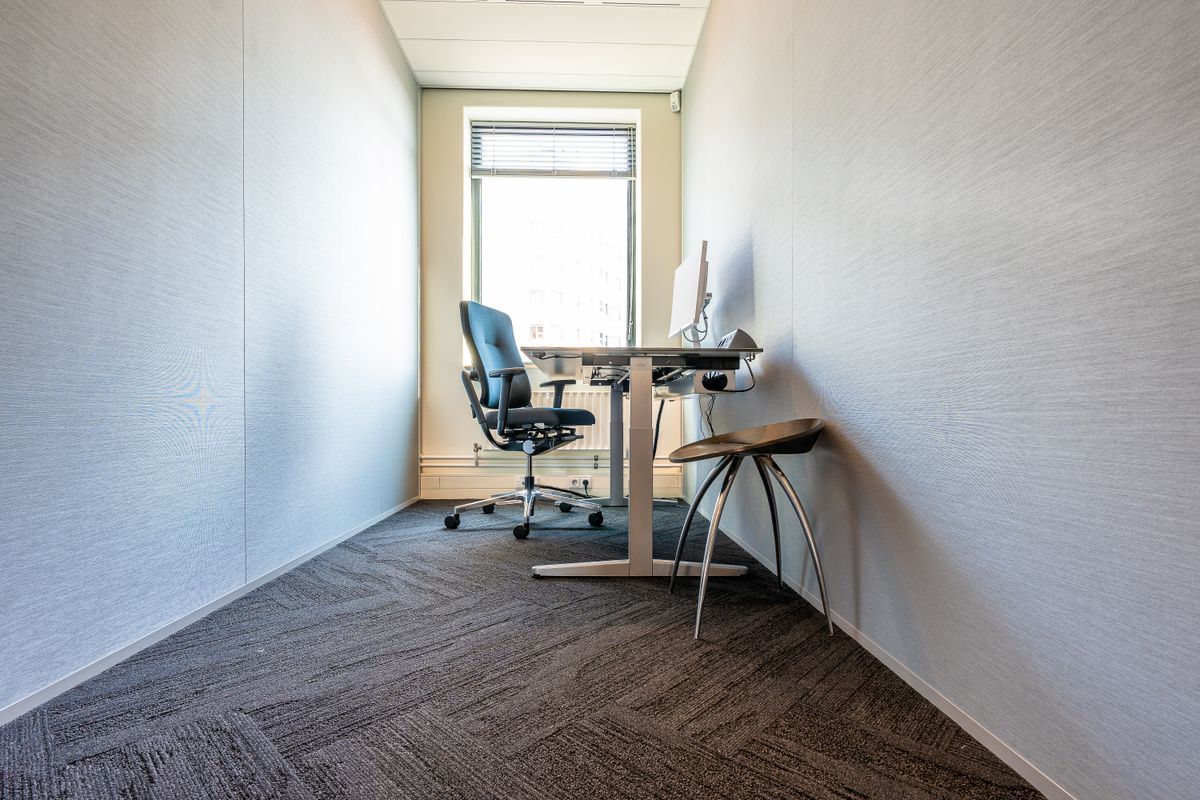
Colour and Paint: Making a Box Room Feel Bigger
The paint colour on a box room’s walls has a bigger impact per square metre than in any other room because every surface is within arm’s reach.
Go light, but not sterile. Pure brilliant white can feel cold and institutional, especially under artificial light. Slightly warmer alternatives like Dulux “Jasmine White” or Farrow & Ball “All White” (if budget allows at around £52 per 2.5L) give the same spacious effect with more warmth.
Paint the ceiling the same colour as the walls. This blurs the boundary between wall and ceiling, making the room feel taller. In a box room with standard 2.4m ceilings, this single trick makes a noticeable difference.
One accent wall works. If you want some personality, paint the wall behind the headboard (or behind the desk) in a slightly deeper shade of the same colour family. A pale grey room with one wall in medium grey, for example. Avoid dark feature walls in box rooms as they close the room in rather than adding depth.
Renter-friendly option. Removable peel-and-stick wallpaper on one wall (from about £15 per roll on Amazon) adds pattern and interest without permanent changes. Stick to small-scale patterns rather than large bold prints, which can overwhelm a tiny room.
Making a Box Room Feel Bigger: The Full Checklist
Beyond colour and lighting, several other decisions affect how spacious a box room feels:
Keep furniture low-profile. Low bed frames and short bookcases keep sight lines open across the room. If you can see the far wall from the doorway without furniture blocking the view, the room immediately feels larger.
Clear the floor. Everything that can go on the wall or under the bed should. A visible floor area, even a small one, registers as space. A floor covered in bags, shoes, and stacked boxes registers as clutter regardless of the room’s actual size.
Use the same flooring as the hallway. If your box room has different flooring to the corridor outside, the visual break at the doorway makes the room feel like a separate, contained space. Matching flooring (or a runner that continues the hallway look) creates flow and borrows perceived space from outside.
Door swing. If the door opens inward and hits the bed or the desk, switch the handle so it opens outward, or replace it with a sliding door if the hallway allows it. A door that can’t open fully makes the room feel cramped every time you enter it.
Curtain rod above the frame. If you do use curtains, mount the rod as close to the ceiling as possible and extend it 10-15cm past each side of the window frame. This makes the window appear larger than it is and lets you stack the curtain fabric entirely off the glass when open.
Renter-Friendly Box Room Ideas
If you’re renting, everything above still applies with a few substitutions. Our renter-friendly bedroom ideas UK guide covers the full range, and our renter-friendly storage rules guide breaks down exactly what needs landlord permission and what doesn’t — but here are the box-room specifics:
No-drill shelving. Tension rod shelving systems (the kind that press between floor and ceiling) hold books, plants, and small items without touching the walls. The IKEA ELVARLI system works for this, though freestanding alternatives from Amazon start at around £30.
Command strips over screws. For anything that would normally need a wall fixing (mirrors, small shelves, hooks, picture frames), the 3M Command range holds up to 7.2kg per pair of strips. They remove cleanly from most painted walls when you leave.
Freestanding wardrobes over built-ins. A canvas wardrobe (from about £15 at Argos) is ugly but functional and takes up about 75cm x 50cm of floor space. A step up, the IKEA PAX at 60cm deep fits along one wall of a box room and looks like a permanent fixture but can be disassembled and moved.
Removable upgrades. Peel-and-stick floor tiles over worn carpet (if the landlord agrees), removable wallpaper, plug-in wall lights instead of hardwired ones, and stick-on LED strip lighting under shelves all transform the room without permanent changes.
What Not to Do in a Box Room
A few common mistakes that waste space or make the room feel worse:
Don’t use a full-length wardrobe if a half-height one works. If you’re only storing folded clothes and a few hanging items, a half-height rail with a shelf above it takes up less visual space than a floor-to-ceiling wardrobe.
Don’t put the bed in the centre of the room. In a normal bedroom, a centred bed looks balanced. In a box room, it blocks walking paths on both sides and wastes the most usable wall space.
Don’t overdo the decor. One or two pieces of wall art, one plant, one throw. A box room filled with cushions, fairy lights, multiple prints, and decorative items feels cluttered rather than cosy. Less is genuinely more at this scale.
Don’t ignore ventilation. Box rooms are often the most poorly ventilated room in the house, especially internal ones with small or no windows. A small USB desk fan (around £10-15) or keeping the door ajar at night prevents the stuffiness that makes a small room feel even smaller.
What This Costs: A Rough Budget
Kitting out a box room doesn’t need to be expensive. Here’s a realistic budget for turning an empty box room into a functional bedroom:
| Item | Budget Option | Mid-Range Option |
|---|---|---|
| Single bed frame + mattress | £120-150 (Argos, IKEA) | £200-300 (Silentnight, Dreams) |
| Under-bed storage boxes | £10-20 (Wilko, IKEA) | £30-40 (muji-style drawers) |
| Floating shelves x2 | £18 (IKEA LACK) | £30-50 (Dunelm, Habitat) |
| Over-door organiser | £8-12 (Amazon, Dunelm) | £15-20 (Lakeland) |
| Roller blind | £12-20 (Argos) | £25-40 (Dunelm, made to measure) |
| Mirror | £5-15 (charity shop, TK Maxx) | £20-35 (Dunelm, IKEA) |
| Paint (one coat, small room) | £12-18 (Dulux, B&Q own brand) | £45-55 (Farrow & Ball) |
| Desk lamp | £9 (IKEA TERTIAL) | £20-35 (John Lewis) |
| Total | £194-262 | £385-575 |
The budget end gets you a fully functional, good-looking box room. The mid-range adds nicer materials and brand-name pieces but doesn’t change the fundamentals.
Related Reading
- Small Bedroom on a Budget UK covers affordable furniture and storage for tight bedrooms.
- Renter-Friendly Bedroom Ideas UK covers no-drill, no-damage upgrades for bedrooms in rented flats.
- Box Room Home Office Ideas UK covers turning the same box room into a workspace instead.
Frequently Asked Questions
A box room is the smallest bedroom in a UK house or flat, typically 6-8 square metres (roughly 2m x 3m or 2.5m x 3m). Originally used for storage, these rooms are now commonly used as bedrooms, home offices, or nurseries.
A single bed (90cm x 190cm) fits comfortably in most box rooms with space left for a small wardrobe and walking room. A small double (120cm x 190cm) fits in box rooms closer to 8 sqm but leaves very little floor space for other furniture.
Use light wall colours (white, pale grey, soft cream), hang a mirror opposite the window to bounce light, keep furniture low-profile and off the floor where possible, and avoid heavy curtains that block natural light. A single accent wall in a slightly deeper tone adds depth without closing the room in.
Yes. A wall-mounted fold-down desk (around £40-80 from Amazon or IKEA) gives you a full work surface that disappears when not in use. Add a slim shelf above for a monitor and you have a functional office in under 2 square metres of floor space.
Most of them. Stick to command strips instead of screws, freestanding furniture instead of built-ins, and removable wallpaper or paint that you can cover when you leave. Over-door hooks and tension rods need zero holes in walls.