For years, British interiors defaulted to pale, neutral, safe. Magnolia walls, grey carpets, white gloss woodwork. The logic was sound: our grey climate means we need to maximise the light we get, so pale colours are practical.
But there’s another logic — one that’s been running through British interior design for centuries, from Victorian parlours to Georgian libraries to Edwardian studies: lean into the darkness. Use it. Make a room that feels like shelter rather than an apology for the weather outside.
Dark, moody interiors are the British interior tradition. And they’re very much back.
I tested this in my own living room eighteen months ago — painting three walls in Farrow & Ball Hague Blue and the chimney breast in something even deeper. It was the most transformative thing I’ve done to my home, and I’ve never looked back.
TL;DR: The key to dark and moody done right is warmth — warm lighting, warm textiles, warm accessory tones. Dark walls need warm companions, not cool ones. Renters can get 80% of the effect through textiles and lighting alone. Budget options exist at every price point from B&Q (£18) to Farrow & Ball (£65 per 2.5L tin).
1. Should You Commit Fully or Not at All?
The biggest mistake people make with dark interiors is going halfway. One dark feature wall surrounded by three pale walls often looks like an accident rather than a choice.
Committing to at least three of four walls in a single dark tone is what separates an intentional, cocooning room from one that looks like an unfinished decorating job.
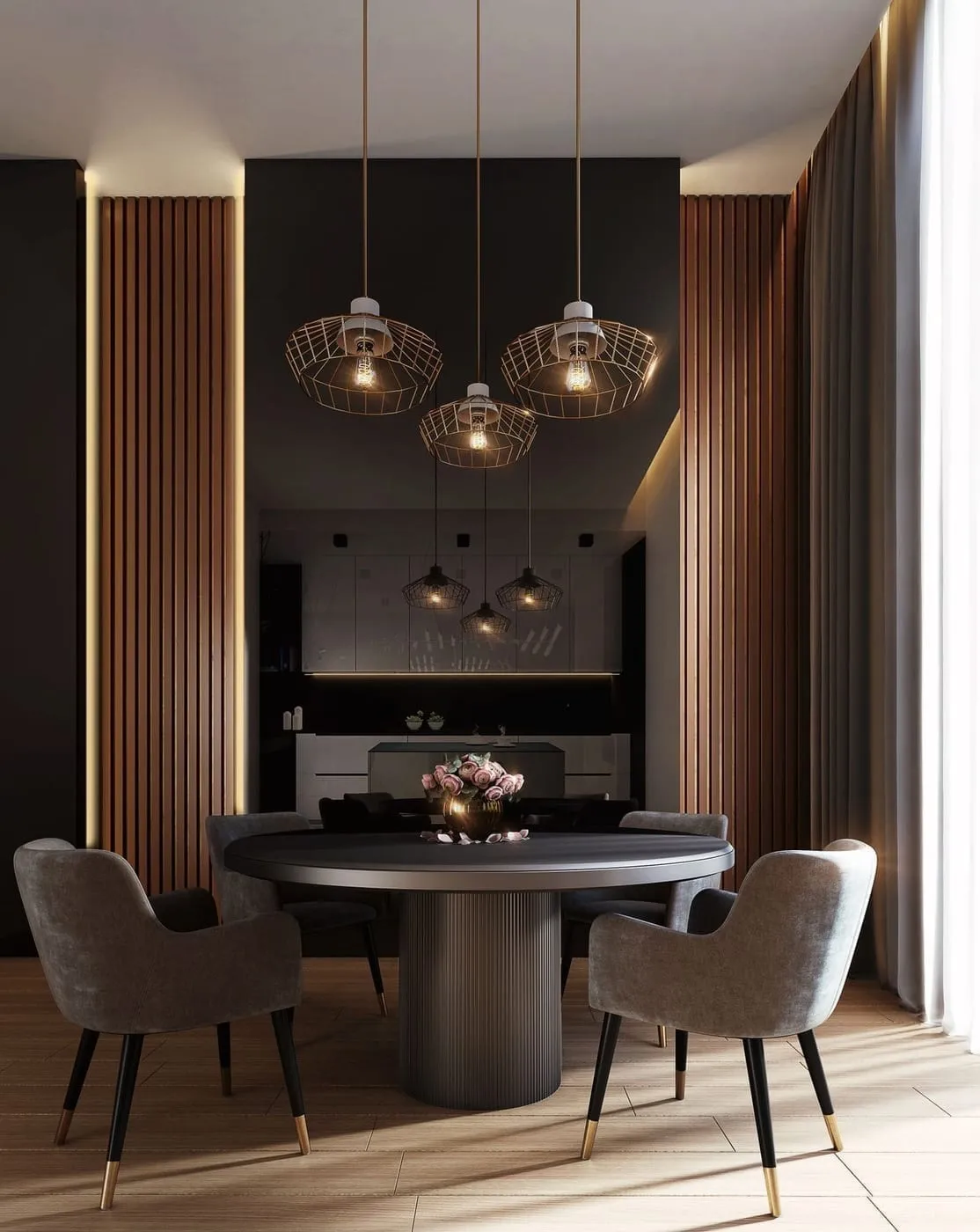
Dark interiors work because they create an enveloping, cocooning atmosphere. That atmosphere only works when you’ve committed: all four walls, or at least three. The ceiling in a matching or slightly lighter tone. Even the woodwork, optionally.
This isn’t as scary as it sounds. A room painted entirely in deep forest green doesn’t feel small and oppressive — it feels like a proper room, a room with intention and character. The one thing that makes dark rooms feel oppressive is bad lighting, which we’ll address next.
If you’re nervous: Start with a room that’s already used in the evening (bedroom, dining room) rather than a south-facing living room. Evening rooms are naturally experienced in artificial light, which is where dark interiors shine.
2. Why Does Lighting Make or Break a Dark Room?
This is the non-negotiable rule of dark interior design: you need warm, layered lighting, and you need enough sources. Without it, a dark room feels like a cave. With it, it feels like the cosiest room in Britain.
A Dunelm floor lamp from around £45 combined with a £8 three-pack of 2700K warm LED bulbs is often all it takes to turn a dark room from cave-like to genuinely cosy.
What to do:
Remove your dependence on the overhead light entirely. In a dark room, a single overhead source creates harsh shadows and makes the walls feel flat and oppressive.
Replace it with:
- A floor lamp in the corner farthest from the door — this bounces light across the room and creates depth
- Table lamps on side tables and shelves — two or three sources at different heights
- A statement ceiling pendant on a dimmer, turned low
- Candlelight in the evenings — real candles or high-quality flameless candles
Every single bulb must be 2700K warm white. No cool white, no daylight bulbs. In a dark room, cool light looks clinical and grey; warm light looks amber and rich.
A Dunelm floor lamp in warm brass starts at around £45. A three-pack of warm white LED bulbs costs less than £8 from Amazon UK. The investment is minimal; the effect is transformative.
3. What Are the Best Dark Paint Colours for UK Homes?
Not all dark colours behave the same way in British light. Green-based darks (forest green, teal, dark sage) tend to work better in our cool grey light than pure blue-based darks, which can read as cold. Warm darks — those with red or brown undertones — work well in any orientation.
Prices for a convincing dark paint range from £15 per 2.5L for Wilko’s budget ‘Deep Forest’ up to £65 per 2.5L for Farrow & Ball’s ‘Hague Blue’ — a more than fourfold difference for a broadly similar deep, warm effect.
The top performers:
- Farrow & Ball ‘Hague Blue’ (~£65/2.5L) — a deep, slightly green-blue. Looks different in every light and is probably the most-photographed dark colour in British interiors right now. Works in any room with any orientation.
- Farrow & Ball ‘Railings’ (~£65/2.5L) — a very deep charcoal-navy. Sophisticated and dramatic.
- Dulux ‘Midnight Teal’ (~£35/2.5L) — a rich teal-green that performs brilliantly under warm light.
- Dulux ‘Ink Well’ (~£35/2.5L) — a deep inky navy, more affordable than F&B Railings with similar effect.
- B&Q ‘Beaumont Green’ (~£18/2.5L) — a deep, warm forest green at a genuinely budget price.
- Wilko ‘Deep Forest’ (~£15/2.5L) — the most affordable option; does a credible impression of the much more expensive F&B greens.
Always: Buy a tester pot first (~£4–£5) and paint two large patches on different walls. Live with them through different times of day. Dark colours shift significantly between morning, afternoon, and evening — you need to see them in your specific room’s light before committing.
4. How Do You Choose the Right Textiles for a Dark Room?
Dark walls need textiles that work with them, not against them. The mistake most people make is adding pale, cool textiles — cream linen cushions, grey throws — against dark walls. This creates contrast without warmth, and the room feels cold and sharp.
Dunelm’s velvet cushion range, running from around £8 to £14 each, is enough to add the warm, light-absorbing texture that dark walls need to avoid feeling cold and sharp.
Instead, choose:
- Warm ambers and burnt oranges — these glow against dark walls and add richness
- Deep golds and mustards — complementary to dark greens and navies
- Terracotta and rust — earthy warmth that grounds the room
- Jewel tones — ruby, teal, plum — if you want colour-on-colour contrast
- Natural materials — velvet, wool, chunky cotton — textures that absorb light
What to avoid: Cool greys, stark whites, and light blues against dark walls. They create a harsh contrast and make the room feel clinical.
Velvet cushions are the obvious choice — they absorb light beautifully and create a matte richness against dark walls. Dunelm’s velvet cushion range runs from around £8–£14 each and the quality is genuinely good.
5. What’s the Right Way to Use Mirrors in Dark Rooms?
The conventional wisdom says dark rooms need mirrors to bounce light. This is true, but the type and placement of mirrors matters.
A large statement mirror from Wayfair UK, priced from around £45 to £120, does more to bounce light around a dark room than several small mirrors ever could.
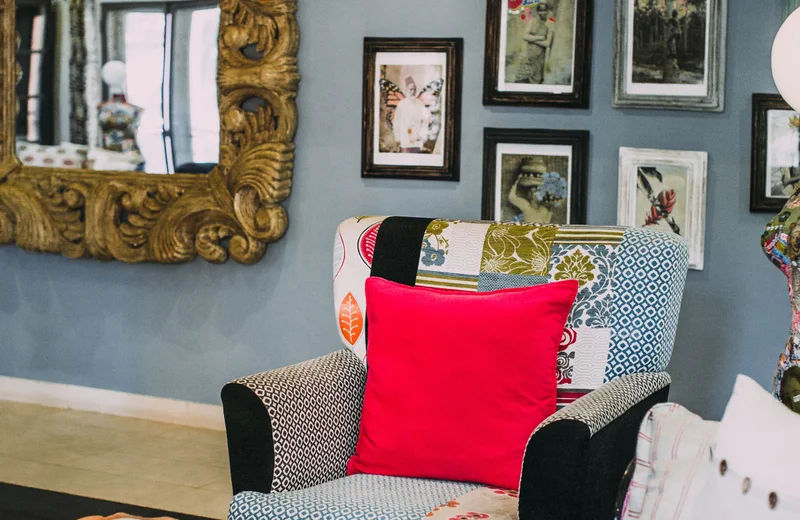
What works: Large, ornate-framed mirrors placed opposite a window or a lamp source. The frame should be warm — antique gold, dark wood, or tarnished brass — rather than chrome or silver. A Baroque-style gilt mirror against a dark green wall is one of the most dramatic things you can do in a British living room.
What doesn’t work: Many small mirrors scattered around the room. They create a busy, fractured effect that fights the enveloping calm that dark rooms are meant to create.
A large statement mirror from Wayfair UK runs from around £45–£120. Charity shops and car boot sales often have ornate-framed mirrors at a fraction of retail — it’s worth being patient and finding something with character rather than buying new.
6. Dark Rooms and Period Properties
If you have a Victorian or Edwardian home, dark moody colours are genuinely coming home. These houses were built with this aesthetic in mind — high ceilings, large skirting boards, ornate coving, and original fireplaces all exist in a tradition of rich, warm, dark interior spaces.
Paint your chimney breast in something dramatic — Railings or Pitch Black from Farrow & Ball, or Midnight Teal from Dulux — and the room’s architectural bones do the rest. Add a large gilt mirror above the fireplace, a pair of matching table lamps with amber shades, and a velvet sofa in a jewel tone.
The result is a room that looks like it belongs in a House & Garden editorial, and it costs the price of a tin of paint and some cushions.
7. The Renter’s Dark Room
If you’re renting and can’t paint, you can still create a genuinely moody, atmospheric room through textiles, lighting, and furniture.
Dark velvet curtains from Next Home or Dunelm, at around £40–£80 a pair, are the single most impactful and fully reversible thing a renter can buy to change the character of a room.
The renter’s toolkit:
- Dark velvet curtains from Next Home or Dunelm (~£40–£80 a pair): the single most impactful thing a renter can do. Dark curtains change the character of a room completely.
- A dark rug in forest green, navy, or charcoal over existing carpet or flooring
- Dark cushions and throws in jewel tones and warm ambers
- A large dark bookcase against one wall — fills the space with a dark anchor without painting
- Warm amber lighting only — swap out every cool bulb in the room for 2700K warm white
Removable dark wallpaper (peel-and-stick) from Etsy UK sellers gives you one feature wall of dark colour without any permanent change. Apply carefully, remove slowly at 45 degrees, and always test a patch first.
See our rented flat makeover guide for more deposit-safe ideas.
8. Dark Kitchens and Bathrooms
The moody trend extends beyond living rooms. Dark kitchens — navy, forest green, or a genuinely moody blue on the lower cabinets, paired with dark worktops — are one of the biggest kitchen design trends in the UK right now, according to Houzz UK’s 2025 home trends report.
For bathrooms, dark walls (a deep teal or charcoal) with brushed brass fittings and warm lighting creates a genuinely spa-like atmosphere. Because bathrooms are typically small and used briefly, dark colours don’t create the same living-in-darkness feeling they might in a bedroom or living room.
The key for dark kitchens and bathrooms: ventilation and moisture-resistant paint. Use specialist kitchen or bathroom paint — Dulux, Crown, and Johnstone’s all do good dark shades in their bathroom and kitchen ranges.
Priority Checklist
| Step | What to do | Approx cost |
|---|---|---|
| 1 | Buy a tester pot of your chosen dark colour | ~£4–£5 |
| 2 | Test on two walls, observe across 24 hours | £0 |
| 3 | Buy paint and paint all four walls (or hire a decorator) | ~£35–£100 |
| 4 | Replace all bulbs with 2700K warm white LEDs | ~£8–£15 |
| 5 | Add a floor lamp and at least one table lamp | ~£45–£90 |
| 6 | Add velvet cushions in amber, terracotta, or gold tones | ~£25–£50 |
| 7 | Find a large ornate mirror from a charity shop | ~£10–£30 |
→ For specific paint palette ideas see Living Room Colour Schemes That Work in British Light. → For living room styling tips to complete the moody look see 21 Living Room Ideas UK. → Taking the dark, moody palette into the kitchen? See Kitchen on a Budget UK.
Frequently Asked Questions
Yes — in fact, dark colours often work better in British rooms than pale ones, because they lean into our grey light rather than fighting it. A deep forest green or inky blue creates a cosy, enclosing atmosphere that feels intentional. See our [living room colour schemes guide](/blog/living-room-colour-schemes-uk/) for specific paint picks.
Farrow & Ball 'Hague Blue', 'Railings', and 'Pitch Black' are the most popular. For budget options, Dulux's 'Ink Well' and B&Q's 'Beaumont Green' perform well. Always test in your room's specific light — dark colours shift significantly between morning and evening.
Three things: warm lighting only (2700K bulbs, multiple lamp sources), warm-toned textiles (amber, terracotta, deep gold) rather than cool neutrals, and mirrors to bounce light without making the room feel bright. The goal is warmth, not brightness.
Yes — use dark curtains, a dark rug, dark cushions and throws, and warm amber lighting to create the moody effect without touching the walls. A dark bookcase or large dark furniture piece also anchors the scheme. See our [rented flat makeover guide](/blog/rented-flat-makeover-uk/) for deposit-safe ideas.