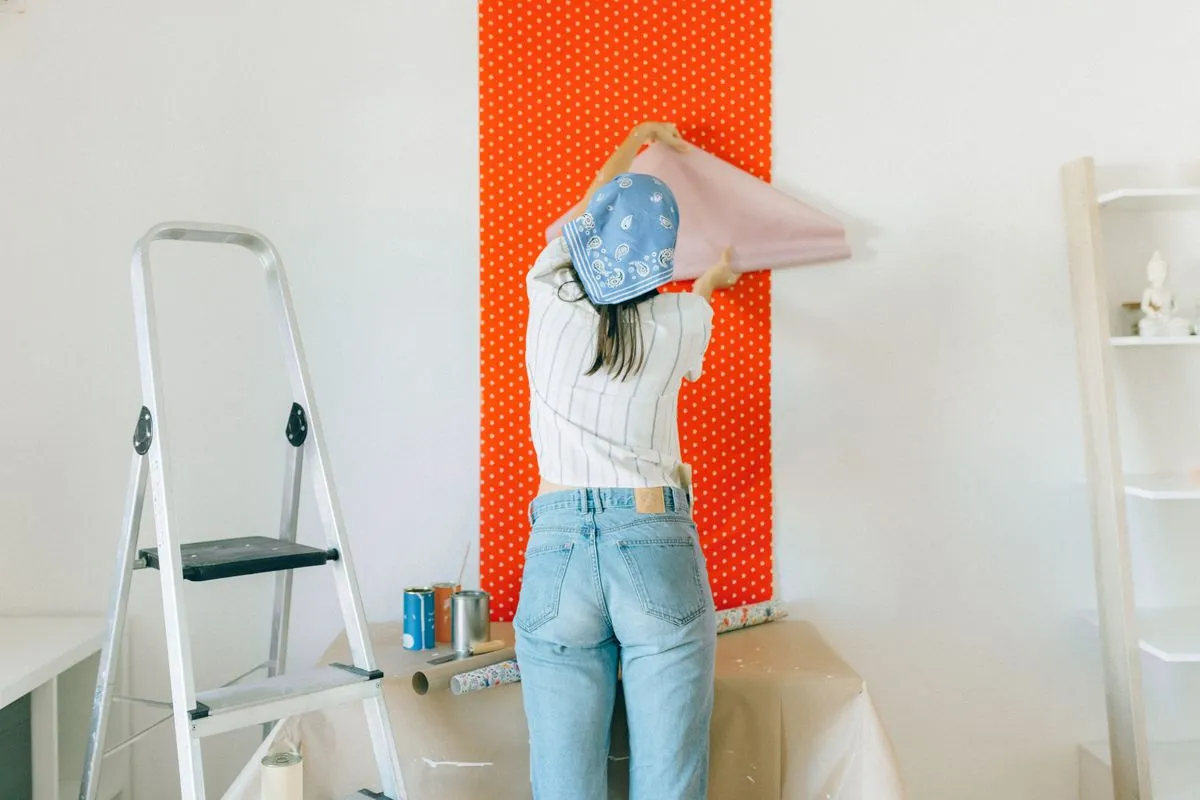
Peel-and-stick wallpaper promises the look of traditional wallpaper with none of the commitment — no paste, no steamer, no redecorating fee from your landlord. For UK renters living with magnolia walls and zero permission to paint, it sounds perfect. But it doesn’t behave the same way on every wall, and the wrong combination of product and surface either looks bad or risks your deposit on removal.
This guide breaks down how peel-and-stick wallpaper behaves on the five wall surfaces you’ll actually find in British rental properties — based on how these products are built (adhesive type, backing thickness, material) and how UK renters consistently report them performing — so you can match the right product to your specific walls before you buy.
Price Tiers You’ll Find in the UK
Peel-and-stick wallpaper sold in the UK generally falls into three price bands, and the tier matters more than the brand:
| Tier | Price Per Roll | What You Get |
|---|---|---|
| Budget | £12-£20 | Thin PVC or vinyl, solid colour or simple pattern, weaker adhesive |
| Mid-range | £25-£35 | Thicker, textured or fabric-effect finishes, better repositionability |
| Premium | £40-£60 | Woven or non-woven backing, strongest adhesive, best for difficult surfaces |
Budget rolls are fine for a short-term change — a party backdrop, a seasonal refresh, or testing whether you like the look before committing. For anything you plan to leave up for 6 months or more, mid-range is the safer buy: thick enough to hide minor wall imperfections, easier to reposition during application, and generally the cleanest to remove. Premium is worth the extra cost mainly for difficult surfaces (gloss paint, high-moisture rooms) where the stronger adhesive earns its price.
Surfaces You’ll Find in UK Rentals
- Magnolia matt emulsion (the ubiquitous UK rental wall colour, applied within the last 2 years)
- Older magnolia emulsion (5+ years old, slightly chalky)
- Woodchip wallpaper (still found in many older UK rentals, council properties, and ex-council flats)
- Lining paper (smooth, unsealed)
- Semi-gloss paint (common on woodwork, occasionally found on feature walls in older properties)
Before committing a full roll to any wall, apply a test piece (roughly 30 cm square) in a hidden spot — behind a door, inside a wardrobe, behind furniture — and leave it at least 48 hours before deciding. This single step catches most of the bad surprises below.
How Each Surface Behaves
1. Fresh Magnolia Matt Emulsion (Best Case)
This is the ideal surface for peel-and-stick wallpaper, and it’s also the most common wall finish in UK rentals. Smooth, sealed, recently painted — the adhesive gets full, even contact.
- Adhesion: Reliable across budget, mid-range and premium products alike on a fresh, sound painted surface.
- Appearance: Mid-range and premium rolls (thicker material) hide minor wall imperfections better than budget rolls.
- Removal: This is the surface where clean removal is most consistent, provided the paint itself is sound. Pull slowly at a 180-degree angle, folding the paper back on itself rather than pulling straight off — this minimises any risk to the paint underneath.
Verdict: If your rental has been recently painted with standard magnolia emulsion, peel-and-stick wallpaper should work well regardless of which price tier you buy.
2. Older Magnolia Emulsion (5+ Years)
This is where results get unpredictable. Older paint — especially anything slightly chalky to the touch — doesn’t always hold up under an adhesive backing the way fresh paint does.
- Adhesion: Generally fine while applied, but older paint underneath is the weak point, not the wallpaper itself.
- Removal: The real risk sits here. On chalky or aged paint, removal can pull small flakes of paint away with the backing — not large patches, but enough that you may need a touch-up.
Verdict: Usable, but test first — this is the surface where the 48-hour hidden-corner test matters most. If the test patch lifts clean, proceed. If it flakes, either skip peel-and-stick on that wall or seal it first with a thin coat of clear primer.
3. Woodchip Wallpaper (Avoid)
Woodchip is the one surface peel-and-stick wallpaper genuinely isn’t built for. The heavily textured, raised surface prevents the adhesive from getting full, even contact with the wall underneath.
- Adhesion: Weak across the board, including premium products — the raised texture creates air pockets and bubbles that no amount of adhesive strength fully solves.
- Appearance: The woodchip texture shows through regardless of product thickness.
- Removal: Ironically easier precisely because the adhesive never bonded fully — though it can still pull small pieces of the woodchip paper itself away with it.
Verdict: Not recommended on woodchip. If your rental has it, fabric wall hangings, large art, or a leaning mirror are better routes to the same visual change without fighting the texture.
4. Lining Paper (Good)
Lining paper gives a smooth, porous, consistent surface — one of the better candidates for peel-and-stick after fresh emulsion.
- Adhesion: Generally strong — the porous surface bonds well with most adhesive backings.
- Removal: Mostly clean, with one caveat: on unsealed lining paper, cheaper adhesives can leave a faint residue behind, removable with warm water and a drop of washing-up liquid. Mid-range and premium repositionable products are the safer choice here specifically because their adhesive is designed to release cleaner.
Verdict: Good to excellent. If your walls have lining paper, mid-range or premium products are the safest bet for clean removal.
5. Semi-Gloss Paint (Trickiest)
Gloss and semi-gloss surfaces are the trickiest case: the smooth, non-porous finish actually works against the adhesive, which needs some texture or porosity to grip.
- Adhesion: The weakest link on this surface is time, not application — edge lifting over weeks is common on gloss regardless of price tier, though premium products with stronger adhesive hold up noticeably longer than budget ones.
- Removal: The upside: the same slick surface that makes adhesion weak also makes removal very clean, with essentially no risk to the paint underneath.
Verdict: Not ideal for anything long-term. If you do apply peel-and-stick to a gloss surface, buy the heaviest-duty product available and consider reinforcing edges with small pieces of removable double-sided tape.
Cost Comparison: Accent Wall
A standard UK accent wall measures approximately 2.5 metres high by 3 metres wide (7.5 square metres).
| Price Tier | Cost Per Roll | Rolls Needed | Total Cost |
|---|---|---|---|
| Budget | £12 - £18 | 2 - 3 | £24 - £54 |
| Mid-range | £28 - £35 | 2 - 3 | £56 - £105 |
| Premium | £45 - £58 | 2 - 3 | £90 - £174 |
For comparison, traditional wallpaper and paste for the same wall would cost £30 to £80 for materials plus £80 to £150 for professional hanging — and you would need permission and likely need to remove it or pay for redecoration when you leave.
Application Tips for UK Rental Walls
- Clean the wall first. Wipe with a damp cloth and let it dry completely. UK rental walls accumulate a surprising film of dust, cooking residue, and airborne grime.
- Check the room temperature. Apply in a room at 15 to 25°C. Cold rooms (common in unheated UK spare bedrooms) reduce adhesive effectiveness.
- Start from the top. Peel 30 centimetres of backing, align at the ceiling, and smooth downward with a squeegee or credit card.
- Use a sharp blade for trimming. A fresh Stanley knife blade gives cleaner cuts than scissors, especially along skirting boards and around plug sockets.
- Leave a 2 to 3 mm gap at the skirting board. This prevents the wallpaper from peeling up from the bottom.
- Wait 24 hours before judging adhesion. Some products need time for the adhesive to reach full strength.
Removal Tips
- Pull slowly at a 180-degree angle (fold the wallpaper back on itself rather than pulling it away from the wall). This minimises the chance of pulling paint.
- Use a hair dryer on low heat if the adhesive resists. 30 seconds of gentle heat softens most adhesives.
- Clean any residue with warm water and a drop of washing-up liquid. Do not use white spirit or other solvents on emulsion paint.
- Touch up any paint damage with a small tin of magnolia matt emulsion (£5 to £8 from any DIY store). Dulux “Magnolia” and Crown “Magnolia” are the most common shades in UK rentals.
Peel-and-stick wallpaper is a genuinely useful tool for UK renters who want to personalise magnolia walls without risking their deposit. The key is matching the right product to your specific wall surface, testing before committing, and removing carefully when you leave. On smooth, well-painted walls, it works remarkably well. On woodchip, save your money.
Related reading:
Frequently Asked Questions
Generally yes, on smooth magnolia emulsion that is in good condition. On older, chalky, or flaking magnolia paint, adhesion is weaker and removal carries a real risk of pulling small paint flakes. Always test a sample piece in a hidden area first and leave it at least 48 hours before trusting the result. Wiping the wall with a damp cloth before application improves adhesion.
It's not recommended. Woodchip's heavily textured surface prevents full contact with the adhesive, causing bubbles, poor adhesion, and difficulty getting clean lines. A heavy-duty product with thicker adhesive can help marginally, but results are inconsistent and the texture usually still shows through.
On smooth, well-painted surfaces in good condition, removal is typically clean with no damage. On older paint, textured surfaces, or freshly painted walls (under 4 weeks old), there is a real risk of paint lifting. Always test in a hidden corner first and follow the manufacturer's removal instructions — pull slowly at a 180-degree angle, folding the paper back on itself rather than pulling straight off the wall.
A standard UK accent wall (approximately 2.5 m × 3 m) needs 2 to 3 rolls. At budget prices (£12-£20 per roll), that's £24-£60. At mid-range (£25-£35 per roll), £50-£105. At premium (£40-£60 per roll), £80-£180. Mid-range offers the best balance of quality and value for rental use — thick enough to hide minor wall imperfections, cleaner removal than budget rolls.