If the whole flat needs a refresh, start with our renter-friendly bedroom ideas UK guide for the deposit-safe basics, then come back here for the teenage-specific layout and storage choices.
Most teenage boys’ bedrooms in the UK are small by default — a box room, a loft conversion, or a second bedroom in a terrace or flat, rarely more than 10-12 square metres. TL;DR: a cabin bed frees the floor, wall-mounted storage keeps gaming and sports gear off it, a single feature wall gives the room an identity, and none of it needs a drill or a landlord’s sign-off.
The usual mistake is treating a teenage room like a smaller version of an adult bedroom. It isn’t. The gear is different, the storage needs are different, and the floor space has to work harder.
What’s the Best Bed for a Small Teenage Boy’s Bedroom?
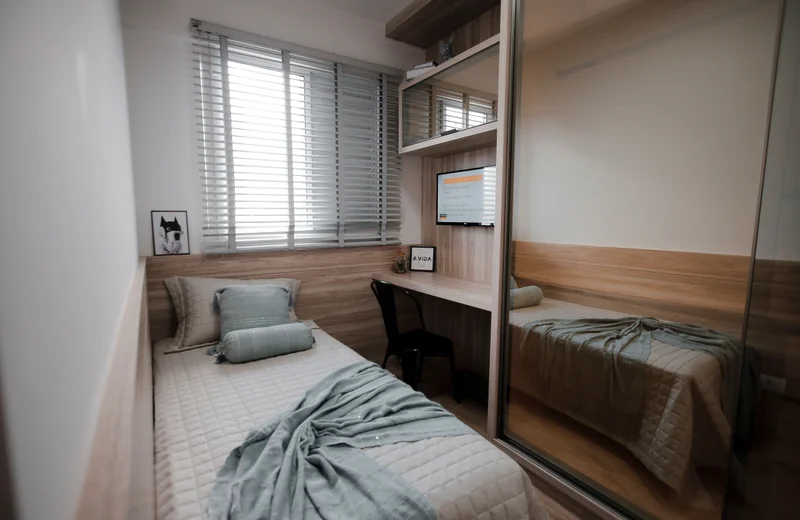
A cabin bed or mid-sleeper (from £180, Argos or IKEA) raises the sleeping area off the floor and frees the whole footprint underneath for a desk, wardrobe, or beanbag zone, which is the single biggest space gain available in a room under 10 square metres. A standard single bed with underbed drawers (from £120, Dunelm) is the cheaper option if a raised bed isn’t practical for the ceiling height.
Loft conversions and box rooms with sloped ceilings often can’t fit a mid-sleeper near the low wall. Measure the ceiling height at the bed’s intended headboard position before buying — most mid-sleepers need at least 1.6m of clearance above the mattress.
Bed options by room size:
- Under 8 sqm: cabin bed with integrated desk underneath (from £280, Argos)
- 8-10 sqm: mid-sleeper with open floor space below for a separate desk
- Over 10 sqm: standard single with underbed storage drawers
For a shared room, bunk beds (from £250, Argos) free up roughly the same floor area as a single mid-sleeper, split between two people.
How Do You Store Gaming and Sports Gear Without Using the Floor?
Wall-mounted pegboard storage (IKEA SKÅDIS, from £20) holds controllers, headsets, and small gear on hooks and shelves without touching a drill, since the panel itself hangs from Command-style strips rated for several kilograms. This matters more in a teenage room than almost any other bedroom type, since the gear changes constantly and floor piles grow fast.
Over-door hooks (£8-£15, Amazon UK or The Range) handle bags, trainers, and jackets on the back of the door, which is usually dead space in a small room. A rolling storage cart (£25-£40, IKEA RÅSKOG) tucked under or beside a desk keeps cables, consoles, and controllers contained and mobile, so the desk surface clears easily.
Storage by gear type:
| Gear | Solution | Cost |
|---|---|---|
| Controllers, headsets | Pegboard with hooks | £20-£35 |
| Trainers, sports bags | Over-door hooks | £8-£15 |
| Consoles, cables | Rolling cart | £25-£40 |
| Clothes | Freestanding rail or wardrobe | £30-£95 |
None of this needs wall fixings beyond adhesive strips rated for the weight, which keeps the whole setup reversible at move-out.
Does a Teenage Room Need a Feature Wall?
A single feature wall using peel-and-stick wallpaper (£15-£35 a roll, B&Q or Wayfair) gives a teenage bedroom a visual identity in a way that bedding and posters alone don’t, and it removes cleanly from painted plaster when peeled slowly. Darker, moodier colours and patterns work well here in a way they wouldn’t in a shared living space, since a teenage bedroom is the one room where a bolder choice doesn’t need to suit anyone else’s taste.
Test a small corner first, especially in older conversions with softer plaster. One wall, usually behind the bed, is enough — a full room of pattern reads as busy rather than deliberate in a room this size.
Removable border decals (£8-£18, Amazon UK or Etsy UK) are the lower-commitment alternative if a full wall of wallpaper feels like too much. A single strip run horizontally at eye level reads as a deliberate design choice rather than a half-finished decorating job.
What’s the Right Desk Setup for a Small Room?
A desk under 100cm wide (IKEA MICKE, 73x50cm, from £49 — verified as of 2026-10-25) fits alongside a single bed in most UK box rooms without blocking the door or wardrobe. Corner desks reclaim an otherwise wasted triangle of floor space and suit rooms where the bed takes up one full wall.
A monitor arm (£25-£45, Amazon UK) clamps to the desk edge and lifts a screen off the surface entirely, which matters when the desk itself is under a metre wide and every centimetre of surface counts for homework, consoles, or a laptop.
Desk placement by room shape:
- Long narrow room: desk against the short end wall, bed along the long wall
- Square box room: corner desk to free the most floor
- Loft conversion with sloped ceiling: desk under the tallest part of the ceiling, bed under the slope
Our small bedroom on a budget UK guide covers the same furniture-arrangement logic in more depth if the room needs a full layout rethink rather than a single desk swap.
How Do Two Teenage Boys Share One Small Bedroom?
A tall bookcase or a hanging curtain rail splits a shared bedroom into two felt zones without a permanent partition wall, which matters since most UK shared teenage rooms aren’t large enough for a true physical divide. Bunk beds (from £250, Argos) free up roughly the floor area of one single bed, which usually becomes the shared desk or gaming zone.
Colour-coding each half with a different duvet set (£15-£30 each, Dunelm) is a low-cost way to signal “this is my space” without any construction. Two identical desks pushed against opposite walls, rather than one shared desk, avoids most of the territorial arguments that come with sharing a single surface.
Start with the bed and storage, since those decisions set every other layout choice in the room. Wall colour and decor are the easiest to change later and the cheapest to get wrong first.
Related reading you might find useful:
- Small Bedroom on a Budget UK for layout and furniture choices in a small room
- Peel-and-Stick Wallpaper Test UK for a full review of removable wallpaper before committing a whole wall
- Renter-Friendly Bedroom Ideas UK for the broader deposit-safe approach this guide builds on
Frequently Asked Questions
Use peel-and-stick wallpaper, Command strips, and freestanding furniture instead of paint, fitted shelving, or drilled brackets. Letting agents in England and Wales can only deduct for damage beyond fair wear and tear, and reversible changes fall outside that, the same rule covered in our renter-friendly bedroom guide.
A cabin bed or mid-sleeper (from £180, Argos or IKEA) raises the sleeping area and frees the floor underneath for a desk or storage, which matters most in UK box rooms under 10 square metres. A standard single bed with underbed drawers is the budget alternative from around £120.
Wall-mounted shelving (IKEA SKÅDIS pegboard, from £20) and over-door hooks keep controllers, trainers, and bags off the floor without using Command-strip weight limits. A rolling storage cart under a desk handles cables and consoles out of sight.
Yes, a visual divider such as a tall bookcase or a hanging curtain rail splits one room into two felt spaces without a permanent partition wall. Bunk beds (from £250, Argos) also free up floor area for a shared desk zone in rooms under 12 square metres.
A full refresh — feature wall, desk, wall storage, and bedding — typically costs £250-£450 using IKEA, Argos, and Dunelm, according to current UK retailer pricing. Spreading the cost across wall decor first and furniture second keeps the spend manageable across a term or two.